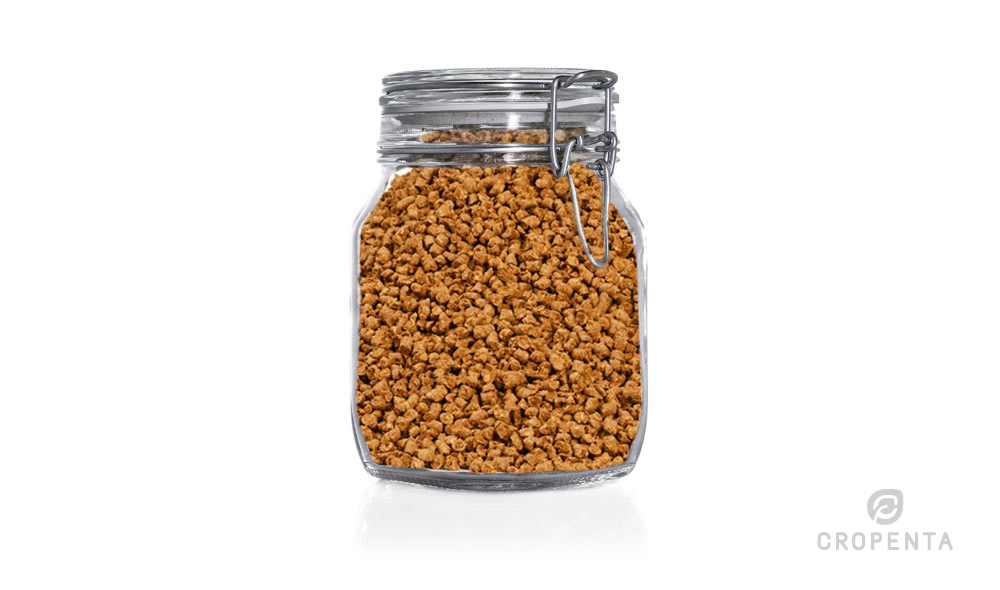
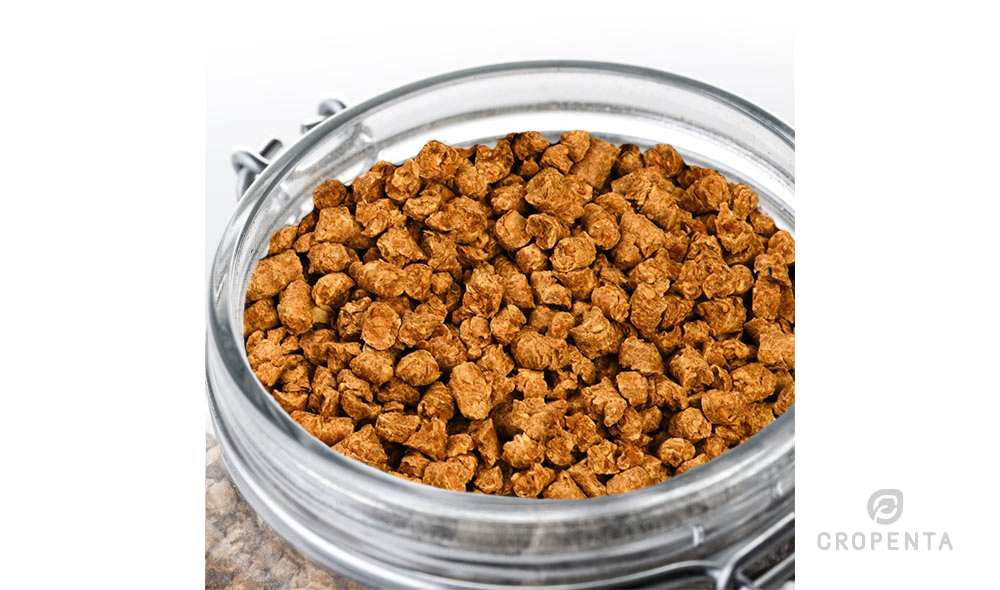
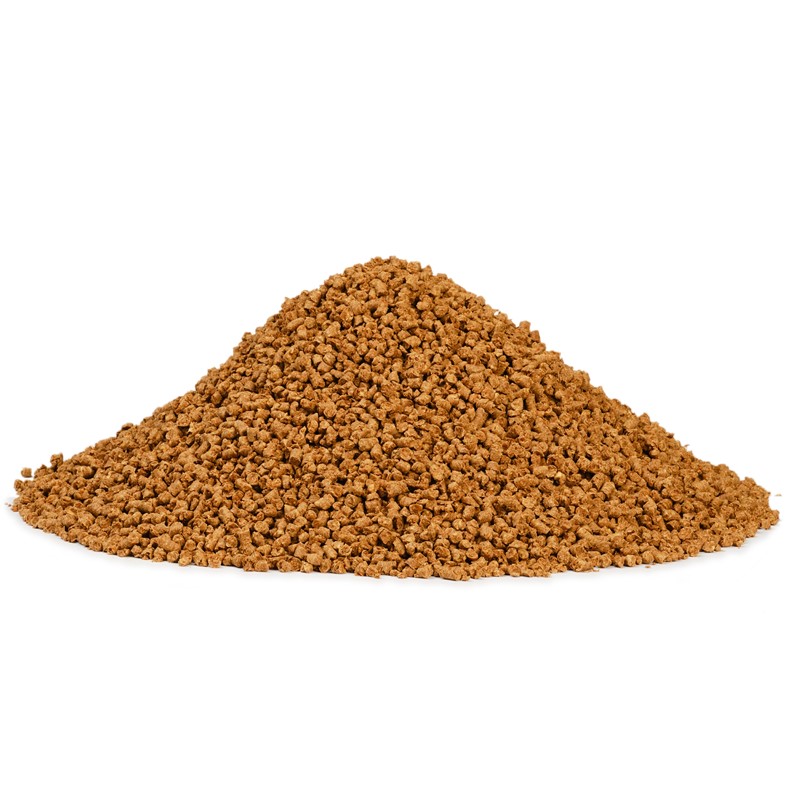
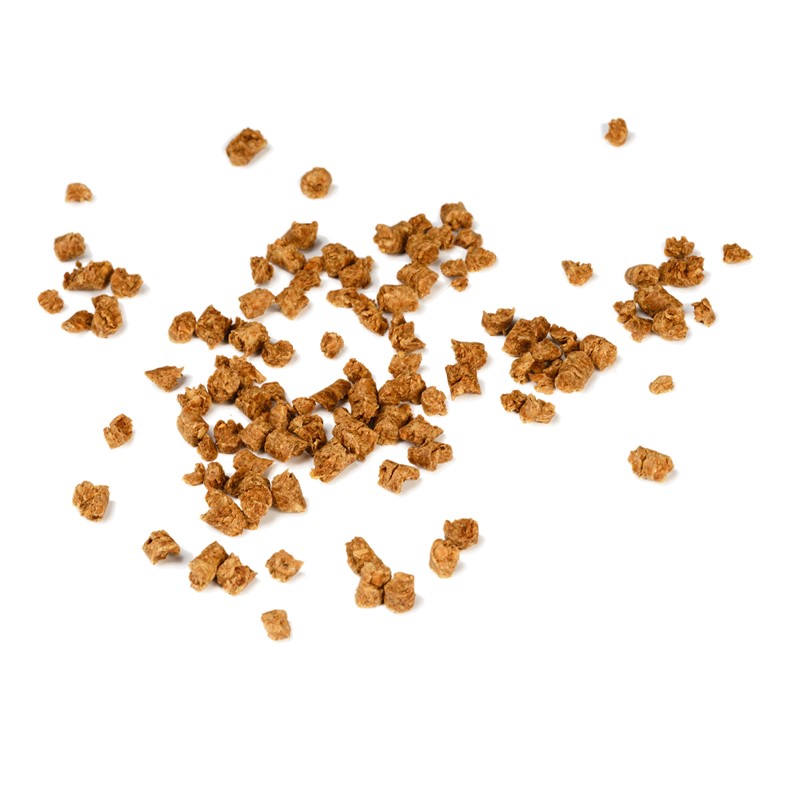
Bypass Soy Protein MP
Protéine de soja à fort bypass pour bovins laitiers et à viande
En résumé
- Une stabilité ruminale de 82,5 % augmente la proportion de protéines de soja qui échappe à la dégradation microbienne dans le rumen.
- 362 g/kg de protéines alimentaires non dégradées fournissent une source concentrée de protéines bypass pour les formulations destinées aux bovins laitiers et à viande.
- Une digestibilité intestinale de 99,6 % garantit que pratiquement toutes les protéines bypass restent disponibles pour la digestion dans l’intestin grêle.
- Des valeurs DVE et PDIE élevées favorisent un apport supérieur en protéines absorbables et métabolisables.
- Une meilleure efficacité protéique permet d’augmenter l’apport en protéines métabolisables sans simplement augmenter le niveau total de protéines brutes de la ration.
- Un OEB de -18 g/kg contribue à un meilleur contrôle de l’azote dégradable dans le rumen au niveau de la ration complète.
- Davantage de flexibilité pour équilibrer les besoins en RDP, RUP, DVE, PDIE et protéines métabolisables.
Tourteau de soja protégé dans le rumen pour un apport efficace en protéines métabolisables
Bypass Soy Protein MP est un tourteau de soja de haute qualité protégé dans le rumen, développé pour la formulation protéique de précision des rations destinées aux bovins laitiers et à viande. Il associe une forte concentration en protéines brutes à une excellente stabilité ruminale et à une digestibilité intestinale exceptionnelle, augmentant ainsi la proportion de protéines alimentaires disponible pour l’animal sous forme de protéines et d’acides aminés absorbables.
Contrairement au tourteau de soja conventionnel, relativement sensible à la dégradation microbienne dans le rumen, Bypass Soy Protein MP est soumis à un procédé contrôlé qui augmente la protection des protéines sans compromettre leur digestibilité dans l’intestin grêle. Il fournit ainsi aux nutritionnistes et formulateurs une source concentrée de protéines alimentaires non dégradables dans le rumen, également appelées protéines bypass ou RUP.
Une évaluation indépendante a démontré une stabilité ruminale de 82,5 % et une digestibilité intestinale de 99,6 % de la protéine bypass. Cette combinaison est essentielle : la protéine est protégée là où une dégradation excessive doit être évitée, tout en restant hautement disponible là où l’absorption des nutriments a lieu.
Apporter davantage de protéines métabolisables par kilogramme de tourteau de soja
La qualité protéique dépend de la disponibilité des nutriments, et pas uniquement de la teneur en protéines brutes
La teneur en protéines brutes reste une spécification importante en formulation des aliments, mais elle ne décrit pas à elle seule la contribution nutritionnelle d’un ingrédient protéique. Chez les ruminants, les protéines alimentaires sont exposées à la fermentation microbienne avant d’atteindre le système digestif propre de l’animal. Leur valeur nutritionnelle dépend donc de la quantité de protéines dégradée dans le rumen, de la fraction qui échappe à cette dégradation et de l’efficacité avec laquelle cette fraction bypass est digérée dans l’intestin grêle.
Cette distinction devient particulièrement importante dans les rations à haut niveau de performance. Une augmentation des protéines brutes alimentaires n’entraîne pas automatiquement une augmentation proportionnelle des protéines métabolisables. Lorsque les protéines supplémentaires sont rapidement dégradées dans le rumen, une partie de l’azote peut soutenir la production de protéines microbiennes, mais l’excès d’azote peut également être transformé en ammoniac. Lorsque l’apport d’énergie microbienne est insuffisant pour capter cet ammoniac, celui-ci est absorbé, transformé en urée puis finalement excrété.
Bypass Soy Protein MP est conçu pour augmenter le rendement nutritionnel de chaque kilogramme de protéines de soja. Avec une teneur en protéines brutes de 458 g/kg et une valeur de protéines alimentaires non dégradées de 362 g/kg, il apporte une forte concentration de protéines pouvant contribuer à l’alimentation de l’animal au-delà du rumen. Les formulateurs peuvent ainsi augmenter la densité en protéines métabolisables sans dépendre exclusivement d’une hausse du niveau total de protéines brutes.
Un flux plus efficace des protéines alimentaires
Dans un tourteau de soja conventionnel, une part importante des protéines est exposée à une dégradation microbienne rapide. Dans Bypass Soy Protein MP, la structure protéique est modifiée par un procédé contrôlé, ce qui réduit son accessibilité aux micro-organismes du rumen. Une plus grande quantité de protéines alimentaires intactes passe ainsi du rumen vers la caillette et l’intestin grêle.
Après avoir quitté le rumen, la protéine protégée doit toutefois rester accessible aux enzymes digestives. Bypass Soy Protein MP associe protection ruminale et très forte digestibilité post-ruminale. Il en résulte un flux nutritionnel plus efficace : moins de dégradation prématurée des protéines dans le rumen et davantage de protéines digestibles atteignant le principal site d’absorption des acides aminés.
- Augmente l’apport en protéines non dégradables dans le rumen.
- Favorise une concentration plus élevée de protéines métabolisables dans la ration.
- Réduit la dépendance à l’augmentation du niveau total de protéines brutes alimentaires.
- Offre davantage de flexibilité pour équilibrer RDP et RUP.
- Améliore la valeur nutritionnelle obtenue à partir des protéines de soja.
Une stabilité ruminale de 82,5 % augmente l’apport en protéines bypass
Pourquoi la stabilité ruminale est importante en nutrition des bovins laitiers et à viande
Les protéines dégradables dans le rumen sont nécessaires à la croissance microbienne et à la fermentation. Une ration efficace doit toutefois assurer un équilibre correct entre protéines dégradables et non dégradables dans le rumen. Un apport insuffisant en azote dégradable peut limiter l’activité microbienne, tandis qu’un apport de protéines rapidement dégradables supérieur à la capacité d’utilisation des microbes du rumen peut réduire l’efficacité azotée.
La stabilité ruminale mesurée de 82,5 % indique que la majeure partie des protéines de Bypass Soy Protein MP reste non dégradée après la période d’incubation ruminale définie. Cela augmente considérablement la proportion de protéines alimentaires pouvant quitter le rumen sous forme de protéines alimentaires intactes.
Pour le nutritionniste, cette valeur est plus informative qu’une simple allégation de protéine protégée. Elle apporte une preuve mesurable que l’ingrédient peut être utilisé pour augmenter l’apport en protéines bypass dans la matrice de la ration. La fraction protéique protégée peut compléter les protéines microbiennes et contribuer à couvrir les besoins en protéines métabolisables lorsque la synthèse microbienne seule est insuffisante.
Soutien des rations à besoins élevés
Les besoins en protéines absorbables augmentent avec le niveau de production. Dans les rations pour vaches laitières à haut rendement, l’apport en protéines métabolisables doit couvrir l’entretien, la production laitière et la synthèse des protéines du lait. Dans les systèmes intensifs de bovins à viande, il contribue à la croissance et au dépôt tissulaire. Dans ces situations, les sources protéiques conventionnelles peuvent apporter suffisamment de protéines brutes sans pour autant fournir la quantité souhaitée de protéines digestibles après la fermentation ruminale.
En augmentant le flux de protéines alimentaires non dégradées, Bypass Soy Protein MP aide les formulateurs à accroître la contribution post-ruminale en protéines de la ration. Cela peut être particulièrement utile lorsque le niveau total de protéines brutes est déjà adéquat, mais que l’apport calculé en DVE, PDIE, RUP ou protéines métabolisables reste limitant.
L’objectif pratique n’est pas d’éliminer la dégradation ruminale, mais d’obtenir une meilleure répartition des protéines entre fermentation microbienne et digestion intestinale. Bypass Soy Protein MP fournit une source concentrée de protéines protégées pouvant être intégrée avec des ingrédients apportant de l’énergie fermentescible et de l’azote dégradable dans le rumen.
Une digestibilité intestinale de 99,6 % préserve la valeur de la protéine protégée. Le bypass ruminal seul ne suffit pas.
La protection des protéines ne crée de valeur nutritionnelle que si la fraction bypass reste digestible après avoir quitté le rumen. Un traitement thermique excessif ou mal maîtrisé peut augmenter l’échappement ruminal tout en réduisant la disponibilité des protéines dans l’intestin grêle. Dans ce cas, la valeur analytique de bypass peut sembler favorable, mais une partie de la protéine protégée traverse le tube digestif sans contribuer pleinement à l’apport en acides aminés.
C’est pourquoi la digestibilité intestinale doit toujours être évaluée conjointement avec la stabilité ruminale. Bypass Soy Protein MP a atteint une digestibilité intestinale de la protéine bypass ruminale, ou DVBE, de 99,6 %. Cela démontre que pratiquement toutes les protéines ayant échappé à la fermentation ruminale restent disponibles pour la digestion post-ruminale.
La combinaison d’une stabilité ruminale de 82,5 % et d’une digestibilité intestinale de 99,6 % constitue la caractéristique nutritionnelle centrale du produit. Elle montre que le procédé protège les protéines pendant la fermentation ruminale sans créer de barrière importante à la digestion enzymatique dans l’intestin.
Davantage de protéines absorbables à partir de la fraction bypass
Dans l’intestin grêle, les protéines digestibles sont hydrolysées en peptides et en acides aminés qui peuvent être absorbés et utilisés par l’animal. Une fraction bypass hautement digestible contribue donc plus efficacement aux protéines métabolisables qu’une protéine protégée présentant une disponibilité intestinale plus faible.
Avec Bypass Soy Protein MP, la quasi-totalité de la fraction échappant au rumen reste digestible. Cela maximise la valorisation nutritionnelle de la protéine protégée et augmente la quantité de protéines absorbables apportée par kilogramme d’ingrédient.
- Digestion pratiquement complète de la protéine bypass ruminale.
- Valorisation élevée de la fraction protéique protégée.
- Contribution accrue à l’apport en acides aminés absorbables.
- Risque réduit de protéger les protéines au détriment de leur disponibilité intestinale.
- Utilisation efficace de la teneur en protéines brutes de l’ingrédient.
Des valeurs DVE et PDIE élevées soutiennent une formulation protéique de précision
DVE : protéines digestibles disponibles dans l’intestin
Dans le système néerlandais d’évaluation des protéines, la DVE représente les protéines vraies pouvant être digérées et absorbées dans l’intestin grêle. Elle comprend les protéines microbiennes digestibles et les protéines alimentaires non dégradées digestibles, corrigées des pertes protéiques endogènes. La valeur DVE fournit donc une indication plus pertinente de l’apport en protéines absorbables que la seule teneur en protéines brutes.
Bypass Soy Protein MP présente une valeur DVE de 448 g/kg. Cette valeur élevée reflète l’effet combiné de sa concentration protéique, de sa protection ruminale et de son exceptionnelle digestibilité intestinale. Elle rend l’ingrédient adapté à l’augmentation de la densité DVE des aliments composés, concentrés et rations totales mélangées.
Pour un formulateur, une source concentrée de DVE offre une flexibilité supplémentaire. Elle peut contribuer à atteindre le niveau requis de protéines absorbables tout en maîtrisant le taux d’incorporation total, le volume de la ration et la concentration en protéines brutes. La réponse précise dépendra de la ration complète, de la catégorie animale, du niveau d’ingestion et des autres sources de protéines et d’énergie utilisées.
PDIE : apport protéique lorsque l’énergie fermentescible est limitante
La valeur PDIE de 454 g/kg exprime l’apport potentiel en protéines digestibles lorsque la synthèse de protéines microbiennes est limitée par l’énergie fermentescible. Une valeur PDIE élevée indique que l’ingrédient contribue fortement à l’apport de protéines disponibles dans l’intestin, notamment grâce à sa fraction de protéines alimentaires non dégradées et digestibles.
Cela est pertinent dans les formulations où l’énergie fermentescible dans le rumen ne permet pas l’utilisation complète de tout l’azote dégradable disponible. Dans de telles rations, l’ajout de protéines rapidement dégradables peut accroître l’excédent d’azote sans augmenter proportionnellement la synthèse de protéines microbiennes. Une source de protéines de soja protégées peut augmenter plus directement l’apport protéique post-ruminal.
Bypass Soy Protein MP peut donc être utilisé comme outil technique pour équilibrer les rations dans lesquelles l’apport en protéines métabolisables est plus limitant que l’apport total en azote.
Un OEB de -18 contribue à un meilleur contrôle de l’équilibre azoté ruminal
Comprendre l’OEB dans la ration complète
L’OEB décrit l’équilibre entre la quantité de protéines dégradée dans le rumen et la quantité d’azote que les micro-organismes du rumen peuvent potentiellement utiliser en fonction de l’énergie fermentescible disponible. Un OEB positif indique un excédent potentiel d’azote dégradable, tandis qu’une valeur négative indique que l’ingrédient apporte lui-même moins d’azote dégradable dans le rumen par rapport aux besoins microbiens.
Bypass Soy Protein MP présente une valeur OEB de -18 g/kg. Cette valeur modérément négative est cohérente avec son degré élevé de protection ruminale. Elle signifie que l’ingrédient n’est pas principalement destiné à fournir de l’azote rapidement disponible dans le rumen. Sa contribution principale réside dans l’apport de protéines digestibles au-delà du rumen.
Pour la formulation, la valeur OEB doit toujours être évaluée au niveau de la ration totale. Bypass Soy Protein MP peut être associé à des ingrédients apportant des protéines dégradables dans le rumen, de l’azote non protéique ou des glucides fermentescibles afin d’obtenir l’équilibre azoté microbien recherché.
Avantages potentiels en formulation
Dans les rations présentant déjà un excès de protéines dégradables dans le rumen, le remplacement d’une partie d’une source protéique conventionnelle par une protéine protégée peut contribuer à réduire l’excédent azoté ruminal calculé. Cela peut améliorer la synchronisation entre la libération d’azote et la disponibilité de l’énergie microbienne.
Une meilleure synchronisation ne signifie pas qu’un seul ingrédient réduira automatiquement l’excrétion azotée ou la formation d’ammoniac dans toutes les rations. Ces effets dépendent de la ration complète et de la réponse de l’animal. Toutefois, la combinaison d’un UDP élevé et d’un OEB modérément négatif offre aux nutritionnistes un outil utile pour formuler des rations avec un meilleur contrôle de l’apport azoté ruminal.
- Contribue au contrôle de l’excès de protéines dégradables dans le rumen.
- Aide à équilibrer l’apport d’azote par rapport à l’énergie fermentescible.
- Apporte des protéines sans forte charge supplémentaire d’azote ruminal.
- Peut contribuer à une formulation plus précise de l’OEB de la ration totale.
Performances nutritionnelles évaluées indépendamment
Bypass Soy Protein MP a fait l’objet d’une évaluation indépendante de ses caractéristiques de dégradation ruminale et de sa digestibilité intestinale des protéines. Les résultats démontrent que le produit associe une forte concentration de protéines alimentaires non dégradées à une digestibilité exceptionnelle de la fraction bypass ruminale.
| Paramètre | Valeur | Intérêt pour le nutritionniste |
| Protéines brutes | 458 g/kg | Apport concentré en protéines végétales. |
| Protéines alimentaires non dégradées | 362 g/kg | Forte contribution en protéines bypass dans la ration. |
| Stabilité ruminale | 82,5 % | La majeure partie des protéines alimentaires échappe à une dégradation ruminale excessive. |
| Digestibilité intestinale, DVBE | 99,6 % | Pratiquement toutes les protéines bypass restent digestibles après le rumen. |
| DVE | 448 g/kg | Apport élevé en protéines vraies digestibles dans l’intestin. |
| PDIE | 454 g/kg | Forte contribution protéique lorsque la synthèse microbienne est limitée par l’énergie. |
| OEB | -18 g/kg | Charge supplémentaire limitée en azote dégradable dans le rumen. |
Protection contrôlée des protéines sans sacrifier leur digestibilité
Le rôle d’un procédé maîtrisé
Bypass Soy Protein MP est produit à l’aide d’un traitement contrôlé conçu pour créer des interactions protectrices entre les sucres réducteurs et les groupes réactifs des protéines. Ce procédé repose sur la phase initiale de la réaction de Maillard. Dans des conditions soigneusement maîtrisées, il réduit l’accès des micro-organismes du rumen aux protéines tout en maintenant une forte digestibilité post-ruminale.
La maîtrise du procédé est essentielle. Un traitement insuffisant apporterait une protection ruminale limitée, tandis qu’un traitement excessif pourrait réduire la disponibilité intestinale des protéines. La combinaison mesurée d’une forte stabilité ruminale et d’une DVBE de 99,6 % indique que le procédé de protection atteint les deux objectifs : résistance pendant la fermentation ruminale et accessibilité pendant la digestion intestinale.
Applications en formulation professionnelle des aliments
Bypass Soy Protein MP est destiné aux fabricants d’aliments, nutritionnistes et spécialistes de la formulation développant des rations à forte densité protéique pour ruminants. Il peut être incorporé dans des aliments composés, concentrés, aliments complémentaires et prémélanges ou mélanges personnalisés.
Formulations pour bovins laitiers
Dans les formulations pour bovins laitiers, l’ingrédient peut être utilisé pour augmenter l’apport en DVE, PDIE, RUP ou protéines métabolisables, selon le système d’évaluation appliqué. Il est particulièrement pertinent lorsque l’apport protéique calculé ne permet pas de soutenir suffisamment le niveau de production visé, même si la teneur totale en protéines brutes est adéquate.
Formulations pour bovins à viande
Dans les rations intensives pour bovins à viande, Bypass Soy Protein MP peut fournir des protéines bypass digestibles en complément des protéines microbiennes. Cela peut être utile pendant les phases de croissance où les besoins en protéines absorbables sont élevés ou dans les rations où les sources protéiques conventionnelles sont principalement dégradables dans le rumen.
Développement d’aliments composés et de concentrés
Pour les fabricants d’aliments, l’ingrédient offre un moyen constant d’augmenter la densité en protéines protégées d’une formulation. Ses valeurs élevées de DVE et de PDIE permettent de le positionner comme un ingrédient protéique fonctionnel, et non simplement comme une source de protéines brutes.
Les taux d’incorporation doivent être déterminés par un nutritionniste qualifié en tenant compte de la composition complète de la ration, des besoins de l’animal, de l’ingestion de matière sèche, de l’apport d’énergie fermentescible et du système d’évaluation protéique retenu.
Pourquoi formuler avec Bypass Soy Protein MP ?
- Forte stabilité ruminale : 82,5 % des protéines restent stables pendant la période d’incubation ruminale évaluée.
- Digestibilité intestinale exceptionnelle : 99,6 % de DVBE préserve la valeur nutritionnelle de la fraction bypass.
- Protéines bypass concentrées : 362 g/kg de protéines alimentaires non dégradées.
- Valeur élevée en protéines absorbables : DVE 448 g/kg et PDIE 454 g/kg.
- Contribution contrôlée à l’azote ruminal : OEB de -18 g/kg.
- Flexibilité de formulation : facilite l’équilibrage précis des RDP, RUP et protéines métabolisables.
- Évaluation indépendante : la stabilité ruminale et la digestibilité intestinale sont étayées par des essais en laboratoire.
Protéine de soja bypass pour une formulation rationnelle fondée sur des données mesurées
Bypass Soy Protein MP offre bien plus qu’une teneur élevée en protéines brutes. Il apporte une combinaison mesurée de protection ruminale, de digestibilité intestinale et de valeur en protéines absorbables. Sa stabilité ruminale de 82,5 % augmente le flux de protéines alimentaires non dégradées, tandis que sa DVBE de 99,6 % garantit que cette fraction protégée reste nutritionnellement disponible après avoir quitté le rumen.
Pour les nutritionnistes et les formulateurs, cela constitue un outil pratique pour augmenter la densité en protéines métabolisables, améliorer l’équilibre entre protéines dégradables et non dégradables dans le rumen et maîtriser la contribution de la fraction protéique à l’azote ruminal.
Bypass Soy Protein MP convient donc aux formulations professionnelles pour bovins laitiers et à viande lorsque l’objectif n’est pas simplement d’ajouter davantage de protéines brutes, mais d’apporter davantage de protéines digestibles au site où l’animal peut les absorber et les utiliser.


Comment pouvons-nous vous aider ?