
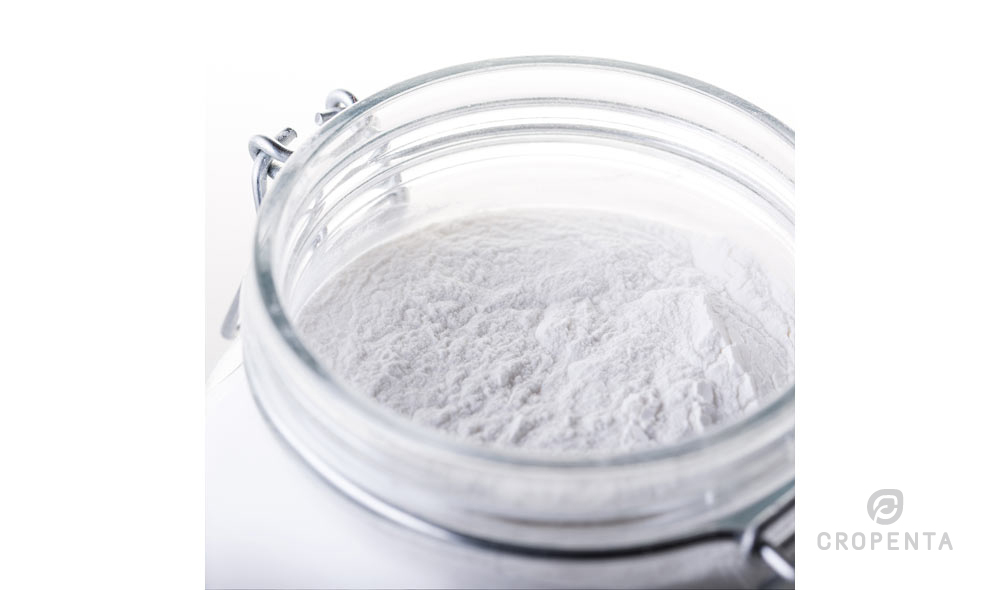
Monocalcium Phosphate (MCP)
Highly Available Phosphorus for Precise Animal Nutrition
Summary
- High phosphorus availability
- 193 g/kg available phosphorus (aP) for poultry
- 188 g/kg digestible phosphorus (d.P) for pigs
- 203 g/kg digestible phosphorus (d.P) for cattle
- Good water solubility
- Suitable for poultry, pig and cattle compound feed and premixes
- Available in 0.2–1.4 mm and 1.4–2.0 mm granulations
Monocalcium Phosphate for Animal Feed
Monocalcium Phosphate (MCP) is an inorganic feed phosphate used as a source of phosphorus in professional animal nutrition. The product is primarily suitable for poultry, pig and cattle compound feed and premixes and is characterised by high phosphorus availability and good water solubility.
For animal nutritionists, the nutritional value of a phosphorus source depends on more than its classification as a feed phosphate. The amount of phosphorus that is available or digestible to the animal is particularly relevant when calculating the phosphorus contribution of a feed ingredient. This Monocalcium Phosphate therefore provides species-specific phosphorus values for poultry, pigs and cattle.
High Phosphorus Availability for Professional Feed Formulation
Phosphorus is an essential macromineral in animal nutrition. It contributes to skeletal development and mineralisation and is involved in energy metabolism, cellular structures and numerous metabolic processes.
The nutritional availability of phosphorus is particularly important in feed formulation because total phosphorus and usable phosphorus are not necessarily equivalent. In poultry and pig diets, for example, a substantial proportion of the phosphorus naturally present in plant ingredients can occur in phytate-bound form.
Supplemental feed phosphates are therefore used to help nutritionists achieve the required available or digestible phosphorus level of the complete diet.
Monocalcium Phosphate is characterised by high phosphorus availability. The product specification provides the following species-specific values:
- Available phosphorus (aP) for poultry: 193 g/kg
- Digestible phosphorus (d.P) for pigs: 188 g/kg
- Digestible phosphorus (d.P) for cattle: 203 g/kg
These values provide nutritionists with a more specific basis for formulation than evaluating a phosphorus source solely by its generic ingredient classification.
Why Available and Digestible Phosphorus Matter
Feed formulation increasingly focuses on the quantity of nutrients that can actually be utilised by the animal. This principle is particularly relevant for phosphorus.
In plant-based poultry and swine diets, part of the phosphorus is bound to phytate. Poultry and pigs have a limited endogenous ability to release phytate-bound phosphorus, although phytase supplementation can substantially improve its utilisation.
The remaining phosphorus requirement can be supplied through inorganic phosphorus sources such as Monocalcium Phosphate feed grade. The required inclusion depends on the complete feed formulation, the phosphorus contribution of other ingredients, phytase strategy and the nutritional requirements of the animal.
Using an appropriate available or digestible phosphorus value helps formulate diets more accurately and reduces the need to rely on total phosphorus as the primary nutritional parameter.
Monocalcium Phosphate for Poultry Feed
Phosphorus and calcium nutrition are important components of poultry feed formulation. Adequate mineral nutrition is required to support normal skeletal development and bone mineralisation, while phosphorus is also involved in energy metabolism and other physiological processes.
For poultry, this Monocalcium Phosphate provides an available phosphorus value of 193 g/kg according to the product specification.
This value can be used when evaluating the contribution of MCP in poultry feed within the applicable formulation system. The actual inclusion level depends on factors including bird type, production stage, basal ingredient composition, calcium-phosphorus balance and phytase use.
Key Benefits for Poultry Nutrition
- 193 g/kg available phosphorus (aP)
- High phosphorus availability
- Suitable for poultry compound feed and premixes
- Contributes to healthy bone development
- Good water solubility
- Suitable for professional mineral formulation
Monocalcium Phosphate for Pig and Swine Feed
Digestible phosphorus is an important formulation parameter in modern swine nutrition. Cereals, soybean meal and other plant-derived ingredients contribute phosphorus to pig diets, but their phosphorus availability can vary because a proportion is naturally bound in phytate.
For pigs, the product specification provides a digestible phosphorus value of 188 g/kg.
This makes MCP for pig feed a defined mineral phosphorus source that can be incorporated into compound feed and premixes according to the phosphorus requirement of the formulation.
Scientific research comparing inorganic feed phosphates shows that phosphorus digestibility can differ between phosphate types and between commercial sources. This is one reason why product-specific nutritional values are more useful to nutritionists than assuming that every MCP or DCP source has identical nutritional characteristics.
Key Benefits for Pig Nutrition
- 188 g/kg digestible phosphorus (d.P)
- High phosphorus availability
- Suitable for pig compound feed and premixes
- Contributes to healthy bone development
- Good water solubility
- Supports digestible-phosphorus formulation
Monocalcium Phosphate for Cattle Feed
Phosphorus is also an essential mineral in cattle nutrition. The requirement for supplemental phosphorus depends on the animal category, production stage and phosphorus supplied by forage, concentrates, mineral sources and other components of the ration.
For cattle, the product specification provides a digestible phosphorus value of 203 g/kg.
Monocalcium Phosphate for cattle feed can be used in compound feed and premixes as part of the complete mineral formulation. Its inclusion should be determined according to the overall mineral balance of the ration rather than considering MCP as an isolated ingredient.
Key Benefits for Cattle Nutrition
- 203 g/kg digestible phosphorus (d.P)
- High phosphorus availability
- Suitable for cattle compound feed and premixes
- Contributes to healthy bone development
- Good water solubility
- Suitable for professional mineral formulation
Good Water Solubility
Good water solubility is a specific characteristic stated for this Monocalcium Phosphate. Solubility is one of several physicochemical characteristics that can be considered when evaluating inorganic phosphorus sources for animal feed.
Water solubility should not, however, be treated as synonymous with phosphorus digestibility. Biological phosphorus utilisation depends on the product, animal species and nutritional evaluation system. For feed formulation, the species-specific available or digestible phosphorus values therefore remain particularly relevant.
Monocalcium Phosphate, Dicalcium Phosphate and Feed Phosphate Selection
Several inorganic feed phosphate sources are available to animal nutritionists, including Monocalcium Phosphate (MCP), Dicalcium Phosphate (DCP) and Monodicalcium Phosphate (MDCP).
These products should not automatically be considered nutritionally interchangeable. Scientific research shows differences in phosphorus digestibility between phosphate types and also demonstrates variation between commercial sources of the same general phosphate category.
For this reason, professional feed phosphate selection should consider relevant product-specific characteristics rather than purchase price per tonne alone.
Important evaluation parameters can include:
- Available or digestible phosphorus
- Calcium and phosphorus contribution
- Animal species and formulation system
- Physicochemical characteristics
- Water solubility
- Particle size and granulation
- Consistency of product specifications
- Cost per unit of nutritionally available phosphorus
This provides a more nutrition-focused basis for comparing MCP with DCP and other phosphorus sources used in animal feed.
MCP and Phytase in Poultry and Pig Diets
Phytase has become an important tool in poultry and swine nutrition because it can release part of the phosphorus bound to phytate in plant-based feed ingredients.
The use of phytase can consequently reduce the amount of supplemental inorganic phosphorus required. It does not remove the need for accurate phosphorus formulation. Instead, nutritionists calculate the phosphorus supplied by the basal ingredients, the expected phosphorus contribution from phytase and the remaining requirement to be supplied through mineral sources.
A Monocalcium Phosphate feed source with defined available or digestible phosphorus values can therefore form part of a precision phosphorus strategy, including formulations in which phytase is used.
Precision Phosphorus Nutrition
Accurate phosphorus formulation has both nutritional and resource-efficiency implications.
An insufficient supply of available or digestible phosphorus can prevent a feed from meeting its intended nutritional specification. Conversely, unnecessary phosphorus oversupply increases mineral input and may increase phosphorus excretion.
Formulating with appropriate available or digestible phosphorus values helps nutritionists align dietary phosphorus supply more closely with animal requirements. This makes phosphorus availability an important consideration when assessing the nutritional and economic value of a feed phosphate.
Compound Feed and Premix Applications
Monocalcium Phosphate is mainly suitable for processing in poultry, pig and cattle compound feed and premixes.
Typical applications include:
- Poultry compound feed
- Pig and swine compound feed
- Cattle compound feed
- Poultry premixes
- Pig premixes
- Cattle premixes
- Mineral feed formulations
Granulation and Feed Processing
The product is available in two granulate ranges depending on customer requirements:
- 0.2–1.4 mm
- 1.4–2.0 mm
The availability of different granulations provides feed manufacturers with options according to their production process and final feed application.
Feeding Advice
According to the product specification, the maximum feeding advice is:
- Poultry: maximum 2% of the ration
- Pigs: maximum 2% of the ration
- Cattle: maximum 2% of the ration
These percentages represent maximum feeding guidance and are not fixed recommended inclusion rates. The actual inclusion level should be calculated by a qualified animal nutritionist according to the complete formulation, animal requirements, available or digestible phosphorus supply, other mineral sources and applicable feed legislation.
Product Characteristics
- Product: Monocalcium Phosphate
- Dry matter: 990 g/kg
- Crude ash: 990 g/kg
- Sodium: 0.6 g/kg
- Available phosphorus for poultry (aP): 193 g/kg
- Digestible phosphorus for pigs (d.P): 188 g/kg
- Digestible phosphorus for cattle (d.P): 203 g/kg
- Good water solubility
- High phosphorus availability
- Granulation: 0.2–1.4 mm or 1.4–2.0 mm
Production
According to the product specification, Monocalcium Phosphate is produced by treating phosphorus ore with phosphoric acid under controlled conditions.
This manufacturing route produces a mineral phosphate intended for professional animal feed applications, including compound feed and premix production.
Storage and Shelf Life
Store the product under dry conditions and protect it from moisture and contamination. The product specification states a shelf life of several months under dry storage conditions.
Batch-specific storage instructions and applicable shelf-life information should always be confirmed in the relevant product documentation.
Product Specifications and Availability
Monocalcium Phosphate is available for professional feed manufacturers, premix producers, nutrition companies and distributors. Two granulate ranges are available depending on customer requirements.
Detailed analytical specifications, certificates, packaging options and commercial availability can be provided upon request.
Monocalcium Phosphate for Professional Animal Nutrition
With high phosphorus availability, species-specific available or digestible phosphorus values, good water solubility and two granulation options, Monocalcium Phosphate provides a defined phosphorus source for animal feed formulations.
The combination of 193 g/kg available phosphorus for poultry, 188 g/kg digestible phosphorus for pigs and 203 g/kg digestible phosphorus for cattle provides nutritionists with species-specific values for evaluating the product within compound feed and premix formulations.
For feed manufacturers and nutritionists, the key consideration is therefore not simply whether an ingredient is classified as MCP, but how its product-specific characteristics fit the nutritional, technical and economic requirements of the complete formulation.
Disclaimer: Nutritional values, product characteristics and feeding guidance stated on this page are based on the applicable product specification. Final inclusion rates should be determined by a qualified animal nutritionist according to species, production stage, complete diet composition, mineral balance and applicable feed legislation. Scientific information regarding phosphorus nutrition and feed phosphate digestibility provides general nutritional context and should not be interpreted as a guaranteed characteristic of this specific product unless explicitly included in its product specification.


How can we assist you?