How Does Silicon Application Influence Root Development and Nutrient Uptake?
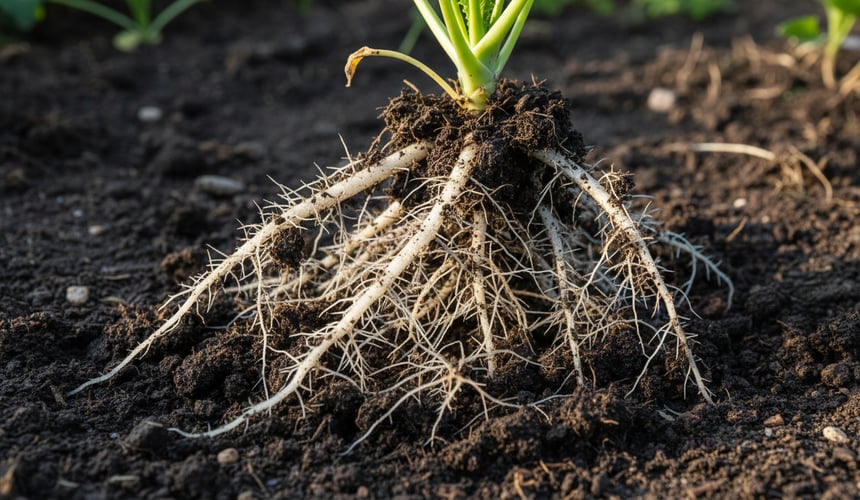
Plant roots are fundamental for nutrient and water uptake, forming the vital interface between the plant and the soil environment. How efficiently a plant acquires nutrients can depend on its root system's architecture and overall health. Recent agricultural research has explored various strategies to optimize root development, including the application of silicon. This element, while not traditionally classified as an essential nutrient, may play a role in supporting root morphology and influencing how plants absorb critical nutrients.
Cropenta Insight
Understanding how silicon influences root morphology is key for professionals seeking to optimize nutrient use efficiency. The observed changes in root length and surface area suggest potential benefits for plants in nutrient acquisition strategies. This understanding can inform the development of formulations aimed at supporting robust root systems under varying soil conditions, contributing to effective crop nutrition programs for diverse agricultural systems.
Silicon and Root System Development
Silicon (Si) is absorbed by plants predominantly in the form of monosilicic acid (orthosilicic acid) from the soil solution. This plant-available silicon is then transported and deposited within plant tissues, including the roots. Studies indicate that silicon application may positively influence various root morphological traits across a diverse range of crop species. For instance, enhanced root length has been observed in rice, soybean, barley, sorghum, and mustard, among other crops [1]. Such changes in root architecture could be associated with an expanded root surface area, which is crucial for efficient exploration of the soil volume.
Implications for Nutrient Uptake
The altered root morphology resulting from silicon application can have implications for how plants acquire nutrients. A more extensive root system, characterized by increased length and surface area, generally suggests a greater capacity for foraging nutrients and water from the soil profile [1]. This interaction is not limited to physical changes; silicon application via roots may also affect overall plant health and nutrient assimilation processes [2]. This could involve complex physiological responses that impact the efficiency with which plants take up and utilize various essential elements.
Silicon's Role in Nutrient Efficiency
Beyond direct effects on root morphology, silicon may also play a role in nutrient use efficiency. It is considered a multi-stress mitigator in plant nutrition, potentially contributing to the plant's ability to cope with nutritional challenges [3]. An improved root system, supported by silicon, could enable plants to better access nutrients that might otherwise be less available in the soil. Furthermore, silicon application has been observed to influence soil structure, with highly absorbent silicates potentially enhancing soil properties [4]. An improved soil structure can contribute to better root penetration and water infiltration, indirectly supporting nutrient uptake.
Technical Summary
Silicon application can influence root development by potentially enhancing morphological traits such as root length and surface area in various crop species. This may alter the plant's capacity for nutrient uptake from the soil. Silicon's role extends to potentially supporting nutrient use efficiency and influencing soil structure, which in turn can aid root penetration and nutrient acquisition under diverse environmental conditions.
Disclaimer
This article has been prepared with AI assistance using publicly available sources and is intended solely for general technical and educational purposes. It does not constitute professional advice or recommendations for specific applications. Cropenta makes no warranties regarding the accuracy, completeness or applicability of the information. No rights may be derived from its contents, and Cropenta accepts no liability for its use to the extent permitted by law.
Technical Questions
What is plant-available silicon and why is it important for roots?
Plant-available silicon typically refers to monosilicic acid, the form plants can absorb through their roots. This form is crucial because it is readily taken up and transported within the plant. Its availability in the soil solution directly influences the potential for silicon to be integrated into root tissues, where it may contribute to changes in root morphology and overall root health.
Does silicon application benefit all crop types equally?
The research indicates that silicon application has shown positive effects on root morphological traits across a diverse range of crop species, including rice, soybean, barley, sorghum, and mustard. However, the extent and specific nature of these benefits can vary significantly between different plant species and even cultivars, as well as with varying soil and environmental conditions. Specific responses may need further investigation.
How does silicon influence nutrient uptake beyond root development?
Beyond directly influencing root morphology, silicon may also affect nutrient uptake through other mechanisms. It is considered a multi-stress mitigator and can support nutrient use efficiency by potentially complexing with certain elements in the soil, affecting their solubility and availability. Silicon may also influence internal plant physiological processes that regulate nutrient assimilation and distribution, indirectly improving the plant's nutrient status.
- 1.Silicon Effects on the Root System of Diverse Crop Species ... by P Tripathi · 2021
- 2.Silicon: A valuable soil element for improving plant growth ... by AL Khan · 2025
- 3.Benefits of Silicon in the Nutrition of Plants - Springer Nature by R de Mello Prado
- 4.The Multiple Role of Silicon Nutrition in Alleviating ... - PMC by S Kovács · 2022
Related articles



Related Products


Looking for something specific?
Our team is there to help you find the right raw materials and solutions for your formulations

