Microbial Fertilizers
 Cropenta in 60 seconds

Technical
Expertise

Specialized
Inputs

Long-Term
Partnerships

Sustainable
Solutions
Endophyte-Derived Metabolites
Endophyte-Derived Metabolites in Specialty Fertilizer Development
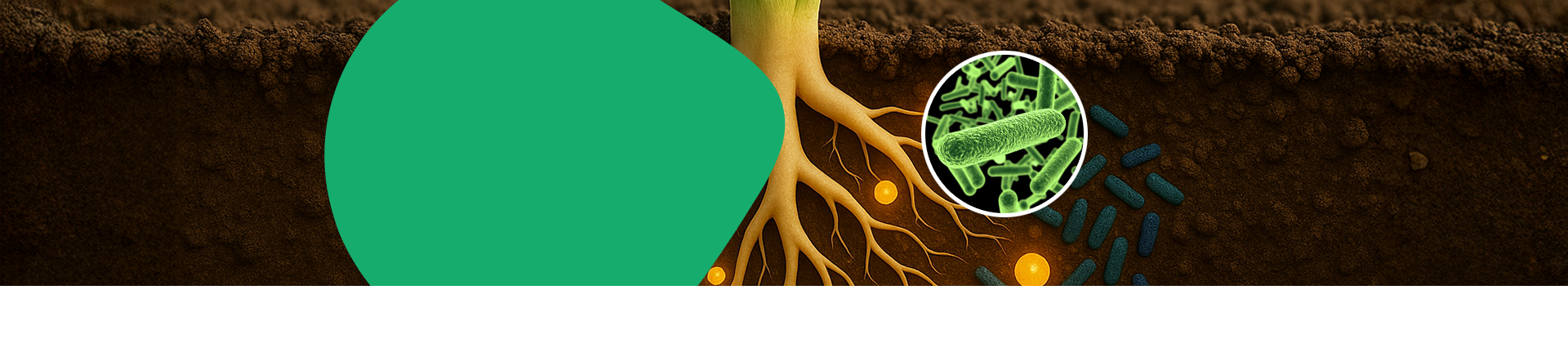
Endophyte-derived metabolites are compounds produced by endophytic microbes during their growth in plant tissues or during controlled fermentation processes. These metabolites are applied as raw materials or as end products within specialty fertilizers, biostimulants, and root-zone focused formulations. They are selected based on solubility, stability, carrier suitability, and compatibility with organic and inorganic components. For formulators and R&D teams, endophyte metabolites are a technically relevant category due to their processability in liquid systems, dry blends, WSF/WSG formulations, and concentrated solutions.
Technical Background of Endophyte Metabolites
Endophytes produce a broad spectrum of metabolites when located in internal plant tissues or in fermentation environments. These metabolites include organic acids, aromatic compounds, peptides, polysaccharide fragments, and other secondary metabolites that arise within microbial interactions. For specialty fertilizer development, technical processability is especially important: solubility behavior, stability under variable pH conditions, salt tolerance, viscosity, and compatibility with other formulation components. The processing of metabolites requires precise assessment of filtration behavior, sedimentation, interactions with chelates, and stability in concentrated solutions.
Types of Endophyte-Derived Metabolites
1. Fermented Metabolite Extracts
Fermented extracts consist of a mixture of metabolites produced during controlled fermentation processes. These extracts are applied in liquid biostimulants, WSF formulations, and root-zone focused products. The technical assessment focuses on solubility, viscosity, stability under storage conditions, and compatibility with fertilizer salts and organic components.
2. Concentrated Metabolite Fractions
Metabolite fractions are obtained through filtration, centrifugation, or fractionation techniques. These fractions contain specific groups of metabolites suitable for integration into specialty fertilizers. Important parameters are pH behavior, salt stability, interactions with amino acids and humic acids, and processability in concentrated formulations.
3. Dried Metabolite Powders
Dried metabolites are produced via spray-drying, freeze-drying, or other drying techniques. These powders are used in dry blends, WSG formulations, and microgranules. The technical assessment includes carrier choice, solubility behavior, dispersion, stability, and compatibility with fertilizer salts.
4. Micro-Encapsulated Metabolites
Micro-encapsulation is used to support stability, shelf-life, and processability of metabolites. This technology is relevant for formulations sensitive to pH fluctuations, oxidation, or high salt concentrations. The choice of encapsulation material determines solubility behavior, dispersion, and compatibility with other formulation components.
Formulation-Technical Considerations
The integration of endophyte-derived metabolites in specialty fertilizers requires a systematic assessment of compatibility with fertilizer salts, organic acids, amino acids, humic acids, and seaweed extracts. pH tolerance is essential for liquid formulations, while carrier choice is critical for dry products such as powders and granules. Stability in WSF/WSG systems, filtration behavior, viscosity, and storage conditions play a significant role in the processability and shelf-life of metabolite raw materials. Additionally, sedimentation behavior, solubility, and interactions with root-zone micro-environments in substrate, soil, and hydroponics systems are examined.
Application of Endophyte Metabolites
Endophyte-derived metabolites are applied in root-zone-focused fertilizers, biostimulants for intensive crops, substrate-specific formulations for rock wool and coco, hydroponics-focused blends, and solutions for recirculation systems in high-tech greenhouses. They are also used in transplant and cultivation formulations where carrier choice, stability, and compatibility with other raw materials are central. The technical integration of metabolites requires a thorough assessment of formulation parameters, storage conditions, and processing methods.
Source Reference
Based on general insights from industry publications and scientific literature on endophytic microbes and their metabolites, including a technical overview published by FFTC-AP (2023).
Disclaimer
This text solely describes general biological processes and formulation technical properties of endophyte-derived metabolites. No statements are made about performance, effects, or specific application results. The information is intended for B2B use by formulators, distributors, and producers of specialty fertilizers. Users are responsible for compliance with local legislation, product registration, and application guidelines.