Seaweed Extract
 Cropenta in 60 seconds

Technical
Expertise

Specialized
Inputs

Long-Term
Partnerships

Sustainable
Solutions
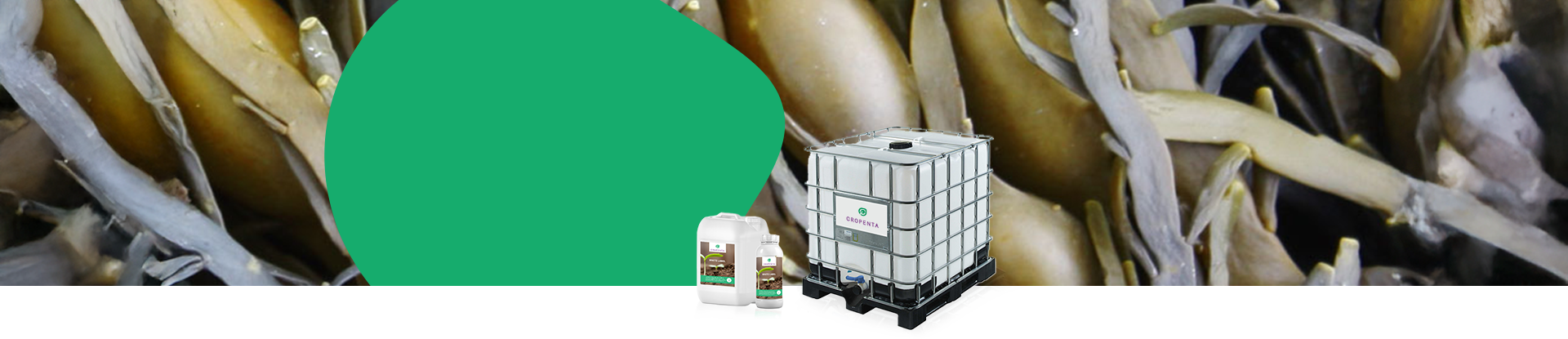
Seaweed Extract
Seaweed extract is a biostimulant raw material obtained from marine algae. Unlike terrestrial plants, seaweeds grow in an aquatic environment, where they are exposed to strong fluctuations in salinity, temperature, currents, and light intensity. To survive under these conditions, seaweeds develop a broad spectrum of protective and regulatory substances.
During extraction, these natural components are made available for application in agriculture and horticulture. Seaweed extract does not naturally contain high concentrations of nutrients or proteins but focuses on activating and supporting physiological processes in the plant.
What does seaweed extract provide to plants?
Seaweed extract is not used as a food source, but as a functional biostimulant. The value of seaweed extract lies mainly in the presence of:
- oligo- and polysaccharides that act as elicitors
- polyphenols with antioxidant action
- osmoprotective substances such as mannitol and betaines
- natural marine minerals in biologically active form
These components stimulate, among other things, root development, stress resistance, nutrient utilization, and overall plant vitality, without directly acting as a fertilizer.
Seaweed extract compared to amino acids
Amino acids are the direct building blocks of proteins and play a fundamental role in metabolic processes, enzyme action, and cell construction within plants. The application of free amino acids provides directly available nitrogen-containing building blocks and supports recovery, growth, and energy balance.
Seaweed extract and amino acids thus have different but complementary functions. While amino acids primarily provide building blocks for protein formation, seaweed extract works mainly as a regulator and activator. In formulations, both raw materials are often combined to stimulate physiological processes as well as to make building blocks directly available.
Humic and fulvic acids in relation to seaweed extract
Humic and fulvic acids also fulfill a different role than seaweed extract. These substances themselves do not provide amino acids or proteins but contribute to:
- improvement of soil structure
- stimulation of microbial activity
- complexing and mobilization of nutrients
In soil and root environments, humic and fulvic acids can act as carriers or catalysts for other active components. In combination with seaweed extract, they indirectly support the uptake and utilization of bioactive substances by the plant.
Complementary use within biostimulant concepts
Seaweed extract, amino acids, and humic/fulvic acids are often combined within modern biostimulant programs. Each component fulfills a unique function:
- seaweed extract: activation and stress regulation
- amino acids: direct building blocks for metabolism
- humic and fulvic acids: support of soil and nutrient processes
Through this complementary action, formulations can be developed that specifically address plant needs without relying solely on traditional fertilization.
Disclaimer: the composition of seaweed extract may vary depending on the seaweed species used, harvest time, and extraction method.