Microbial Fertilizers
 Cropenta in 60 seconds

Technical
Expertise

Specialized
Inputs

Long-Term
Partnerships

Sustainable
Solutions
Microbial Biostimulants
Microbial biostimulants play an increasingly important role in professional agriculture and horticulture. This technology uses selected microorganisms that support natural processes in the soil and around the root zone. They are applied worldwide by growers aiming for more efficient nutrient use, stronger root development, and better tolerance to abiotic stress factors such as drought, salt stress, and temperature fluctuations. Microbial biostimulants are not used as fertilizers or crop protection agents but as an additional technology that optimizes the physiological processes of plants.
Contact Cropenta
If you have questions about products or raw materials for you as a producer or distributor, feel free to contact us via our contact form. We supply high-quality B2B raw materials and end products for professional applications within the sector. We are happy to think along about suitable materials for your product portfolio or production process.
What are Microbial Biostimulants? – Definition and Basic Principles
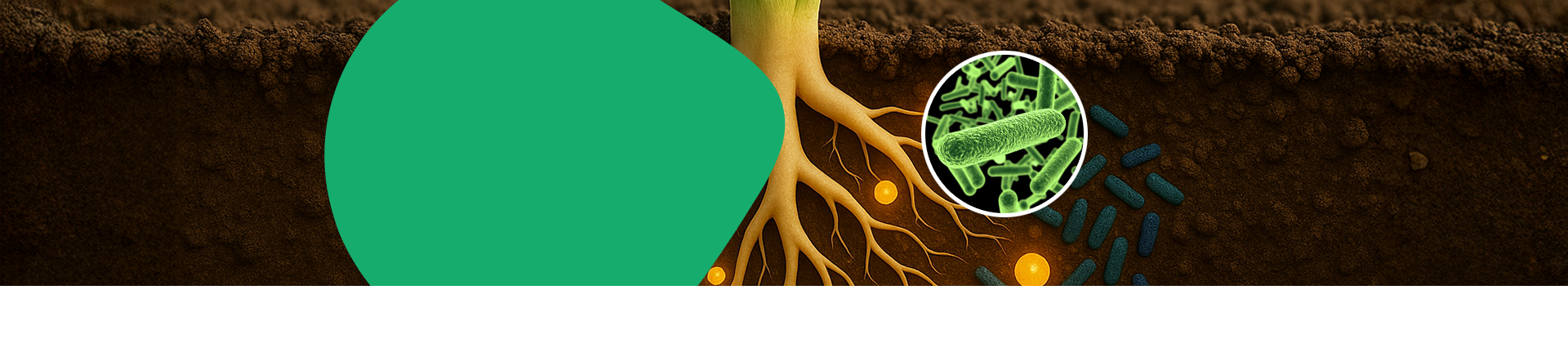
Microbial biostimulants consist of living microorganisms such as bacteria, fungi, and endophytes that positively interact with plant roots or the soil environment. Commonly used groups include Plant Growth-Promoting Rhizobacteria (PGPR), mycorrhizal fungi, Trichoderma species, endophytic bacteria, and nutrient-mobilizing microorganisms. These microbes colonize the rhizosphere or internal plant tissues and support natural processes such as nutrient uptake, root growth, water management, and stress response.
How Microbial Biostimulants Work – Mechanisms and Interactions
The functioning of microbial biostimulants is based on natural interactions between microorganisms and plant roots. These interactions vary by strain and crop but often follow similar biological principles that contribute to a more efficient cultivation system.
Rhizosphere Colonization and Root Interaction
Microorganisms establish themselves around the roots and form a stable microbiome that supports the plant. This leads to improved root branching, more efficient absorption of water and nutrients, and more active soil life. The interaction between microbes and roots forms the basis of many biostimulating effects.
Nutrient Mobilization and Mineralization
Certain bacteria convert organic or bound nutrients into plant-available forms. Phosphate-mobilizing bacteria, nitrogen-fixing microbes, and potassium-mobilizing organisms are commonly used examples. These processes support more efficient use of fertilizers.
Production of Natural Metabolites
Microorganisms produce metabolites such as siderophores, enzymes, organic acids, and signaling substances that support plant processes. These substances can stimulate root growth, improve mineral uptake, and help the plant in stress management.
Support Against Abiotic Stress
Microbial biostimulants are used worldwide to help plants cope with drought, salt stress, heat, cold, and low soil fertility. They optimize water uptake, improve root architecture, and modulate stress-related processes in the plant.
Overview Table – Mechanisms of Microbial Biostimulants
The table below shows the main mechanisms of action of microbial biostimulants and their cultivation value.
| Mechanism | Effect | Cultivation Value |
|---|---|---|
| Nutrient Mobilization | More available minerals | Higher yield certainty |
| Rhizosphere Activation | Improved root health | More stress resilience |
| Priming ISR/SAR | Faster stress adaptation | Premium crop performance |
| Water Uptake Optimization | More efficient hydration | More drought tolerance |
| Synergy with Biostimulants | Accelerated plant response | Next-generation formulations |
Application of Microbial Biostimulants in Different Crops
The use of microbial biostimulants varies by sector, but the underlying principles remain the same: support for root development, optimization of nutrient uptake, and improvement of stress resilience.
Vegetable Cultivation in Open Field and Greenhouse
Microbial biostimulants are widely used in tomato, pepper, cucumber, lettuce, cabbage crops, root vegetables, leek, onion, and garlic. Growers use them to strengthen root development, utilize fertilizers more efficiently, and improve crop uniformity.
Fruit Cultivation and Orchards
In fruit cultivation, microbial biostimulants are applied in apple, pear, citrus, grapes, berries, and soft fruit. They are often used at young planting, during stress periods, or in soils with low phosphate or organic matter availability.
Arable Crops
Applications in potato, corn, wheat, barley, rye, and soy are emerging worldwide. The focus is on root development, nutrient efficiency, and stress management, especially in regions with intensive cultivation.
Floriculture and Tree Nursery
In floriculture and tree nurseries, microbial biostimulants are used to support rooting of cuttings, optimize plant resilience, and promote uniform growth.
Worldwide Use of Microbial Biostimulants
The global market for microbial biostimulants is growing rapidly. Different regions have unique drivers and application areas.
Europe
Europe is one of the largest markets for microbial biostimulants. Demand is driven by sustainable agriculture, stricter regulations, and an increasing focus on soil health. The Netherlands, Spain, Italy, France, and Germany are key regions.
North America
In the United States and Canada, the market is growing due to large arable areas, interest in regenerative agriculture, and strong R&D investments. Applications in corn, soy, potato, and specialty crops are dominant.
South America
Brazil, Argentina, and Chile are among the fastest-growing markets. Intensive cultivation of soy, corn, and sugarcane and a large export-oriented fruit sector stimulate demand.
Asia and China
In Asia, demand is growing due to high population pressure on agricultural production, intensive vegetable and rice cultivation, and increasing adoption of modern cultivation technologies. China is investing heavily in microbial technologies.
What Producers and Distributors Can Achieve with Microbial Biostimulants
For B2B companies, microbial biostimulants offer opportunities on multiple levels, ranging from portfolio expansion to market positioning.
Portfolio Expansion with High-Quality Technology
Microbial biostimulants are attractive for producers and distributors who want to offer innovative products, respond to global demand for sustainable solutions, and differentiate their assortment.
Commercial Opportunities in Fast-Growing Markets
The market is growing strongly in specialty crops, greenhouse horticulture, export-oriented fruit cultivation, and regenerative agriculture. B2B companies can respond to international trends.
Opportunity for Custom Formulations
Many producers are looking for specific strains, blends for certain crops, and compatibility with fertilizers or substrates. Microbial biostimulants offer flexibility in formulation and positioning.
Formulation and Product Development
The development of microbial biostimulants requires attention to stability, carriers, compatibility, and viability of microorganisms.
Carriers and Formulation Types
Common forms are powders (WP, SP), liquid suspensions, micro-encapsulated formulations, and granulate forms for soil application.
Stability and Viability
Important considerations are protection against UV, temperature stability, osmosis resistance, and compatibility with fertilizers.
Application Methods
Microbial biostimulants are applied via seed coating, drip irrigation, soil application, substrate mixtures, and root dipping in young plants.
Microbial Biostimulants in Sustainable Agriculture
Microbial biostimulants play an important role in sustainable cultivation systems. They support more efficient use of nutrients, improvement of soil structure, stimulation of biodiversity, and optimization of water use. They are integrated into organic cultivation, regenerative agriculture, precision agriculture, and integrated cultivation systems.
Conclusion: Strategic Value for the Sector
Microbial biostimulants are an essential part of modern agriculture and horticulture. They support natural processes, improve the efficiency of cultivation systems, and offer producers and distributors commercial opportunities in a rapidly growing market. Due to their broad applicability in different crops and regions, they are a valuable addition to any professional product portfolio.
Disclaimer: This text is for informational purposes only. The described functions and applications of microbial biostimulants are general in nature and do not constitute product claims. Results may vary depending on crop, cultivation conditions, and product formulation.