How Does Silicon Application Influence the Root Architecture of Crops?
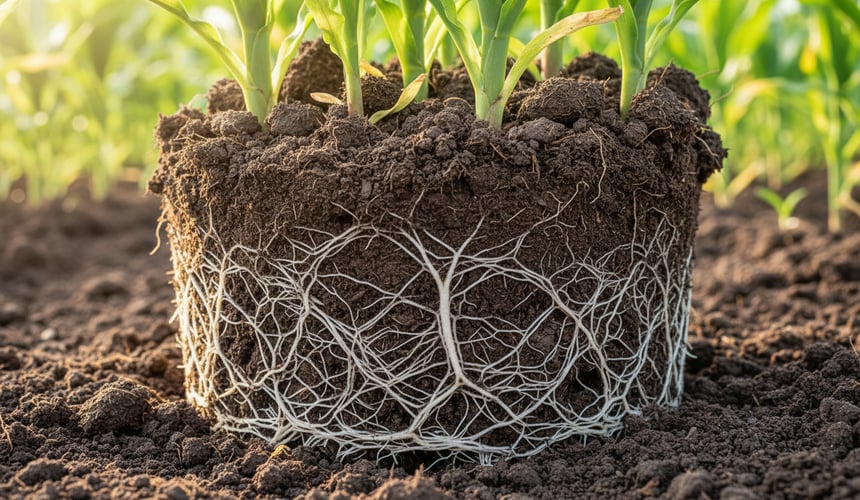
The architecture of a crop's root system plays a fundamental role in its ability to acquire water and essential nutrients from the soil. Recent observations suggest that the application of silicon (Si) can modify this architecture, potentially leading to a more robust and efficient root system, especially under various environmental pressures. Understanding these changes provides insight into how silicon might support plant development and resource management.
Cropenta Insight
Silicon's impact on root architecture is a critical consideration for fertilizer and biostimulant professionals. The physiological mechanism involves changes in root cell structure and development, which can contribute to more efficient nutrient and water uptake.
Silicon's Influence on Root Growth and Development
Silicon is recognized for its role in promoting root growth and development across various crop species. Studies indicate that silicon application may increase both the fresh and dry weight of roots [1]. This suggests a general stimulatory effect on root biomass accumulation, which can result in a larger physical presence within the soil profile. The primary study observed these effects across diverse crop species under varying conditions, highlighting a consistent influence of silicon on root systems.
Beyond overall biomass, silicon has been observed to influence specific aspects of root morphology. For instance, silicon application may lead to improved rhizosheath formation, which is the layer of soil adhering to roots due to root exudates and root hairs . An increased length and density of root hairs have also been associated with silicon application [2]. These microscopic changes can significantly expand the surface area available for absorption, potentially allowing the plant to explore a greater volume of soil for water and nutrients.
Implications for Nutrient and Water Acquisition
The changes in root architecture influenced by silicon application are often linked to enhanced nutrient and water acquisition. A larger, more intricate root system with increased root hair density may allow plants to capture nutrients and water more effectively from the soil [1]. This can be particularly valuable in environments where nutrient availability is limited or water is scarce. Silicon's role in this context extends to favoring the uptake of these critical resources.
Furthermore, silicon inputs to soils may modulate nutrient availability by influencing soil structure, acidity, and cation exchange balances [3]. This indirect effect on the soil environment can complement the direct physiological changes in the root system, creating more favorable conditions for nutrient access. The application of silicon via roots has also been reported to influence plant health, nutrient assimilation, and overall physiology [4].
Conclusion
Silicon application has been associated with modifications in crop root architecture, leading to increased root biomass, enhanced rhizosheath formation, and greater root hair density. These changes may contribute to improved nutrient and water uptake, potentially supporting crop development, especially under challenging environmental conditions. The physiological mechanisms and agronomic implications of silicon's interaction with root systems continue to be a focus of research.
Technical Summary
Silicon application influences crop root architecture by potentially increasing root fresh and dry weight, improving rhizosheath formation, and enhancing root hair length and density. These structural changes may contribute to more efficient nutrient and water acquisition by plants, particularly under stress conditions.
Disclaimer
This article has been prepared with AI assistance using publicly available sources and is intended solely for general technical and educational purposes. It does not constitute professional advice or recommendations for specific applications. Cropenta makes no warranties regarding the accuracy, completeness or applicability of the information. No rights may be derived from its contents, and Cropenta accepts no liability for its use to the extent permitted by law.
Technical Questions
How does silicon influence water uptake in plants?
Silicon application can indirectly influence water uptake by modifying root architecture, such as increasing root biomass and root hair density. A more extensive and efficient root system allows the plant to explore a larger volume of soil, potentially improving its capacity to acquire water. Additionally, silicon may play a role in transpiration regulation, contributing to improved water-use efficiency.
Can silicon application also impact soil conditions relevant to root growth?
Yes, silicon inputs can influence several soil conditions that are relevant to root growth and nutrient availability. These may include improvements in soil structure, modulation of soil acidity, and effects on cation exchange balances. Such changes can create a more favorable environment for root development and overall plant health, complementing the direct physiological effects of silicon on the roots themselves.
Related articles



Related Products


Looking for something specific?
Our team is there to help you find the right raw materials and solutions for your formulations

