How Sulfate Reductase Regulates Sulfur Assimilation in Crop Plants
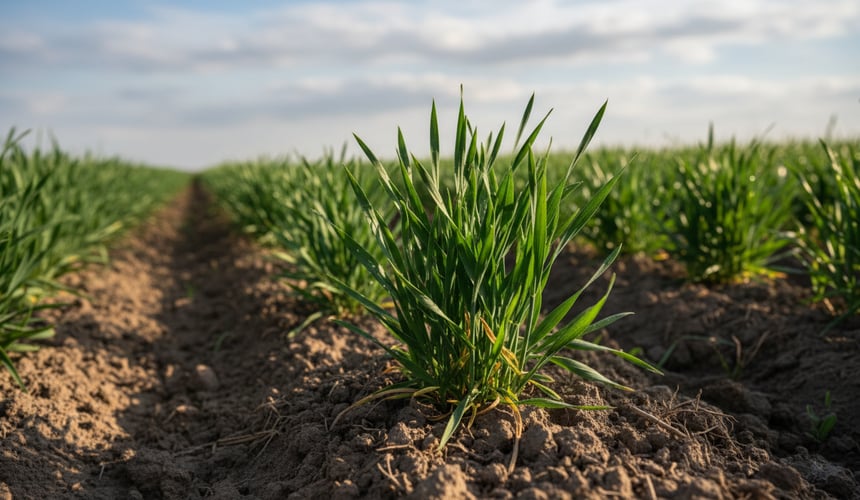
Crop plants absorb sulfur primarily as sulfate from the soil, but this inorganic form cannot be directly used for many essential functions. To become biologically active, sulfate must undergo a series of conversions within the plant. This process, known as sulfur assimilation, is critically regulated by specific enzymes, with sulfate reductase being a key player. Understanding this enzymatic pathway is important for interpreting how plants utilize sulfur and its broader implications for crop health [1].
Cropenta Insight
The regulation of sulfate reductase activity offers a crucial insight into how effectively crops can utilize absorbed sulfur. Recognizing this enzymatic control point helps professionals consider the timing and form of sulfur applications, especially in nutrient efficiency programs. Optimizing sulfur availability and uptake can support the plant's internal conversion processes, which may contribute to overall crop development and metabolic activity.
The Role of Sulfate Reductase in Sulfur Assimilation
Sulfur is an essential macronutrient for plants, involved in the synthesis of amino acids, proteins, and various sulfur-containing metabolites that are important for plant structure and defense mechanisms [2]. The initial step in sulfur assimilation involves the uptake of sulfate (SO₄²⁻) from the soil by roots. Once inside the plant cells, sulfate needs to be reduced to sulfide (S²⁻) before it can be incorporated into organic compounds [1].
Sulfate reductase is an enzyme that catalyzes a critical step in this reduction process. Specifically, it facilitates the conversion of adenosine 5'-phosphosulfate (APS) or 3'-phosphoadenosine 5'-phosphosulfate (PAPS) into sulfite, which is then further reduced to sulfide [3]. This enzymatic action is essential because sulfide is the form of sulfur that plants can incorporate into cysteine, a foundational amino acid for building proteins and other vital sulfur compounds [1].
From Absorption to Utilization: The Sulfur Pathway
The journey of sulfur in a plant begins with sulfate uptake. Once absorbed, sulfate is activated by ATP sulfurylase to form APS. From APS, two pathways may diverge: one leading to sulfate reduction and the other to the synthesis of various sulfate esters. For the reductive pathway, APS can be further phosphorylated to PAPS, or directly reduced by APS reductase. Sulfate reductase then acts on these activated sulfate forms, using electrons donated by compounds like thioredoxin to reduce them to sulfite [1, 3]. Subsequently, sulfite reductase further reduces sulfite to sulfide, which is then integrated into organic molecules through the synthesis of cysteine [1].
The efficiency of sulfate reductase activity can influence the rate at which plants convert inorganic sulfur into usable organic forms. This conversion directly impacts the availability of sulfur for synthesizing essential compounds, including chlorophyll, vitamins, and secondary metabolites [2]. Adequate sulfur assimilation is therefore linked to robust plant growth and various physiological processes [1].
Agronomic Implications for Crop Sulfur Management
The regulatory role of sulfate reductase underscores the importance of balanced sulfur nutrition in crop management. If sulfur assimilation is inefficient due to insufficient enzyme activity or inadequate sulfate supply, plants may experience disruptions in protein synthesis and other sulfur-dependent metabolic pathways. This can affect overall crop development and biomass accumulation [1].
Research into sulfur nutrition has evolved over time, moving from studies in yeast and algae to more complex plant models like Arabidopsis, providing deeper insights into the intricate molecular mechanisms involved in sulfur assimilation [1, 4]. These studies highlight the complex interplay between sulfur availability, uptake, and the internal enzymatic processes that make it biologically active for the plant.
Technical Summary
Sulfate reductase is an enzyme fundamental to sulfur assimilation in crop plants. It catalyzes the reduction of activated sulfate forms to sulfite, a crucial intermediate step for converting absorbed inorganic sulfate into biologically usable sulfide. This process enables the synthesis of essential sulfur-containing compounds such as amino acids and proteins, which are vital for plant growth and metabolic functions. Its activity directly influences how efficiently plants utilize sulfur for overall development.
Disclaimer
This article has been prepared with AI assistance using publicly available sources and is intended solely for general technical and educational purposes. It does not constitute professional advice or recommendations for specific applications. Cropenta makes no warranties regarding the accuracy, completeness or applicability of the information. No rights may be derived from its contents, and Cropenta accepts no liability for its use to the extent permitted by law.
Technical Questions
What is the primary form of sulfur absorbed by crop plants?
Crop plants primarily absorb sulfur from the soil in the inorganic form of sulfate (SO₄²⁻). This is the most readily available form for uptake through the root system before it undergoes various enzymatic transformations within the plant to become biologically active.
Why is sulfur assimilation important for plant health?
Sulfur assimilation is crucial because it converts absorbed inorganic sulfate into organic forms like sulfide, which plants use to synthesize essential amino acids such as cysteine. These amino acids are building blocks for proteins, enzymes, and other vital sulfur-containing compounds important for overall growth, metabolic functions, and plant structure.
What role does ATP sulfurylase play before sulfate reductase activity?
Before sulfate reductase can act, ATP sulfurylase plays a vital initial role by activating sulfate. This enzyme catalyzes the conversion of inorganic sulfate into adenosine 5'-phosphosulfate (APS), an energized intermediate compound. This activation step is necessary to prepare sulfate for subsequent reduction in the assimilation pathway.
Related articles
Related Products



Looking for something specific?
Our team is there to help you find the right raw materials and solutions for your formulations

