How Liquid Fat Blends and Lecithin Improve Pellet Quality
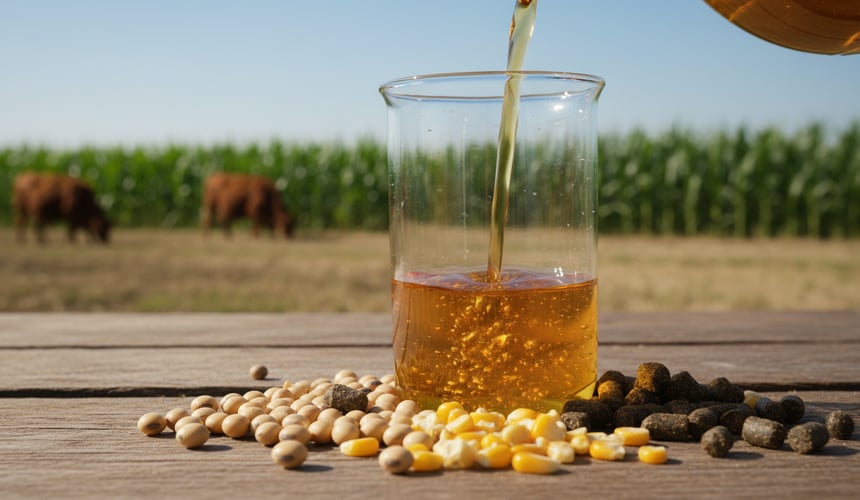
Feed pellet quality is a critical factor in animal nutrition, directly impacting feed intake, nutrient utilization, and overall animal performance. Pellets that are durable and resistant to breakage help minimize feed waste and ensure consistent nutrient delivery. Achieving high pellet quality involves careful consideration of feed formulation and processing parameters, with certain ingredients playing a key role in influencing pellet integrity. Among these, liquid fat blends and lecithin are recognized for their beneficial contributions to the physical properties of compound feed pellets.
Cropenta Insight
Understanding the interplay between liquid fat blends and lecithin in feed pelleting is vital for formulators. The emulsifying properties of lecithin can help integrate fats more effectively into the feed matrix, which in turn influences the binding characteristics and lubrication during processing, ultimately contributing to better pellet durability. This technical distinction helps compare relevant feed ingredient solution categories when optimizing pellet quality.
The Role of Fats in Feed Pelleting
Fats are essential components in animal feed, providing concentrated energy and improving palatability. However, their inclusion in the pelleting process needs careful management. While fats can act as lubricants, facilitating passage through the pellet die, excessive levels may weaken pellet structure by reducing particle-to-particle binding. Research indicates that both heat processing and the inclusion level of fat are significant factors influencing pellet quality [1].
Liquid fat blends, which can be incorporated into feed formulations, are often used to achieve desired energy densities. The physical properties of these fats, such as viscosity and melting point, can influence how they interact with other feed ingredients during conditioning and pelleting. Proper dispersion of fat throughout the feed mash is important to leverage its lubricating effects without compromising the binding capacity of starches and proteins present in the formulation.
Lecithin and its Functionality in Pelleting
Lecithin, a natural phospholipid, is known for its emulsifying properties. In feed applications, it may play a role in fat digestion and nutrient absorption [2]. Its functionality extends to feed processing, where it can be involved in binding and lubrication, thereby influencing pellet quality. In the context of pelleting, lecithin's surface-active properties can help create a more homogeneous mixture of fat and other feed components, potentially leading to a more cohesive pellet structure.
When liquid fat blends are used, lecithin can facilitate better emulsification of the fats within the feed mash. This improved dispersion allows the fats to lubricate the die more effectively, reducing friction and energy consumption during pelleting. At the same time, better integration of fats may prevent them from interfering with the natural binding mechanisms of other ingredients, such as gelatinized starches and denatured proteins, which are crucial for pellet durability. One study showed that adding calcium salts of long-chain fatty acids (CaLS) to diets with soybean oil significantly influenced pellet hardness and durability, suggesting the importance of fat form and interaction with other components [3].
Interactions of Liquid Fat Blends and Lecithin
The combination of liquid fat blends and lecithin can offer synergistic benefits for pellet quality. Lecithin's ability to emulsify fats means that higher levels of fat can potentially be incorporated into the feed with less negative impact on pellet durability. By promoting a finer dispersion of fat droplets, lecithin helps ensure that the fat acts more as a lubricant and less as a barrier between binding particles. This can lead to pellets that are both harder and more resistant to breakage.
Moreover, the improved lubrication from the emulsified fat-lecithin mixture may contribute to reduced wear on pellet mill dies and rollers, potentially extending equipment lifespan and influencing operational efficiency. Longer conditioner retention times are known to influence pellet quality by increasing heat and moisture absorption, which helps activate natural binders, but this can also decrease throughput [4]. By optimizing fat distribution with lecithin, feed manufacturers may achieve desired pellet quality at more efficient processing speeds.
Practical Implications for Feed Manufacturers
For feed manufacturers, understanding these interactions can lead to optimized formulations and processing conditions. Incorporating liquid fat blends with lecithin may offer a pathway to influence pellet durability, reduce fines during handling and transport, and potentially decrease energy consumption in the pellet mill. This approach can contribute to a more consistent feed product, which is beneficial for livestock producers aiming for efficient animal performance.
Careful consideration of the type and inclusion level of both the liquid fat blend and lecithin is essential. The specific composition of the fat blend (e.g., fatty acid profile, free fatty acid content) and the lecithin (e.g., phospholipid concentration) can influence their effectiveness. Adjustments to conditioner temperature, moisture content, and die specifications may also be necessary to fully capitalize on the benefits of these ingredients.
Technical Summary
Liquid fat blends and lecithin can collectively influence feed pellet quality by affecting lubrication and binding during the pelleting process. Lecithin's emulsifying properties help to disperse fats more uniformly throughout the feed mash, mitigating the potential negative impact of fat on pellet integrity. This synergistic action promotes stronger, more durable pellets, influences wear on equipment, and can optimize manufacturing efficiency in compound feed production.
Disclaimer
This article has been prepared with AI assistance using publicly available sources and is intended solely for general technical and educational purposes. It does not constitute professional advice or recommendations for specific applications. Cropenta makes no warranties regarding the accuracy, completeness or applicability of the information. No rights may be derived from its contents, and Cropenta accepts no liability for its use to the extent permitted by law.
Technical Questions
How do different types of liquid fat blends influence pellet quality when combined with lecithin?
The fatty acid composition and free fatty acid content of liquid fat blends can influence their interaction with lecithin. Blends with a higher proportion of unsaturated fatty acids may disperse differently than saturated ones. Lecithin's emulsifying action is crucial for integrating these diverse fat types, ensuring they lubricate the die effectively without weakening the pellet structure, thereby influencing optimal pellet durability.
What processing parameters are most critical when using lecithin with liquid fat blends for influencing optimal pellet quality?
Key processing parameters include conditioner temperature and retention time, as well as the moisture content of the mash. Adequate heat and moisture are needed to gelatinize starches and denature proteins, which are natural binders. When using lecithin with liquid fat blends, these parameters must be balanced to ensure proper fat emulsification and ingredient activation, maximizing the binding and lubricating effects for influencing pellet quality.
Can lecithin inclusion influence the stability of fats in liquid fat blends within the feed matrix?
Lecithin, as an emulsifier, can influence the oxidative stability of fats by improving their dispersion and reducing exposure to oxygen within the feed matrix. This can be particularly relevant in liquid fat blends, where a more homogeneous mixture created by lecithin may help to minimize lipid oxidation, thus preserving the energy value and overall quality of the fat over time in the finished feed.
Related articles

Related Products


Looking for something specific?
Our team is there to help you find the right raw materials and solutions for your formulations

