How Glycine Betaine Influences the Antioxidant Defense System in Plants
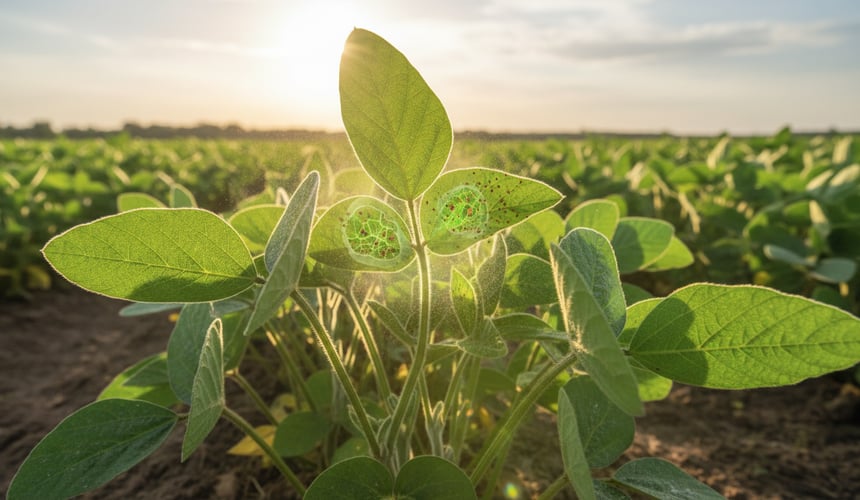
Plants frequently encounter environmental challenges such as salinity, drought, and extreme temperatures, which can induce oxidative stress. Oxidative stress is characterized by an imbalance between the production of reactive oxygen species (ROS) and a plant's ability to detoxify these harmful molecules. Glycine betaine, a compatible solute, is well-known for its role in osmotic adjustment, helping to maintain cellular turgor and water balance under stress conditions. Beyond this primary function, recent research suggests that glycine betaine also plays a significant part in enhancing the plant's internal antioxidant defense system, which is crucial for neutralizing ROS and preserving cellular integrity [1].
Cropenta Insight
Understanding how glycine betaine supports the antioxidant defense system is valuable for professionals evaluating biostimulant raw materials. This mechanism suggests that glycine betaine may offer benefits beyond osmotic regulation, providing a more comprehensive approach to crop resilience under various environmental pressures. For manufacturers and distributors, this insight can inform the development and positioning of specialized biostimulant formulations.
Glycine Betaine and Oxidative Stress Mitigation
Under stressful conditions, plants generate various reactive oxygen species, including superoxide radicals, hydrogen peroxide, and hydroxyl radicals. While ROS are natural byproducts of metabolism and can act as signaling molecules at low concentrations, their overaccumulation can lead to cellular damage, impairing photosynthesis, lipid membranes, proteins, and nucleic acids [2]. Plants have evolved sophisticated antioxidant defense systems to counteract these effects, comprising both enzymatic and non-enzymatic components.
Enzymatic antioxidants include superoxide dismutase (SOD), catalase (CAT), ascorbate peroxidase (APX), and glutathione reductase (GR). These enzymes work synergistically to convert ROS into less harmful molecules. For instance, SOD dismutates superoxide into hydrogen peroxide, which is then further reduced by CAT or APX. Non-enzymatic antioxidants, such as ascorbic acid (vitamin C), glutathione, tocopherols (vitamin E), and carotenoids, directly scavenge ROS [2, 3].
Influence on Antioxidant Enzymes
Studies indicate that the application of glycine betaine can modulate the activity of key antioxidant enzymes in plants. For example, foliar application of glycine betaine to onion plants exposed to salt stress has been observed to enhance the activity of antioxidant defense systems. This suggests that glycine betaine may not only help with osmotic balance but also directly or indirectly support the plant's capacity to detoxify ROS [1]. This activation could be a critical mechanism by which glycine betaine contributes to improved plant performance under challenging environmental conditions.
Interaction with Non-Enzymatic Antioxidants
Beyond enzymatic activity, glycine betaine's influence may extend to the levels of non-enzymatic antioxidants. While research continues to elucidate the precise pathways, it is plausible that by stabilizing cellular structures and maintaining metabolic function under stress, glycine betaine helps preserve or even increase the availability of these crucial ROS scavengers. The overall effect is a more robust cellular environment better equipped to manage oxidative damage.
Agronomic Implications
The role of glycine betaine in influencing the antioxidant defense system has significant implications for agronomy. By supporting these internal defense mechanisms, glycine betaine may assist plants in maintaining physiological function and mitigating stress-induced damage. This understanding could inform strategies for crop management, particularly in regions prone to abiotic stresses where a plant's natural resilience can be a critical factor in cultivation success.
Technical Summary
Glycine betaine contributes to plants' capacity for enduring stress by supporting the intrinsic antioxidant defense system. It is associated with heightened activity of key enzymatic antioxidants like superoxide dismutase and catalase, helping plants manage reactive oxygen species under abiotic stress conditions. This goes beyond its known role in osmotic adjustment, suggesting a broader physiological influence on plant endurance and cellular protection.
Disclaimer
This article has been prepared with AI assistance using publicly available sources and is intended solely for general technical and educational purposes. It does not constitute professional advice or recommendations for specific applications. Cropenta makes no warranties regarding the accuracy, completeness or applicability of the information. No rights may be derived from its contents, and Cropenta accepts no liability for its use to the extent permitted by law.
Technical Questions
Does glycine betaine directly scavenge reactive oxygen species?
While glycine betaine is primarily an osmoprotectant, its main role in antioxidant defense is not direct ROS scavenging. Instead, it is understood to support the plant's own enzymatic and non-enzymatic antioxidant systems, helping to stabilize cellular components and maintain the efficiency of these internal detoxification mechanisms under stress conditions.
How does exogenous application of glycine betaine affect plant physiology differently from endogenous production?
Many plants naturally produce glycine betaine, but its synthesis can be energy-intensive. Exogenous application provides an external source, potentially reducing the metabolic load on the plant during stress and allowing it to allocate resources elsewhere. The physiological effects, however, are generally similar, aiming to maintain osmotic balance and cellular integrity.
Related articles

Related Products


Looking for something specific?
Our team is there to help you find the right raw materials and solutions for your formulations

