How Different Processing Methods Influence Full-Fat Soybean Protein Quality
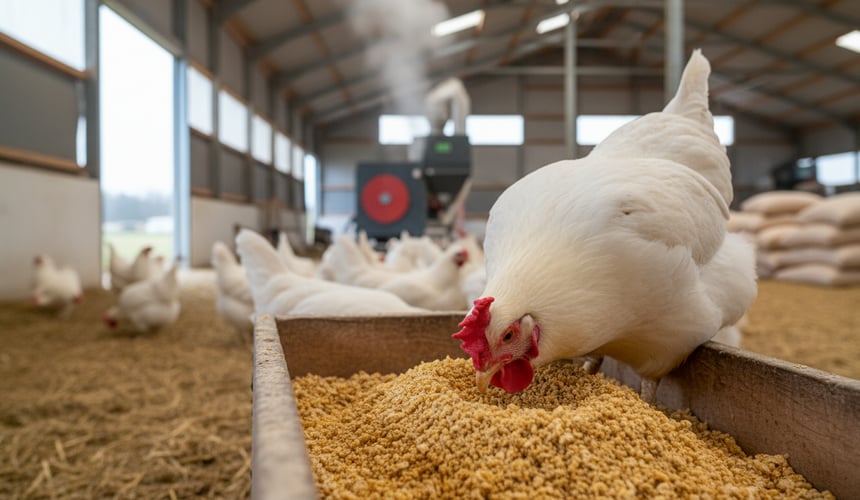
Full-fat soybeans are a dense source of both protein and energy, making them a key ingredient in animal feed formulations. Their nutritional contribution is significant, providing essential amino acids and lipids. However, raw soybeans contain anti-nutritional factors, such as trypsin inhibitors, that can reduce nutrient digestibility and overall feed efficiency. Consequently, processing is essential to deactivate these compounds and enhance the nutritional value of full-fat soybeans.
Cropenta Insight
Understanding how different processing methods affect full-fat soybean protein quality is crucial for feed formulators. Variations in heat treatment, such as during extrusion or toasting, can significantly influence the availability of essential amino acids and the deactivation of anti-nutritional factors. For professional animal nutrition applications, assessing the processing history of full-fat soybean ingredients helps to accurately predict nutrient contribution and manage formulation costs for Young Animal Nutrition.
The Role of Processing in Full-Fat Soybean Protein Quality
The protein quality of soy products is widely recognized as high, but it is highly dependent on effective processing. Research confirms that processing and post-processing conditions can significantly influence protein quality scores [1, 2]. Raw soybeans contain anti-nutritional factors, primarily trypsin inhibitors, which can interfere with protein digestion. Proper heat treatment is necessary to reduce the activity of these inhibitors, thereby making protein and amino acids more available for digestion and absorption by animals. The goal is to achieve adequate heat treatment without causing damage to the protein itself, which can occur with excessive heat.
Extrusion and Toasting: Distinct Thermal Treatments
Two common thermal processing methods for full-fat soybeans are extrusion and toasting. While both involve heat, their application and effects on the soybean matrix differ. Extrusion involves subjecting soybeans to high temperature, pressure, and shear forces for a short duration. This process typically leads to a more significant breakdown of the soybean's cell structure, gelatinization of starches, and denaturation of proteins. These changes can collectively improve nutrient digestibility and energy availability [3]. Toasting, on the other hand, involves heating soybeans at lower temperatures for longer periods, often in a dryer or roaster. This method primarily focuses on reducing anti-nutritional factors and can also affect protein structure, but generally with less severe structural disruption compared to extrusion.
Impact on Protein Digestibility and Anti-Nutritional Factors
The primary objective of processing full-fat soybeans is to enhance protein digestibility by deactivating anti-nutritional factors. Studies indicate that both extrusion and toasting can effectively reduce trypsin inhibitor activity [3]. However, the extent of this reduction and the subsequent impact on amino acid digestibility can vary. Properly extruded full-fat soybeans may exhibit superior amino acid digestibility compared to inadequately toasted soybeans, as the intense, short-duration heat and mechanical forces of extrusion can more thoroughly denature trypsin inhibitors and make protein more accessible to digestive enzymes. Over-processing, however, regardless of the method, can lead to Maillard reactions, which bind amino acids, particularly lysine, making them unavailable for absorption. This emphasizes the importance of precise control over processing parameters to optimize protein and amino acid availability.
Nutritional Implications for Animal Feed Formulation
For feed formulators, understanding the processing method of full-fat soybeans is crucial for accurate nutritional evaluation. The choice between extruded and toasted full-fat soybeans may depend on the specific animal species, their physiological requirements, and the desired balance of protein and energy in the diet. For instance, in diets for young animals or high-producing livestock, where amino acid availability is critical, extruded full-fat soybeans with their potentially higher amino acid digestibility might be preferred. The open cell structure created by extrusion may also enhance the availability of the soybean oil, contributing to the energy value. Careful consideration of these factors allows formulators to optimize feed efficiency and animal performance, ensuring that the full nutritional potential of full-fat soybeans is realized while minimizing the impact of anti-nutritional factors [4].
Technical Summary
Processing methods such as extrusion and toasting significantly influence the protein quality and amino acid digestibility of full-fat soybeans by deactivating anti-nutritional factors like trypsin inhibitors. Extrusion typically offers a more thorough reduction of these factors and improved nutrient availability due to intense heat and mechanical forces. Careful control of processing parameters is essential to optimize protein quality and prevent amino acid damage, impacting feed formulation and animal nutrition.
Disclaimer
This article has been prepared with AI assistance using publicly available sources and is intended solely for general technical and educational purposes. It does not constitute professional advice or recommendations for specific applications. Cropenta makes no warranties regarding the accuracy, completeness or applicability of the information. No rights may be derived from its contents, and Cropenta accepts no liability for its use to the extent permitted by law.
Technical Questions
How does anti-nutritional factor reduction differ between extrusion and toasting?
Extrusion uses high temperature, pressure, and shear to rapidly denature anti-nutritional factors like trypsin inhibitors, often resulting in a more complete reduction. Toasting, employing lower temperatures over longer periods, also reduces these factors, but its effectiveness can be more variable depending on precise temperature and duration control. Both methods aim to enhance protein digestibility by minimizing the impact of these compounds.
What is the primary risk of over-processing full-fat soybeans?
The primary risk of over-processing full-fat soybeans, whether by extrusion or toasting, is the occurrence of Maillard reactions. These reactions can reduce the availability of essential amino acids, particularly lysine, by binding them into indigestible complexes. This diminishes the overall protein quality and nutritional value of the ingredient, impacting feed formulation efficiency.
How can feed formulators assess the protein quality of processed full-fat soybeans?
Feed formulators can assess protein quality by evaluating amino acid profiles and digestibility data. Lysine digestibility is a key indicator, as lysine is sensitive to heat damage. Monitoring the residual activity of trypsin inhibitors also provides insight into processing effectiveness. These analytical measures, combined with understanding the processing history, inform accurate nutritional value assignment in formulations.
Related articles

Related Products

Looking for something specific?
Our team is there to help you find the right raw materials and solutions for your formulations

