Lecithin's Role in Fat Emulsification and Digestibility in Feeds
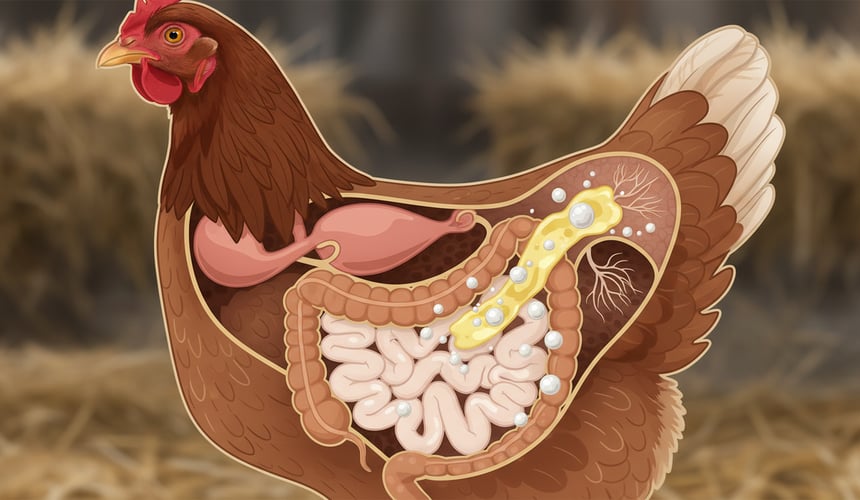
Efficient utilization of dietary fats is crucial for energy provision in animal feed formulations. Fats are concentrated energy sources, but their digestion and absorption can be complex due to their hydrophobic nature. Emulsifiers like lecithin are incorporated into animal feeds to address this challenge, aiming to support the breakdown and uptake of lipids in the digestive tract. This article explores how lecithin facilitates fat emulsification and contributes to fat digestibility and energy utilization in animal diets.
Cropenta Insight
Understanding how lecithin influences fat emulsification is key to its application in feed. Formulators often assess the specific phospholipid profile of lecithin, as this can affect its efficacy in creating stable fat droplets in the gut. This ingredient characteristic is central to predicting its impact on fat digestibility and overall energy contribution in compound feeds, allowing for precise formulation adjustments to support nutritional targets.
The Mechanism of Fat Emulsification
Dietary fats, primarily triglycerides, are insoluble in water. For digestion to occur, they must first be broken down into smaller droplets, a process known as emulsification. This increases the surface area for lipase enzymes to act upon. In the digestive tract, natural emulsifiers like bile salts aid this process. Lecithin, a phospholipid, functions similarly by having both hydrophobic and hydrophilic properties. This amphiphilic structure allows it to position itself at the interface between fat and water, stabilizing fat droplets and preventing them from coalescing [1].
When lecithin is added to feed, it helps create a finer, more stable emulsion of dietary fats in the gastrointestinal tract. This improved emulsification facilitates the enzymatic hydrolysis of triglycerides by pancreatic lipase into monoglycerides and free fatty acids. These smaller, emulsified fat components are then more readily absorbed across the intestinal wall, potentially supporting overall fat digestibility [1].
Associated Digestibility and Energy Utilization
Research indicates that lecithin inclusion in animal diets is associated with nutrient digestibility. A study focusing on its application in ducks showed consistent results in supporting overall nutrient uptake [2]. While the primary study did not detail specific fat digestibility percentages across species, the general trend observed suggests a positive impact on the utilization of dietary components.
Beyond general nutrient digestibility, the enhanced emulsification may contribute to fat absorption. This is particularly relevant for species with relatively less developed digestive systems or those under certain physiological stresses. In swine, for instance, the use of lysolecithin, a hydrolyzed form of lecithin, has been associated with fat and nutrient digestibility, which may support growth rates and efficiency in growing pigs [3]. Similarly, in broiler chickens, supplementing low-energy diets with lysolecithin may play a role in supporting emulsifying actions [4].
Lecithin in Poultry and Swine Nutrition
The role of lecithin is particularly noted in poultry and swine diets, where fat is a critical energy source. In broiler chickens, studies suggest that lecithin may contribute to lower cholesterol levels [2]. Molecular studies further reinforce the potential of emulsifiers to influence fat digestion, lipid metabolism, and overall productivity in poultry [1]. For young animals, such as piglets, whose endogenous enzyme production and bile salt secretion might not yet be fully mature, supplemental lecithin can be particularly valuable in supporting efficient fat digestion.
In practical feed formulation, incorporating lecithin can allow for more flexible use of various fat sources, potentially including those that are harder to digest without emulsifier assistance. By contributing to the metabolizable energy derived from fats, lecithin contributes to the overall energy value of the compound feed, supporting animal performance without necessarily increasing total fat inclusion.
Technical Summary
Lecithin, acting as an emulsifier, aids in breaking down dietary fats into smaller, more stable droplets within the animal digestive tract. This enhanced emulsification is associated with an increased surface area available for enzymatic digestion, leading to fat digestibility and absorption. Consequently, animals, particularly poultry and and swine, may extract more metabolizable energy from their feed, supporting efficient nutrient utilization and overall performance.
Disclaimer
This article has been prepared with AI assistance using publicly available sources and is intended solely for general technical and educational purposes. It does not constitute professional advice or recommendations for specific applications. Cropenta makes no warranties regarding the accuracy, completeness or applicability of the information. No rights may be derived from its contents, and Cropenta accepts no liability for its use to the extent permitted by law.
Technical Questions
What is the primary role of lecithin as an emulsifier in animal feed?
Lecithin's primary role is to create a stable emulsion of dietary fats in the gastrointestinal tract. Its amphiphilic structure helps disperse hydrophobic fat molecules in the aqueous digestive environment, forming smaller droplets. This increases the surface area for lipase enzymes to act upon, which is crucial for efficient fat breakdown and subsequent nutrient absorption in the gut.
How does the phospholipid content in lecithin affect its emulsifying performance?
The specific phospholipid composition of lecithin directly influences its emulsifying properties. Different phospholipids, such as phosphatidylcholine and phosphatidylethanolamine, have varying degrees of emulsifying power. A higher concentration of certain phospholipids can lead to more stable and finer fat emulsions, which may contribute to superior fat digestibility and energy extraction from the feed.
Are there differences in how lecithin affects fat digestion in monogastric versus ruminant animals?
Lecithin primarily benefits monogastric animals like poultry and swine by enhancing fat emulsification in the small intestine, where most fat digestion occurs. In ruminants, fat digestion is more complex due to microbial activity in the rumen. While some phospholipids may offer benefits, the primary mechanisms and impact of lecithin on fat digestibility differ significantly between these animal types.
How can feed manufacturers ensure the stability of lecithin in compound feeds?
Ensuring lecithin's stability in compound feeds involves protecting it from oxidation. Lecithin contains unsaturated fatty acids which can be prone to oxidation. Manufacturers can mitigate this by incorporating antioxidants, using appropriate packaging, and optimizing storage conditions to minimize exposure to heat, light, and oxygen, thereby preserving its functional properties and efficacy.
Related articles


Related Products


Looking for something specific?
Our team is there to help you find the right raw materials and solutions for your formulations

