How Does Silicon Influence the Stability of Photosynthesis Under Stress?
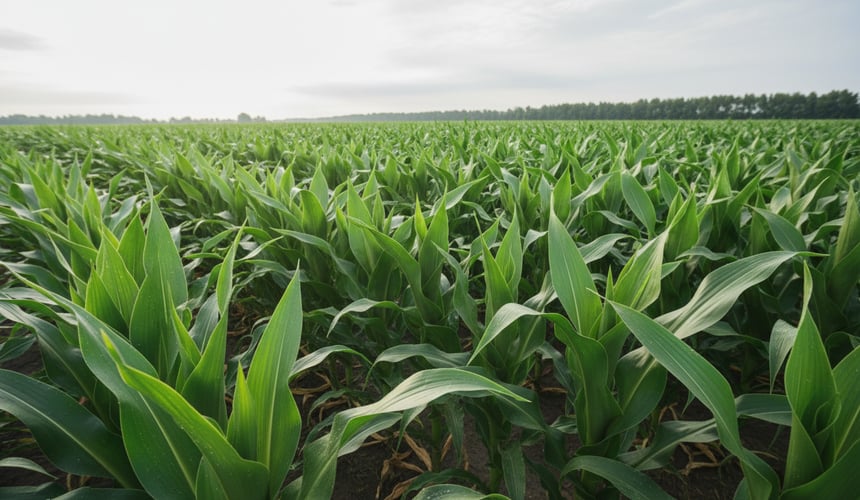
Photosynthesis, the fundamental process by which plants convert light energy into chemical energy, is highly sensitive to environmental stressors. Conditions such as drought, extreme temperatures, and salinity can disrupt the photosynthetic machinery, leading to reduced efficiency and compromised plant growth. While not universally classified as an essential nutrient, silicon (Si) has emerged as a significant modulator of photosynthesis and stress resilience in many plant species [1]. Understanding how silicon supports photosynthetic stability under stress offers valuable insights for agronomic practices aimed at enhancing crop performance in challenging environments.
Cropenta Insight
Silicon's ability to support photosynthesis under stress is a critical factor for crop resilience, especially in environments facing increasing abiotic pressures. Understanding the mechanisms, such as enhanced nutrient uptake and protection of photosynthetic machinery, allows for more targeted approaches in crop nutrition.
Silicon's Influence on Photosynthetic Processes
Silicon's contribution to photosynthetic stability under stress involves several physiological and biochemical mechanisms. Research indicates that silicon can help protect the photosynthetic machinery from various forms of stress-induced damage [2]. This includes maintaining the structural integrity of chloroplasts, the organelles responsible for photosynthesis, and supporting the function of key photosynthetic pigments like chlorophyll.
Under stressful conditions, plants often experience oxidative stress, where an imbalance between reactive oxygen species (ROS) production and antioxidant defense mechanisms leads to cellular damage. Silicon application has been associated with enhanced antioxidant enzyme activity, which may help scavenge ROS and mitigate oxidative damage to photosynthetic components [3]. By reinforcing the plant's natural defense systems, silicon helps to safeguard the delicate structures involved in light capture and energy conversion.
Modulating Nutrient Dynamics and Water Relations
Beyond direct protection, silicon also appears to influence plant nutrient dynamics, which are indirectly linked to photosynthetic efficiency. Silicon may support the uptake and distribution of essential macro- and micronutrients vital for photosynthesis [4]. For instance, adequate potassium (K) is crucial for stomatal regulation and enzyme activation within the photosynthetic pathway. Studies suggest that silicon can support plants in managing potassium deficiency, thereby potentially maintaining photosynthetic function [3].
Moreover, silicon is observed to play a role in regulating plant water status, a critical factor for photosynthesis, especially under drought conditions. While the precise mechanisms are complex, silicon deposition in plant tissues can contribute to physical barriers that might influence transpiration rates and overall water-use efficiency [3]. By potentially optimizing water availability and nutrient supply, silicon indirectly supports the continuous operation of the photosynthetic apparatus even when environmental conditions are unfavorable.
Chlorophyll Fluorescence and Photosynthetic Efficiency
Measuring chlorophyll fluorescence is a common technique to assess photosynthetic efficiency and the integrity of the photosynthetic system. Changes in fluorescence parameters can indicate stress-induced damage to photosystem II, a key component of the light-dependent reactions of photosynthesis. In stress-exposed plants, silicon has been associated with the amelioration of negative effects on these parameters, suggesting a role in maintaining the efficiency and stability of photosynthetic processes [2]. This indicates that silicon application may help plants to continue converting light energy effectively, even when faced with environmental challenges.
Technical Summary
Silicon contributes to the stability of photosynthesis under stress by protecting photosynthetic machinery, enhancing antioxidant enzyme activity, and modulating nutrient uptake and water relations. By safeguarding chloroplast integrity and supporting chlorophyll function, silicon may help plants maintain efficient light energy conversion. These mechanisms can enable crops to sustain photosynthetic performance when exposed to abiotic stressors such as drought, heat, and salinity.
Disclaimer
This article has been prepared with AI assistance using publicly available sources and is intended solely for general technical and educational purposes. It does not constitute professional advice or recommendations for specific applications. Cropenta makes no warranties regarding the accuracy, completeness or applicability of the information. No rights may be derived from its contents, and Cropenta accepts no liability for its use to the extent permitted by law.
Technical Questions
What specific types of environmental stress does silicon help plants with regarding photosynthesis?
Silicon may assist plants in maintaining photosynthetic stability under various environmental stresses, including drought, high temperatures, and salinity. These conditions can disrupt water balance, damage cellular components, and induce oxidative stress, all of which compromise photosynthetic efficiency. Silicon's actions are thought to help mitigate these adverse effects on the plant's light-capturing and energy-converting machinery.
How does silicon protect chlorophyll and the photosynthetic machinery?
Silicon's protective actions on chlorophyll and photosynthetic machinery are believed to involve several mechanisms. It may contribute to the structural integrity of chloroplasts and associated pigments, potentially by being deposited in cell walls. Furthermore, silicon is associated with enhancing antioxidant defense systems, which can help neutralize reactive oxygen species that damage chlorophyll and other vital photosynthetic components under stress.
Can silicon application influence other nutrient uptakes that are important for photosynthesis?
Yes, silicon may influence the uptake and distribution of other key nutrients essential for photosynthesis. For instance, it has been observed to modulate the dynamics of macro- and micronutrients, including potassium. Adequate potassium levels are critical for stomatal function and enzyme activity within the photosynthetic pathways, suggesting an indirect benefit of silicon in supporting overall photosynthetic performance through improved nutrient balance.
Related articles


Related Products


Looking for something specific?
Our team is there to help you find the right raw materials and solutions for your formulations

