How Beneficial Microbes Aid Plants Under Environmental Pressure
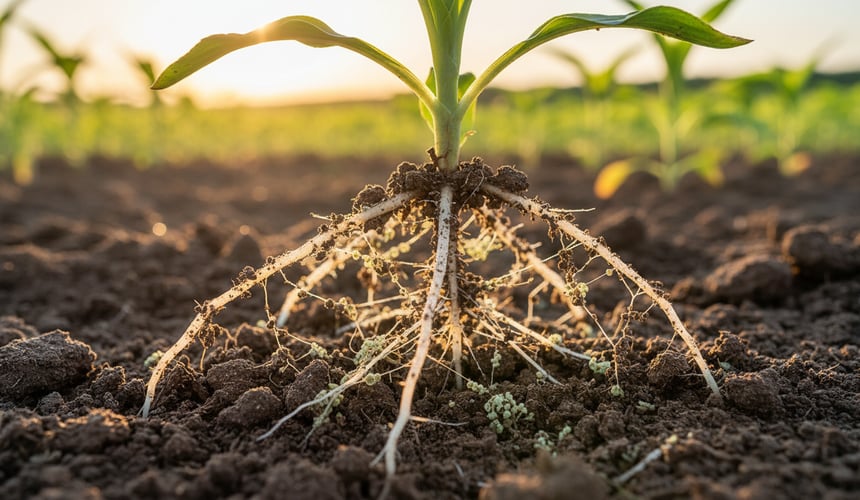
Plants in agricultural systems frequently encounter environmental pressures such as drought, high salinity, and elevated temperatures. These abiotic stressors can impact plant physiological processes, potentially affecting overall crop development. Beneficial soil microbes may contribute to a plant's capacity to tolerate and recover from such conditions by engaging in various plant-microbe interactions within the rhizosphere.
Cropenta Insight
Understanding how beneficial microbes support plants under abiotic pressure is key for professionals assessing microbial technologies. These microorganisms may help plants maintain nutrient uptake and water balance, even when conditions become challenging. Recognizing the specific mechanisms involved helps growers and formulators evaluate suitable microbial inputs that align with targeted crop resilience strategies, especially for enhancing root-driven nutrient conditions and soil biological activity.
Mechanisms of Microbial Support for Plant Resilience
Beneficial soil microbes may assist plants in acquiring essential nutrients by processes such as nitrogen fixation, phosphorus solubilization, and iron chelation, which can be particularly relevant under stress conditions where nutrient availability is restricted [1]. Beyond nutrient acquisition, these microorganisms are also observed to produce phytohormones, reduce oxidative stress within plant tissues, and regulate gene expression associated with stress responses [2]. Such interactions can contribute to the plant's physiological adjustments, helping to maintain cellular functions under adverse environmental conditions.
Enhancing Plant-Microbe Interactions for Abiotic Stress Conditions
The ability of certain microbes to form associations with plant roots, known as root colonization, can be a crucial factor in their potential contribution to plant robustness. These interactions may lead to improved water absorption and more efficient nutrient use, which are critical for plants experiencing water-limited or saline environments [3]. The application of selected microbes to plants or seeds is considered a strategy to assist plants facing various environmental pressures, offering a pathway to support plant resilience in agriculture [4].
Agronomic Implications for Crop Management
The role of microbial activity in the rhizosphere extends to influencing soil biological activity and nutrient cycling, which are foundational aspects of soil fertility. By mediating these processes, beneficial microbes may contribute to a more stable soil environment, allowing plants to better cope with intermittent environmental pressures. Strategies focusing on microbial inputs in agriculture are therefore often considered within the context of comprehensive nutrient management programs designed to support crop development under a variety of field conditions.
Technical Summary
Beneficial soil microbes assist plants in tolerating environmental stressors by enhancing nutrient uptake, producing phytohormones, and modulating plant physiological responses. These microbial activities contribute to improved water absorption, nutrient use efficiency, and overall soil biological activity, supporting crop resilience under conditions such as drought, salinity, and heat pressure in agricultural systems.
Disclaimer
This article has been prepared with AI assistance using publicly available sources and is intended solely for general technical and educational purposes. It does not constitute professional advice or recommendations for specific applications. Cropenta makes no warranties regarding the accuracy, completeness or applicability of the information. No rights may be derived from its contents, and Cropenta accepts no liability for its use to the extent permitted by law.
Technical Questions
How do beneficial microbes directly affect plant nutrient availability under stress?
Beneficial microbes may enhance nutrient availability by processes such as biological nitrogen fixation, phosphorus solubilization, and iron chelation. These mechanisms help convert essential nutrients into forms that plants can more readily absorb, which can be particularly important when environmental stressors restrict nutrient mobility and uptake from the soil.
Are there specific types of abiotic stress conditions where microbes are most effective?
Microbes are observed to support plants under a range of abiotic stressors, including drought, salinity, and heat. Their effectiveness can be related to their ability to assist with water uptake, manage osmotic balance, and reduce oxidative stress, all of which are critical physiological responses to these challenging environmental conditions.
How do microbial phytohormones influence a plant's ability to cope with environmental pressures?
Microbial phytohormones can modulate plant growth and development, including responses to stress. These substances may help plants regulate their internal physiological processes, such as root development and stomatal closure, which are essential for coping with environmental challenges like water scarcity and high temperatures.
Related articles

Related Products


Looking for something specific?
Our team is there to help you find the right raw materials and solutions for your formulations

