How Raw Material Sourcing Affects Nutrient Availability in Fertilizers
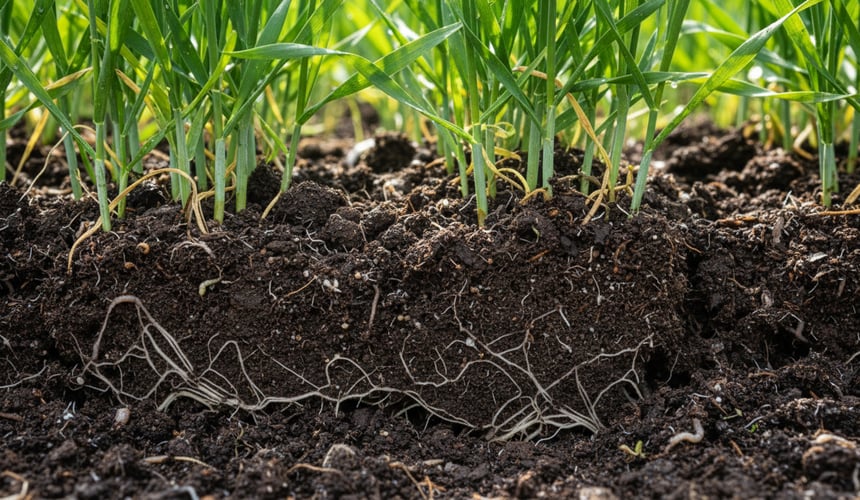
The effectiveness of a fertilizer extends beyond its stated nutrient content; it is deeply rooted in the origin and processing of its raw materials. The way fertilizer ingredients are produced directly influences the chemical forms in which nutrients are presented, which, in turn, dictates their availability and uptake by crops. This interplay between raw material characteristics and nutrient behavior is a central consideration in sustainable plant nutrition, aiming to improve nutrient use efficiency across diverse agricultural systems [1].
Cropenta Insight
Understanding how raw material sourcing shapes nutrient forms is crucial for formulating effective fertilizers. The chemical stability and plant compatibility of sourced ingredients directly influence how nutrients perform in various application methods, from foliar sprays to fertigation systems.
Influence of Raw Material Origin on Nutrient Forms
The journey of a nutrient begins with its raw material source, whether it is a mined mineral, an organic byproduct, or a synthetic compound. Each origin imparts specific characteristics to the nutrient. For instance, phosphorus derived from rock phosphate undergoes various chemical treatments to convert it into plant-available forms like superphosphates. The purity of the original rock phosphate and the efficiency of the conversion process may affect the final product's solubility and the proportion of accessible phosphorus [2].
Similarly, nitrogen sources can vary significantly. While synthetic ammonia-based fertilizers provide highly soluble nitrogen, organic sources like animal manures or plant-based hydrolysates offer nitrogen in more complex forms, such as amino acids and peptides. These organic forms require microbial activity in the soil to break them down into plant-absorbable nitrate or ammonium, influencing their release kinetics and long-term availability [2, 3].
Processing Methods and Nutrient Accessibility
Beyond origin, the processing methods employed for raw materials play a pivotal role in determining nutrient availability. For example, the extraction of seaweed to produce biostimulants involves various techniques—cold, alkaline, or enzymatic extraction. Each method may yield different profiles of bioactive compounds, such as marine polysaccharides or mannitol, which in turn can influence nutrient uptake mechanisms in plants, even if the primary nutrient content is not directly altered [2]. The specific compounds present can affect the plant's physiological responses, which may modify its ability to absorb other nutrients.
The physical processing of raw materials, such as grinding or granulation, also influences nutrient release. Fine particles, for example, often have a larger surface area, which can lead to a more rapid dissolution and immediate nutrient availability compared to larger granules. However, for certain nutrients, a slower, sustained release may be desirable to match the crop's uptake curve and minimize losses [2].
Agronomic Relevance for Crop Nutrition
The chemical form and release pattern of nutrients, as determined by raw material sourcing and processing, have direct agronomic implications. A fertilizer with readily available nutrient forms may provide a quick response, suitable for addressing immediate deficiencies or supporting rapid growth phases. In contrast, a fertilizer with slow-release characteristics, often derived from specific organic raw materials or encapsulated forms, can provide sustained nutrition, potentially reducing the frequency of applications and minimizing nutrient leaching [2].
Understanding these dynamics allows for more precise nutrient management, enabling agronomists and growers to select fertilizers that align with specific crop requirements, soil conditions, and cultivation goals. The choice of raw materials ultimately contributes to the overall effectiveness of a nutrient management strategy, supporting robust plant development and nutrient utilization [4].
Technical Summary
Raw material sourcing and processing profoundly influence nutrient availability in fertilizers by dictating the chemical forms and release characteristics of nutrients. Different origins and treatments yield varying nutrient structures and dissolution rates, which directly affect plant uptake. This knowledge enables the selection of fertilizers that match specific crop physiological needs, contributing to improved nutrient use efficiency and sustainable agricultural practices by optimizing how crops access essential elements.
Disclaimer
This article has been prepared with AI assistance using publicly available sources and is intended solely for general technical and educational purposes. It does not constitute professional advice or recommendations for specific applications. Cropenta makes no warranties regarding the accuracy, completeness or applicability of the information. No rights may be derived from its contents, and Cropenta accepts no liability for its use to the extent permitted by law.
Technical Questions
How do different raw material origins impact the solubility of a nutrient in fertilizer?
The origin of raw materials can significantly affect nutrient solubility. For example, phosphorus from rock phosphate needs extensive processing to become soluble, whereas nitrogen from synthetic sources is often highly soluble. Organic raw materials release nutrients over time as microbial activity breaks down complex compounds, offering different solubility profiles crucial for matching crop needs and minimizing nutrient loss.
What is the role of soil microbiology in processing nutrients from organic raw materials?
Soil microbiology is essential for breaking down complex nutrient forms found in organic raw materials. Microbes convert organic nitrogen into plant-available ammonium and nitrate, and they can mobilize phosphorus and potassium from less soluble forms. This biological activity influences the rate and timing of nutrient release, making microbial communities a key factor in the effectiveness of organic-based fertilizers.
Can processing methods for raw materials affect a fertilizer's stability in storage?
Yes, processing methods can affect a fertilizer's storage stability. For instance, the particle size and chemical form resulting from processing can influence hygroscopicity, leading to caking or degradation over time. Stabilizing agents or specific granulation techniques used during processing can help maintain the physical and chemical integrity of the fertilizer, preserving its quality until application.
Related articles



Related Products




Looking for something specific?
Our team is there to help you find the right raw materials and solutions for your formulations

