How Betaine Influences the Stomata to Conserve Water in Plants
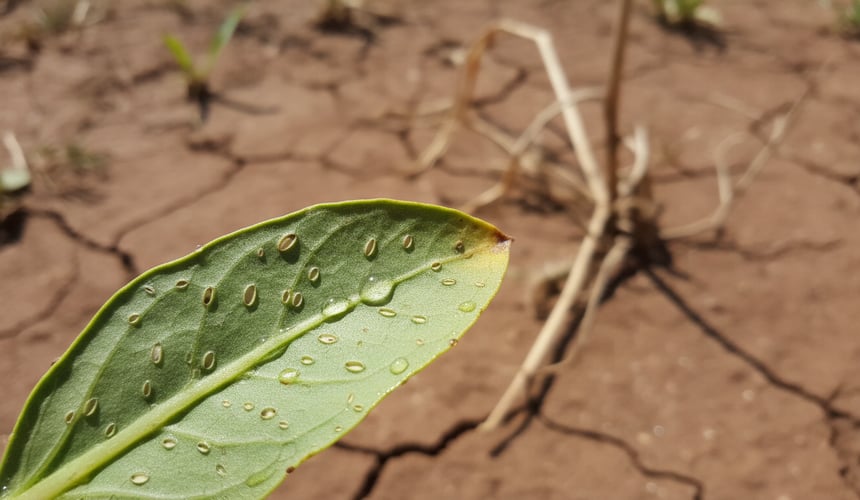
Plants manage water loss primarily through stomata, small pores on leaf surfaces that regulate gas exchange and transpiration. Under environmental pressures such as drought, efficient stomatal regulation becomes critical for plant survival and productivity. Glycine betaine, a naturally occurring osmoprotectant, has been observed to influence these stomatal responses, contributing to a plant's ability to conserve water [1].
Cropenta Insight
Understanding how betaine influences stomatal regulation provides insight into optimizing plant responses to water-deficit conditions. By supporting the stomata's ability to moderate water loss, betaine can be relevant for maintaining cellular hydration and physiological function in crops facing environmental pressures. This mechanism contributes to the scientific understanding relevant for developing strategies for nutrient management, particularly those involving biostimulants, to support crops under environmental stress.
Betaine's Role in Stomatal Regulation
Glycine betaine is a compatible solute, meaning it can accumulate in plant cells without interfering with metabolic processes. Its primary function as an osmoprotectant is to help maintain osmotic balance within cells, especially under conditions of osmotic stress, such as drought or salinity [2]. This osmotic adjustment capacity is closely linked to stomatal function.
A study involving mung bean (Vigna radiata L.) explored the effects of foliar-applied glycine betaine on stomatal behavior and water conservation. Researchers examined changes in stomatal characteristics, gas exchange parameters, and overall plant water relations under normal and water-deficit conditions [1].
Study Findings on Mung Bean
In the mung bean study, foliar application of glycine betaine was associated with modifications in stomatal structure and function. Under water-deficit conditions, plants treated with glycine betaine exhibited a reduction in stomatal aperture and stomatal density, alongside an increase in stomatal length. These structural changes can collectively contribute to a lower stomatal conductance, indicating reduced water vapor efflux from the leaves [1].
The study also observed that glycine betaine application was linked to improved water use efficiency under drought conditions. This effect is attributed to the coordinated regulation of stomatal opening and closing, which helps the plant maintain essential CO2 uptake for photosynthesis while simultaneously limiting excessive water loss through transpiration [1, 3]. Such regulation is a physiological response that may assist plants in conserving cellular water balance during periods of reduced water availability.
Physiological Implications for Water Conservation
The observed influence of glycine betaine on stomatal characteristics suggests a mechanism by which this osmoprotectant may support plant water conservation. By moderating stomatal opening and closing, glycine betaine can contribute to sustained photosynthetic activity even under moderate drought pressure, while also reducing the rate of water loss. This balanced approach can be a factor in maintaining plant turgor and metabolic function when water is limited [1, 4].
Understanding these physiological responses provides context for how external applications of glycine betaine could be considered as part of nutrient management strategies. The ability of glycine betaine to influence stomatal regulation underscores its potential relevance in supporting crops grown under various environmental pressures.
Technical Summary
Glycine betaine is recognized for its role as an osmoprotectant, which includes influencing stomatal behavior to support plant water management. Research on plants like mung bean indicates that foliar application of glycine betaine under water-deficit conditions can lead to structural and functional changes in stomata. These modifications, such as altered stomatal aperture and density, are associated with a reduction in stomatal conductance, contributing to enhanced water use efficiency. This mechanism highlights how betaine can support plants in maintaining cellular hydration and physiological function during periods of water scarcity.
Disclaimer
This article has been prepared with AI assistance using publicly available sources and is intended solely for general technical and educational purposes. It does not constitute professional advice or recommendations for specific applications. Cropenta makes no warranties regarding the accuracy, completeness or applicability of the information. No rights may be derived from its contents, and Cropenta accepts no liability for its use to the extent permitted by law.
Technical Questions
How does reduced stomatal aperture benefit plants during water scarcity?
Reduced stomatal aperture during water scarcity helps plants minimize water loss through transpiration. While some carbon dioxide uptake may be impacted, the primary benefit is the conservation of cellular water, which supports maintaining turgor pressure and essential physiological processes under drought or other water-deficit conditions. This regulation can be a factor in the plant's capacity to continue functioning.
Are the effects of betaine on stomata consistent across all plant species?
The physiological responses to betaine, including its effects on stomata, can vary among plant species. Some plants naturally synthesize and accumulate betaine, while others do not. The extent and nature of stomatal regulation influenced by exogenous betaine may depend on the plant's inherent physiological characteristics and its adaptive mechanisms to environmental pressures. Further research can clarify species-specific responses.
What is the distinction between stomatal density and stomatal aperture?
Stomatal density refers to the number of stomata per unit area on a leaf surface, while stomatal aperture describes the degree to which individual stomata are open. Both characteristics influence the rate of gas exchange and transpiration. A plant might adjust either or both in response to environmental cues, such as water availability, to regulate water loss and CO2 uptake.
How does betaine help maintain cellular water balance?
Betaine helps maintain cellular water balance primarily through osmotic adjustment. As a compatible solute, it accumulates in the cytoplasm, increasing the cell's osmotic potential. This allows the cell to take up or retain water, helping to counteract the effects of water loss from the surrounding environment. This mechanism can contribute to preserving cell turgor and functional integrity under water-deficit conditions
Related articles
Related Products


Looking for something specific?
Our team is there to help you find the right raw materials and solutions for your formulations

