How Do Microbes Produce Siderophores and Improve Iron Availability for Plants?

Iron is an essential micronutrient for plants, involved in processes such as photosynthesis and respiration. However, iron often has limited availability in many soils, particularly in alkaline or calcareous conditions, which can lead to iron deficiency in crops. Beneficial soil microbes can influence the availability of iron for plants through the production of compounds called siderophores [1, 2].
Cropenta Insight
Understanding how microbial siderophores enhance iron availability for plants provides valuable insight into optimizing nutrient management strategies. These microbial metabolites represent a natural pathway for mobilizing essential nutrients in the rhizosphere, which can be a key consideration for formulators and distributors working with microbial technologies. Focusing on such natural mechanisms helps in developing solutions that support nutrient uptake under challenging soil conditions, contributing to effective crop nutrition programs.
Microbial Siderophore Production and Iron Chelation
Siderophores are low-molecular-weight, iron-chelating compounds synthesized and secreted by various microorganisms, including bacteria and fungi, in the rhizosphere [3]. When iron concentrations are low in the soil, microbes produce these compounds to scavenge for ferric iron (Fe3+). Siderophores exhibit a high affinity for Fe3+, forming stable soluble complexes that can then be taken up by the microbes themselves [1].
This microbial strategy can indirectly benefit plants. The iron-siderophore complexes can be absorbed by plant roots, or the iron can be released from the complex near the root surface and then taken up by the plant. This mechanism is especially important in soils where iron is abundant but largely insoluble and unavailable to plants. By solubilizing and chelating iron, siderophore-producing microbes may help to transform iron into a form that is more readily accessible for plant acquisition [2, 4].
Rhizosphere Interactions and Plant Nutrient Acquisition
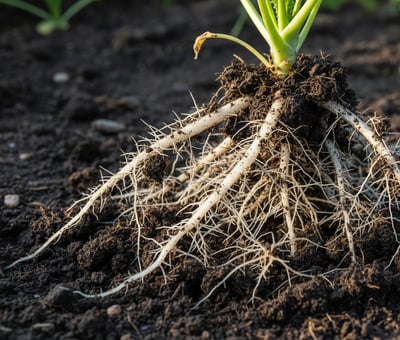
The rhizosphere, the narrow zone of soil directly influenced by root exudates, is an active area for plant-microbe interactions. Siderophore-producing microbes within this zone can influence the chemical environment around plant roots, affecting nutrient cycling and availability. The presence of microbial siderophores may help plants to acquire sufficient iron, particularly when environmental factors reduce direct iron uptake by roots [1, 4].
The ability of microbial siderophores to enhance iron solubilization and uptake can contribute to plant growth and resilience. This interaction is considered in efforts to support plant iron nutrition under various cultivation conditions, potentially assisting plants in maintaining essential physiological functions even in iron-stressed soils [2, 4].
Technical Summary
Beneficial soil microbes produce siderophores, which are iron-chelating compounds. These compounds bind to ferric iron in the soil, forming soluble complexes that can then be taken up by plants. This process is particularly relevant in soils with limited iron availability, such as alkaline or calcareous conditions, where it helps to enhance iron nutrition and support plant physiological functions by making essential iron more accessible.
Disclaimer
This article has been prepared with AI assistance using publicly available sources and is intended solely for general technical and educational purposes. It does not constitute professional advice or recommendations for specific applications. Cropenta makes no warranties regarding the accuracy, completeness or applicability of the information. No rights may be derived from its contents, and Cropenta accepts no liability for its use to the extent permitted by law.
Technical Questions
What is the primary function of siderophores produced by soil microbes?
Siderophores are organic compounds synthesized by microbes to bind and chelate ferric iron (Fe3+) in the soil. This process converts insoluble iron into a soluble form that can be more readily absorbed by both the microbes and nearby plants, thereby increasing iron availability in the rhizosphere, particularly under challenging soil conditions.
How do microbial siderophores help plants overcome iron deficiency?
In soils where iron is abundant but inaccessible, microbial siderophores play a role by solubilizing and chelating iron, making it available for plant uptake. Plants can either directly absorb these iron-siderophore complexes or take up the iron released from the complex near the root surface, thus mitigating iron deficiency symptoms.
Are all soil microbes capable of producing siderophores?
No, not all soil microbes produce siderophores. Siderophore production is a specific adaptation primarily found in certain beneficial bacteria and fungi. These microorganisms synthesize and release siderophores, especially under conditions of low iron availability, as a strategy for iron acquisition.
What soil conditions typically favor the production of microbial siderophores?
Microbial siderophore production is generally enhanced in soils where iron availability is limited. This includes alkaline or calcareous soils, where iron is often present in insoluble forms. Low oxygen levels and high organic matter content can also influence microbial activity and siderophore synthesis in the rhizosphere.
Related articles



Related Products


Looking for something specific?
Our team is there to help you find the right raw materials and solutions for your formulations

