The Impact of Raw Material pH on Liquid Fertilizer Stability
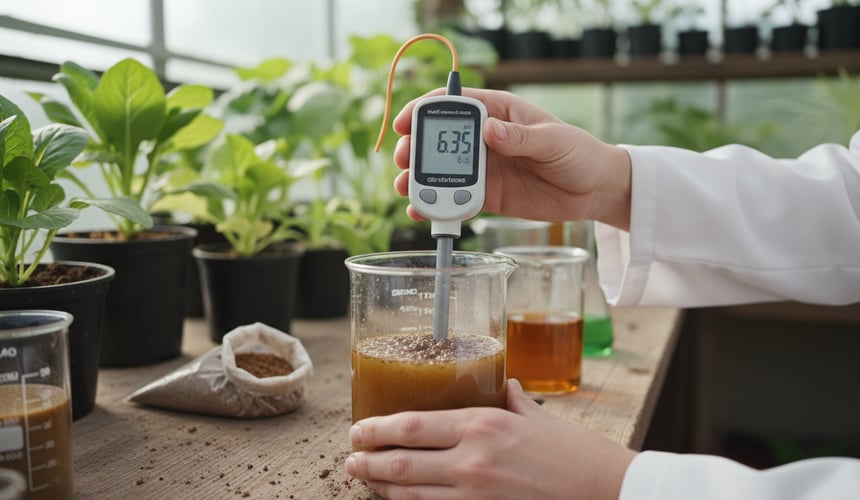
The precise balance of a liquid fertilizer formulation relies heavily on the characteristics of its constituent raw materials. Among these, pH is a critical factor influencing both physical and chemical stability. The pH of individual raw materials can significantly affect the overall pH of the final product, which in turn dictates the solubility and compatibility of various nutrients, playing a key role in preventing precipitation and nutrient degradation.
Cropenta Insight
Understanding the pH behavior of raw materials is fundamental for liquid fertilizer formulators. Variations in raw material pH can influence the solubility of essential nutrients, potentially leading to precipitation or degradation within the formulation. For manufacturers, carefully selecting and evaluating raw materials based on their pH characteristics and buffering capacity is key to developing stable and effective liquid fertilizer products.
Understanding Raw Material pH in Formulations
Plant nutrition involves the study of essential nutrients required for optimal plant growth and development [1]. In liquid fertilizer applications, these nutrients must remain soluble and available. The pH of each raw material contributes to the final solution's pH, which can affect the ionization state of nutrients and their propensity to react with other components. For instance, some micronutrients are more soluble in acidic conditions, while others require a more neutral or alkaline environment to remain in solution. When raw materials with contrasting pH values are combined, unexpected shifts in the overall pH can occur, potentially leading to the formation of insoluble compounds.
Maintaining an appropriate formulation pH is critical for long-term stability. Fluctuations can cause components to precipitate out of the solution, reducing nutrient availability and potentially clogging application equipment. This can be particularly relevant when dealing with raw materials that have a strong acidic or alkaline nature. Incorporating such materials requires careful consideration of their buffering capacity and how they might interact with other ingredients to shift the overall pH equilibrium.
Agronomic Implications of pH Stability
The stability of a liquid fertilizer directly impacts its agronomic effectiveness. A formulation that experiences nutrient precipitation may not deliver the intended nutrient ratios to the crop, potentially affecting nutrient uptake efficiency. While controlled release fertilizers are designed to release nutrients gradually [2], conventional liquid fertilizers require stable nutrient solubility for immediate plant uptake. For example, inorganic fertilizers exhibit uptake efficiency ranging from 50–70% for nitrogen, 10–25% for phosphorus, and 50–60% for potassium, underscoring the importance of nutrient availability in the applied solution [3].
Formulators must consider the impact of raw material pH not only on the immediate stability of the product but also on its behavior during storage and application. Understanding these interactions allows for the development of robust liquid fertilizers that maintain their integrity from production to plant uptake, supporting efficient nutrient management strategies.
Technical Summary
Raw material pH is a critical determinant of liquid fertilizer stability, directly influencing the solubility and compatibility of nutrients within a formulation. Variations in pH can lead to nutrient precipitation, reducing efficacy and potentially causing application issues. Careful consideration of raw material pH and its buffering effects is essential for formulators to ensure stable, effective liquid fertilizer products.
Disclaimer
This article has been prepared with AI assistance using publicly available sources and is intended solely for general technical and educational purposes. It does not constitute professional advice or recommendations for specific applications. Cropenta makes no warranties regarding the accuracy, completeness or applicability of the information. No rights may be derived from its contents, and Cropenta accepts no liability for its use to the extent permitted by law.
Technical Questions
Why is nutrient precipitation a concern in liquid fertilizers?
Nutrient precipitation in liquid fertilizers can lead to insoluble compounds, reducing the effective concentration of nutrients available to plants. This can compromise the fertilizer's performance, cause clogging in irrigation systems, and result in uneven nutrient distribution, impacting overall crop nutrition and yield potential.
How do acidic and alkaline raw materials affect formulation pH?
Acidic raw materials tend to lower the overall formulation pH, while alkaline raw materials raise it. The extent of this shift depends on the raw material's concentration and buffering capacity. Formulators must account for these effects to maintain a stable pH range that optimizes nutrient solubility and prevents undesirable reactions within the product.
What role does pH buffering play in liquid fertilizer formulations?
pH buffering agents help maintain the formulation's pH within a narrow range, even when acidic or alkaline raw materials are added or external factors attempt to alter it. This buffering capacity is essential for preserving the solubility of nutrients and preventing precipitation, ensuring the fertilizer remains stable and effective over time and under varying conditions.
Related articles

Related Products




Looking for something specific?
Our team is there to help you find the right raw materials and solutions for your formulations

