Optimizing Rumen-Protected Soy Protein for Amino Acid Balance in Dairy Rations
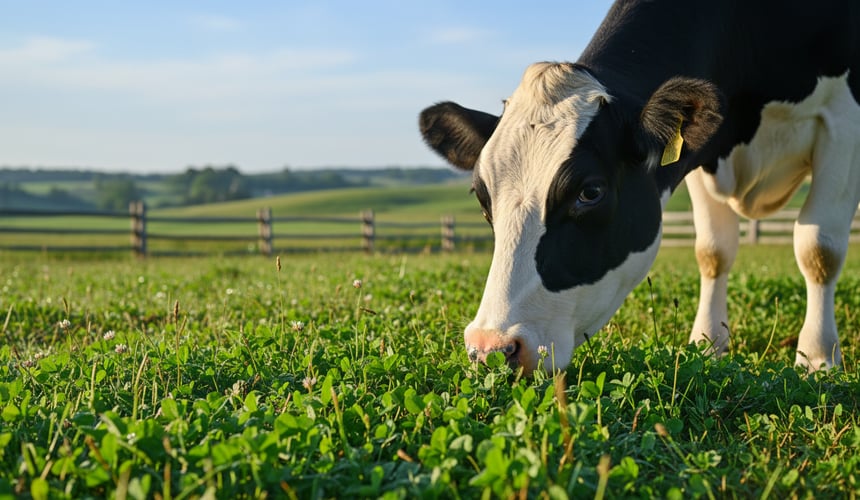
Optimizing the amino acid profile in dairy cow rations is fundamental for supporting milk production, milk protein synthesis, and overall cow health. Traditional protein sources often undergo extensive degradation in the rumen, leading to inefficient delivery of essential amino acids to the small intestine.
Cropenta Insight
According to product documentation, while some processing methods may appear to protect proteins from rumen degradation, their actual contribution to digestible bypass protein relies on robust in vivo evaluation [1].
The Science of Rumen-Protected Protein
The rumen environment is designed to degrade dietary proteins into ammonia and microbial protein, which is then utilized by the cow. While microbial protein synthesis is vital for dairy cattle nutrition, it often does not provide a sufficient supply of certain essential amino acids, such as lysine and methionine, to meet the demands of high-producing cows. This creates a need for 'bypass protein' or 'rumen-undegradable protein' (RUP) that can escape rumen degradation and be digested directly in the small intestine [2].
A study investigated the rumen degradation characteristics of various protein sources, including fermented soybean meal (FSM). It found that while FSM can improve protein utilization, it is still highly degradable in the rumen, suggesting that it cannot reliably provide a significant amount of rumen-undegradable protein [3]. This highlights the importance of specific protection technologies to ensure soy protein effectively bypasses rumen degradation.
Mechanisms of Rumen Protection and Intestinal Digestibility
Effective rumen protection involves treatments that modify the protein structure to resist microbial attack in the rumen while remaining digestible in the acidic environment of the abomasum and the enzymatic processes of the small intestine. According to product documentation, one method involves controlled Maillard reactions, where protein is bound to reducing sugars . According to product documentation, these complexes, often referred to as melanoidins, resist breakdown in the rumen, yet can be denatured by acid in the abomasum and subsequently digested by pepsin, trypsin, and chymotrypsin in the small intestine, releasing the amino acids [1].
According to product documentation, a specific rumen-protected protein made from non-GMO soybean meal and treated molasses exhibits a calculated RUP above 80% at an assumed passage rate of 6%/h, with intestinal digestibility of the rumen-undegraded protein close to 100% . According to product documentation, this indicates a highly efficient delivery of amino acids to the small intestine . According to product documentation, in-vitro protein degradation tests are not always reliable for Maillard-protected proteins and may overstate rumen protection compared to in-vivo measurements [1].
The effectiveness of such treatments can be variable. For instance, research evaluating protected rapeseed meals found that in-situ measurements of RUP in rumen-fistulated cows were often lower than values declared in product information. Physically treated rapeseed meal, for example, showed only a small difference in RUP compared to untreated meal, while lignosulfonate treatment increased RUP, but not as significantly as expected. Formaldehyde treatment, now largely restricted, historically yielded higher RUP increases [4].
Formulation Relevance for Amino Acid Balance
Optimizing the balance between dietary proteins and energy in dairy cow feeding is key to supporting milk production efficiency [5]. By ensuring a steady supply of essential amino acids like lysine and methionine, formulators can support milk protein synthesis and overall nitrogen utilization efficiency in dairy cows. Supplementation with rumen-protected methionine products, for example, can be an effective strategy to meet specific amino acid requirements [6].
According to product documentation, the use of rumen-protected soy protein allows formulators to reduce reliance on conventional protein meals that may supply more rumen-degradable protein than desired . According to product documentation, this approach can help in steering the crude protein share and milk urea levels in a ration, contributing to more sustainable feeding practices . According to product documentation, the digestible protein value of Maillard-protected soy, for instance, can be significantly higher than that of untreated soybean meal, with a rumen protein balance closer to zero [1].
Practical Considerations for Feed Formulators
According to product documentation, when incorporating rumen-protected soy protein, formulators should consider the specific in-vivo RUP values and intestinal digestibility . According to product documentation, the calculated RUP can vary depending on the assumed passage rate (Kp), making comparisons only valid at the same Kp . This precision is crucial for accurately predicting the metabolizable amino acid supply. According to product documentation, formulators can use such ingredients as a concentrated tool to fine-tune the amino acid profile, particularly when a ration requires additional digestible bypass protein or when seeking a protected protein without specific chemical additives [1].
The choice of rumen-protected protein source impacts not only amino acid delivery but also the overall protein quality of the ration. An adequate supply of rumen ammonia is also necessary for maximal synthesis of microbial protein, underscoring the importance of balancing rumen-degradable and rumen-undegradable protein sources [2]. Therefore, a holistic approach to ration formulation, integrating highly digestible rumen-protected soy protein, can support optimal dairy performance and resource efficiency.
Technical Summary
According to product documentation, by bypassing rumen degradation, it delivers essential amino acids like lysine and methionine directly to the small intestine, supporting metabolizable protein supply . According to product documentation, in-vivo evaluation of rumen-undegradable protein (RUP) and intestinal digestibility is critical for accurate formulation, supporting milk production efficiency and optimized nitrogen utilization in dairy cows [1].
Disclaimer
This article has been prepared with AI assistance using publicly available sources and is intended solely for general technical and educational purposes. It does not constitute professional advice or recommendations for specific applications. Cropenta makes no warranties regarding the accuracy, completeness or applicability of the information. No rights may be derived from its contents, and Cropenta accepts no liability for its use to the extent permitted by law.
Technical Questions
How do different processing methods for soy protein influence its rumen protection and intestinal digestibility?
According to product documentation, processing methods such as controlled Maillard reactions modify soy protein structure, reducing rumen degradation. However, the degree of protection and subsequent intestinal digestibility can vary significantly. According to product documentation, in-vivo studies are crucial, as in-vitro methods may overstate protection, impacting accurate metabolizable protein calculations for dairy rations.
What is the significance of in-vivo RUP measurements compared to in-vitro estimates for dairy ration formulation?
According to product documentation, in-vivo RUP measurements, typically performed in rumen-fistulated cows, provide a more accurate assessment of a protein's true rumen bypass value compared to in-vitro estimates. This precision is essential for formulators to ensure dairy cows receive the expected supply of metabolizable protein and essential amino acids, directly impacting milk production and nitrogen efficiency.
How does the assumed passage rate (Kp) affect the reported RUP values of rumen-protected soy protein?
According to product documentation, the calculated RUP value for rumen-protected proteins is highly dependent on the assumed rumen passage rate (Kp). According to product documentation, different Kp values can lead to varying RUP figures, making direct comparisons between products only valid when the same Kp is applied. Formulators need to be aware of this dependency for accurate ration balancing.
- 1.Cropenta product documentation: Bypass Soy Protein MP
- 2.A 100-Year Review: Protein and amino acid nutrition in dairy cattle
- 3.Rumen Degradation Characteristics of Fermented Soybean Meal and Other Protein-Rich Feedstuffs
- 4.Geschützte Rapsextraktionsschrote im Fütterungsversuch (proteinmarkt.de)
- 5.The use of rumen-protected amino acids and fibrous by-products in dairy cow feeding: effects on milk production, nitrogen utilization, and environmental impact
- 6.Evaluation of a rumen-protected methionine product to increase milk protein yield in dairy cows
Related articles

Related Products

Looking for something specific?
Our team is there to help you find the right raw materials and solutions for your formulations

