How Silicon Application Affects Crop Yield in Field Trials
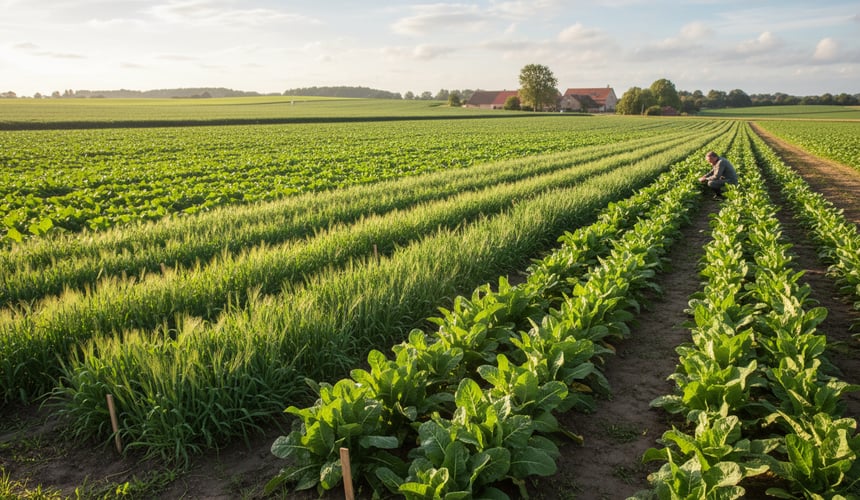
What has actual field research shown about whether applying silicon to crops genuinely affects yields and quality? While laboratory and greenhouse studies often demonstrate significant physiological benefits of silicon, the translation of these effects to observable changes in commercial field conditions requires careful examination.
Cropenta Insight
Understanding the distinction between silicon’s performance in controlled environments versus its observable impact in field trials is crucial for professionals. Factors such as soil type, existing nutrient levels, and specific crop physiology can influence how much applied silicon becomes available to plants, and consequently, its effect on yield.
Silicon Uptake and Availability in Field Settings
Silicon is recognized for its role in supporting healthy crop growth and development, acting as a beneficial element rather than an essential nutrient for most plants. According to some research, plants primarily take up silicon as monomeric orthosilicic acid (Si(OH)4) through specific transporters in their roots. This chemical characteristic is crucial in field applications, as the form and stability of applied silicon can dictate its uptake. The concentration of available silicon in a spray tank, even from stabilized products, is subject to a fundamental solubility limit after dilution, according to product documentation [1].
Yield Responses to Silicon Application in Field Trials
Field trials demonstrate varied responses to silicon application across different crops and environmental conditions. For instance, in situations characterized by drought and saline conditions, silicon-based fertilization has been observed to be associated with notable productivity in a significant majority of cases [2]. This suggests a role for silicon in the context of certain abiotic stresses that commonly limit yield in the field.
The extent to which silicon application influences productivity can depend on several factors, including the crop type and the level of silicon already present. This highlights that an increase in silicon input does not automatically correlate with a linear change in productivity, and optimal application rates may vary.
Beyond direct yield quantity, silicon application may also influence aspects of crop quality and physical plant characteristics. For example, silicon fertilization can be associated with improved foliar architecture, such as increased leaf erectness, which may lead to greater light interception and reduced self-shading within the canopy [3]. These structural changes could indirectly support photosynthetic efficiency and, by extension, yield potential. However, the direct, consistent, and broad-spectrum productivity across all crops and conditions, as sometimes observed in controlled settings, are not always uniformly replicated in diverse field environments.
Comparing Field Data to Controlled Environments
The distinction between results from field trials and those from controlled laboratory or greenhouse studies is important. While controlled environments allow for precise manipulation of silicon levels and stress factors, isolating specific physiological mechanisms, field conditions introduce a multitude of variables such as soil heterogeneity, fluctuating weather, and complex nutrient interactions. These variables can modulate or mask the effects of silicon, leading to less consistent or pronounced yield responses compared to highly controlled settings [4].
Therefore, while silicon is recognized as a valuable addition to crop nutrition strategies due to its role in influencing plant growth and development [4], its impact on crop yield and quality in actual field research often reflects the complexity of real-world agricultural systems. Results may vary considerably depending on crop species, soil characteristics, existing stress levels, and the specific form and method of silicon application.
Technical Summary
Field trials on silicon application reveal varied impacts on crop yield and quality, often contingent on environmental conditions and crop species. While silicon can be associated with abiotic stresses and influence plant architecture, direct yield changes are not universally observed and may be linked to specific application rates and interactions with other nutrients. These outcomes often differ from controlled environment studies due to the complexity of field variables.
Disclaimer
This article has been prepared with AI assistance using publicly available sources and is intended solely for general technical and educational purposes. It does not constitute professional advice or recommendations for specific applications. Cropenta makes no warranties regarding the accuracy, completeness or applicability of the information. No rights may be derived from its contents, and Cropenta accepts no liability for its use to the extent permitted by law.
Technical Questions
Why do silicon effects sometimes differ between greenhouse and field trials?
Greenhouse studies offer controlled environments, allowing isolation of silicon's specific physiological impacts. Field trials, however, involve complex variables like soil heterogeneity, fluctuating weather, and diverse biotic interactions, which can modulate or mask silicon's effects on yield and quality, leading to more varied outcomes compared to controlled settings.
What factors influence the plant availability of applied silicon?
According to some sources, orthosilicic acid is the only form plants absorb. Soil type, organic matter content, and existing nutrient levels also affect its uptake and efficacy.
Does silicon application universally affect crop productivity?
No, silicon application does not universally affect crop productivity across all species and conditions. While studies show benefits under specific abiotic stresses like drought or salinity, and effects on plant architecture, responses can vary. Optimal application rates and the existing silicon status in the soil are crucial factors in determining any productivity change.
Related articles

Related Products


Looking for something specific?
Our team is there to help you find the right raw materials and solutions for your formulations

