When Do Foliar Glycine Betaine Applications Help Plants Under Stress?
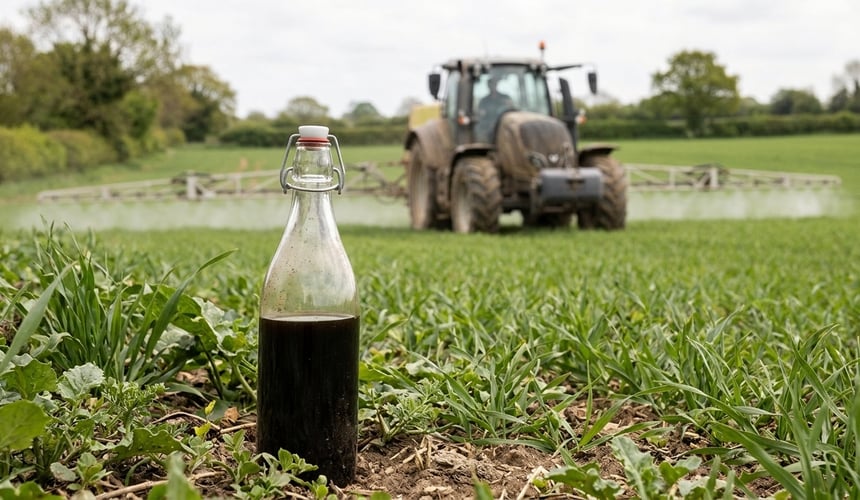
Under what specific conditions and at what growth stages can applying glycine betaine to plant leaves actually help them cope with stress from drought, heat, or salinity? Understanding the nuanced effects of foliar glycine betaine (GB) applications requires examining the scientific evidence for its role in plant stress responses.
Cropenta Insight
The efficacy of foliar glycine betaine for abiotic stress depends on specific factors like stress type, intensity, and application timing. Understanding these nuances, as highlighted by recent research, helps professionals interpret findings beyond general claims. This focus supports informed decisions regarding the potential use of osmoprotective compounds in diverse agricultural contexts, aligning with the principles of nutrient efficiency programs.
Glycine Betaine and Osmotic Regulation
Glycine betaine is an organic osmolyte, a type of compatible solute that accumulates in plant cells under abiotic stress. Its primary role involves osmotic adjustment, which helps maintain cellular water balance and turgor under water-deficit conditions [1, 2]. When plants experience drought, heat, or salinity stress, internal GB synthesis may increase, contributing to their natural defense mechanisms. Exogenous application of GB aims to supplement this natural process, potentially enhancing the plant's capacity to cope with stress.
Timing and Concentration for Drought Stress
For drought stress, studies measured that foliar GB applications are associated with improved photosynthetic performance and overall physiological status [3]. The effectiveness often correlates with the timing of application relative to the stress event. Applying GB before or early in the onset of drought stress may allow the plant to better prepare for or mitigate the stress effects [1]. Concentrations are also critical, with optimal ranges varying by crop species. Excessive concentrations might not provide additional benefit or could potentially lead to other physiological shifts.
Addressing Salinity and Heat Stress
Under salinity stress, foliar GB applications may play a role in maintaining cellular integrity and enzyme activity, which can be compromised by high salt concentrations [1]. Research involving crops like quinoa has shown differential effects based on application method and salinity level, indicating that efficacy is not universal across all conditions or crops [4]. For heat stress, GB application may support the stabilization of proteins and cell membranes, contributing to thermotolerance [1]. The timing of application, such as before anticipated heatwaves, could be relevant in these scenarios.
Limitations and Contextual Factors
It is important to recognize that the effects of foliar GB applications are not uniform across all plant species, stress types, or environmental conditions. The plant's inherent capacity to synthesize GB, its growth stage, and the severity and duration of the abiotic stress are all factors that can influence the outcome [1, 2]. Laboratory and greenhouse studies provide valuable insights into physiological mechanisms, but these results may not always directly translate to field conditions where multiple environmental variables interact. Therefore, understanding the specific context of each application is crucial for determining potential benefits.
Technical Summary
Foliar glycine betaine applications may support plants under abiotic stress such as drought, heat, and salinity by assisting in osmotic regulation and cellular protection. Efficacy often depends on applying GB before or early in the stress period, using appropriate concentrations, and considering the specific crop and environmental conditions. Results can vary significantly by species and stress intensity, emphasizing the need for context-specific evaluations.
Disclaimer
This article has been prepared with AI assistance using publicly available sources and is intended solely for general technical and educational purposes. It does not constitute professional advice or recommendations for specific applications. Cropenta makes no warranties regarding the accuracy, completeness or applicability of the information. No rights may be derived from its contents, and Cropenta accepts no liability for its use to the extent permitted by law.
Technical Questions
How does glycine betaine help plants maintain water balance under drought?
Glycine betaine acts as a compatible solute, accumulating in plant cells to help maintain osmotic balance. This process supports cellular turgor and prevents water loss from critical cell structures, which can be particularly important when external water availability is limited, helping the plant cope with water-deficit conditions.
Are there specific plant growth stages where foliar glycine betaine is more effective?
Research suggests that applying glycine betaine before or during the early stages of abiotic stress, such as drought or heat, may be more effective. This timing allows the plant to potentially prepare its physiological responses, but optimal application windows can vary significantly depending on the crop species and the specific stress encountered.
Can high concentrations of foliar glycine betaine be detrimental to plants?
While glycine betaine can support plants during periods of duress, there are optimal concentration ranges for effective application. Excessive concentrations may not provide additional benefits and could potentially disrupt other physiological processes. Therefore, adherence to recommended application rates is important for avoiding unintended effects and making the most of potential advantages.
Related articles

Related Products


Looking for something specific?
Our team is there to help you find the right raw materials and solutions for your formulations

