Extruded Full-Fat Soybeans in Piglet Nutrition
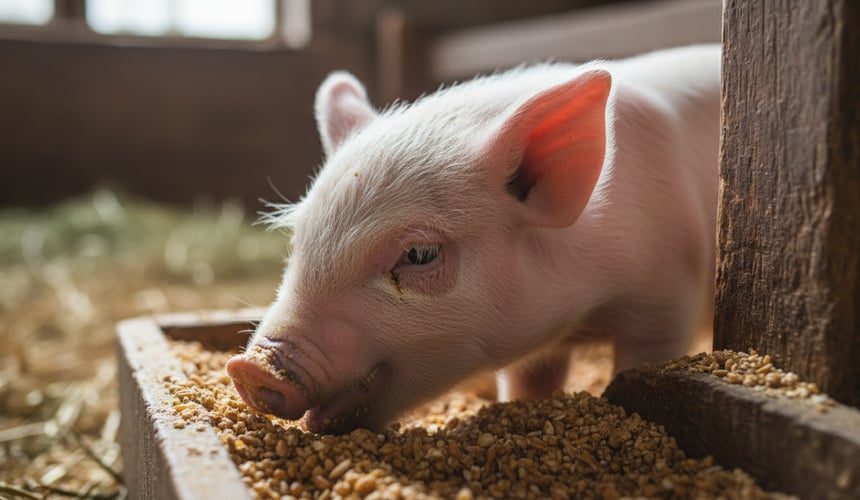
Early-weaning piglets have distinct digestive systems that require carefully formulated diets to support growth and health. A key consideration for these diets is the inclusion of protein and energy sources that are highly digestible and low in anti-nutritional factors. The question arises: how do full-fat toasted extruded soybeans contribute to the health of early-weaning piglets, considering their specific digestive needs, especially compared to other processed soy products?
Cropenta Insight
For formulators addressing early-weaning piglet nutrition, evaluating protein quality and energy availability in processed soy ingredients like full-fat toasted extruded soybeans is crucial. Understanding how thermomechanical processes such as extrusion impact trypsin inhibitor reduction and amino acid digestibility may allow for precise formulation to support nutrient uptake and gut health in young animals. This detailed insight into ingredient functionality helps differentiate between various processed soy forms for contributing to feed efficiency and animal performance.
Extrusion and Nutrient Availability in Full-Fat Soybeans
Full-fat soybeans undergo processing to reduce anti-nutritional factors and enhance nutrient availability. Extrusion is a thermomechanical treatment where temperature, moisture, pressure, residence time, screw configuration, and shear forces work together to process the material, forcing it through a die [1]. According to product documentation, this process can alter the soybean's structure, potentially rupturing oil cells and affecting the availability of nutrients [2].
A study investigating the digestibility of nutrients in different soy products, including roasted full-fat soybeans, explored their impact on growing pigs [3]. While this study focused on roasting and growing pigs rather than extrusion and piglets, it provides insights into how processing affects nutrient utilization. Another study evaluated the impact of extrusion on nutrient digestibility and energy in soybean meal, noting that extrusion generally reduces anti-nutritional factors without adversely affecting the digestibility of available nutrients [1]. This suggests that the thermal and mechanical forces applied during extrusion are instrumental in preparing soybeans for inclusion in sensitive animal diets.
The effectiveness of heat treatment in reducing anti-nutritional factors, particularly trypsin inhibitors, is a critical aspect of preparing soybeans for monogastric animals. Trypsin inhibitor activity (TIA) is a direct indicator of adequate heat treatment [1]. While urease activity is an indirect indicator, suggesting that heat was applied, it does not confirm optimal processing or the absence of over-processing. According to product documentation, over-processing can lead to Maillard reactions, which can compromise protein quality, even if total lysine remains unchanged [2]. Therefore, the processing conditions for full-fat toasted extruded soybeans must be carefully controlled to balance the reduction of anti-nutritional factors with the preservation of amino acid quality.
Amino Acid and Energy Digestibility in Early-Weaning Piglets
For early-weaning piglets, high amino acid and energy digestibility are paramount due to their immature digestive systems. Research indicates that the apparent ileal digestibility of amino acids (AID) in growing pigs can be influenced by the type of processed soy. A study with growing pigs examined roasted full-fat soybeans and expelled-extruded soybean meal, finding variations in the digestibility of amino acids, energy, and minerals [3]. While the specific product and pig age differ from early-weaning piglets, the principle remains that processing methods affect nutrient availability.
According to product documentation, full-fat toasted extruded soybeans typically offer a combination of crude protein and crude fat . The extrusion process may contribute to making both the protein and the oil digestible. According to the company, standardized ileal amino acid digestibilities were generally similar to toasted soybeans, with some specific variations [2].
According to product documentation, for early-weaning piglets, a trial explored diets with full-fat toasted extruded soybeans replacing part of the soybean meal and oil. According to the company, the firmer faeces observed in the processed-bean groups, and the absence of diarrhoea, suggest a potentially positive impact on gut health and digestive comfort. According to the company, surface enlargement by extrusion, the bound oil, and the presence of lecithin in the beans are suggested as possible contributing factors to these numerical differences [2].
Considerations for Feed Formulation
When formulating diets for early-weaning piglets, the choice of processed full-fat soybeans involves balancing protein and energy contributions with palatability and anti-nutritional factor management. The reduction of anti-nutritional factors like trypsin inhibitors is key for young animals to avoid digestive disturbances. According to product documentation, over-processing can cause damage to protein, particularly reducing reactive lysine through Maillard reactions, which compromises protein quality [2]. Therefore, processing methods must achieve optimal reduction of heat-labile anti-nutritional factors without over-processing.
Full-fat toasted extruded soybeans may provide a convenient way to deliver both protein and a readily available energy source (oil) within one ingredient. The physical form and palatability can also influence feed intake in piglets. Formulators must consider the overall nutrient profile, including amino acid balance and energy density, to ensure that the diet meets the rapid growth demands of early-weaning piglets. The quality of soybean processing, as indicated by measures like trypsin inhibitor activity, remains crucial for optimizing nutritional outcomes [1, 2].
Technical Summary
Careful control of thermomechanical treatment ensures effective trypsin inhibitor reduction without compromising protein quality via Maillard reactions. This approach aims to support enhanced nutrient utilization and may contribute to better gut health outcomes.
Disclaimer
This article has been prepared with AI assistance using publicly available sources and is intended solely for general technical and educational purposes. It does not constitute professional advice or recommendations for specific applications. Cropenta makes no warranties regarding the accuracy, completeness or applicability of the information. No rights may be derived from its contents, and Cropenta accepts no liability for its use to the extent permitted by law.
Technical Questions
How does extrusion specifically affect the availability of energy from full-fat soybeans for piglets?
Extrusion helps rupture oil cells within the soybean, which can increase the accessibility of the fat for digestion. This thermomechanical treatment also denatures proteins and reduces anti-nutritional factors, contributing to higher overall energy utilization.
What are the key indicators for evaluating optimal heat treatment in processed full-fat soybeans for piglets?
The most direct indicator for adequate heat treatment for monogastrics is trypsin inhibitor activity (TIA), which measures residual trypsin inhibitors. While urease activity indicates that heat was applied, it does not confirm optimal processing. Other indicators like KOH protein solubility and Protein Dispersibility Index (PDI) help assess if over-processing, which can damage protein quality and reduce reactive lysine, has occurred.
Why is amino acid digestibility particularly critical when using processed full-fat soybeans in early-weaning piglet diets?
Early-weaning piglets have immature digestive systems, making them highly sensitive to anti-nutritional factors and requiring readily available amino acids for rapid growth. Processing, such as extrusion, is vital to reduce trypsin inhibitors that hinder protein digestion. Maximizing standardized ileal amino acid digestibility can help piglets absorb essential amino acids efficiently, which supports muscle development and overall health.
Related articles


Related Products


Looking for something specific?
Our team is there to help you find the right raw materials and solutions for your formulations

