Fat Digestion Changes in Young Animals as They Mature
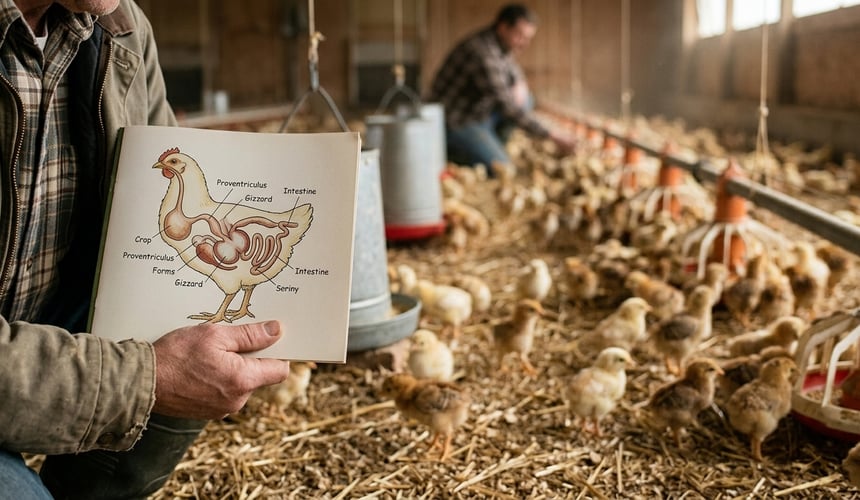
The capacity of young animals to digest and utilize dietary fat undergoes significant changes as they mature. This developmental process is crucial for animal nutritionists and feed formulators, as it dictates the optimal inclusion of fat sources in age-specific diets. Understanding the underlying physiological and enzymatic adaptations provides a foundation for effective nutritional strategies.
Cropenta Insight
Understanding the age-dependent shifts in fat digestion, particularly the development of pancreatic lipase and bile salt production, is key for formulators. These physiological changes directly influence the efficacy of various lipid sources and emulsifying ingredients in young animal diets. Feed ingredient suppliers offering specialized nutritional raw materials can help optimize energy utilization and animal performance by providing appropriate fat blends and emulsifiers tailored to specific developmental stages.
Early Limitations in Fat Digestion
At birth and during early development, young animals, including piglets and chicks, often have a limited capacity to digest fats effectively. This is primarily due to the immaturity of their digestive systems, particularly regarding enzyme production and bile salt secretion. Pancreatic lipase, the primary enzyme responsible for hydrolyzing triglycerides into free fatty acids and monoglycerides, is present in lower concentrations in very young animals. Similarly, the production and secretion of bile salts, which are essential for emulsifying dietary fats into smaller droplets for enzymatic action and micelle formation for absorption, are also immature. Studies indicate that during early stages, some saturated fats may be associated with reduced digestibility compared to unsaturated oils [1, 2].
Physiological Development and Increased Efficiency
As young animals age, their digestive capabilities for fat gradually improve. This progression is marked by several physiological developments. The pancreas matures, leading to an increased production and secretion of pancreatic lipase. Concurrently, the liver's capacity to synthesize and secrete bile salts develops, allowing for more effective emulsification of fats in the small intestine. These improvements facilitate better hydrolysis of triglycerides and subsequent formation of micelles, which are critical for transporting fatty acids and monoglycerides to the intestinal wall for absorption. In pigs, research suggests that overall fat digestibility may rise with age, reflecting these advancements in enzymatic activity and emulsification processes [2, 3].
Impact of Fatty Acid Composition and Emulsification
The type of fat included in the diet plays a role, especially in young animals. To address the limitations in endogenous emulsification, particularly in piglets, emulsified fats are sometimes used in feed. This approach supports fat digestion and utilization, and may contribute to growth performance in pigs [1, 2]. While the emulsifying property of certain ingredients can improve the conditions for fat digestion, this does not automatically translate to higher fat digestibility in a given diet [2, 3].
Considerations for Feed Formulation
Given the age-dependent nature of fat digestion, the type and inclusion rate of fat sources may be adjusted as animals mature. For very young animals, selecting highly digestible fat sources, potentially incorporating emulsifiers, may be beneficial. As animals grow, their digestive systems become more robust, allowing for a broader range of fat sources to be utilized efficiently. This understanding of lipid metabolism and digestive physiology in growing animals helps in considering energy utilization, which is a key factor in animal performance [2, 3, 4].
Technical Summary
Young animals exhibit an evolving capacity for fat digestion, driven by the maturation of their digestive systems. Early life stages are characterized by limited pancreatic lipase and bile salt production, leading to lower fat digestibility. As animals age, these enzymatic and physiological functions develop, enhancing their ability to emulsify and hydrolyze fats. This progression influences the effective utilization of various fat sources and underpins the need for age-specific feed formulations to optimize energy intake.
Disclaimer
This article has been prepared with AI assistance using publicly available sources and is intended solely for general technical and educational purposes. It does not constitute professional advice or recommendations for specific applications. Cropenta makes no warranties regarding the accuracy, completeness or applicability of the information. No rights may be derived from its contents, and Cropenta accepts no liability for its use to the extent permitted by law.
Technical Questions
What is the primary limitation to fat digestion in neonatal piglets?
Neonatal piglets primarily face limitations in fat digestion due to immature pancreatic lipase production and insufficient bile salt secretion. These factors hinder the efficient hydrolysis of triglycerides and the formation of micelles necessary for fat absorption, making fat utilization less effective compared to older animals.
How do bile salts contribute to fat digestion in young poultry?
Bile salts are crucial for fat emulsification in young poultry, breaking down large fat globules into smaller droplets. This increases the surface area for pancreatic lipase to act upon. As chicks mature, improved bile salt production directly enhances the efficiency of fat digestion and absorption.
What role do emulsifiers play in young animal diets to support fat digestion?
Emulsifiers, such as lecithin, can help compensate for the immature digestive systems of young animals by improving fat emulsification in the gut. This pre-emulsification supports better action of endogenous lipase and facilitates the formation of mixed micelles, thereby potentially supporting fat utilization and nutrient uptake.
Related articles

Related Products


Looking for something specific?
Our team is there to help you find the right raw materials and solutions for your formulations

