Investigating Bioactive Compounds in Brown, Red, and Green Seaweeds
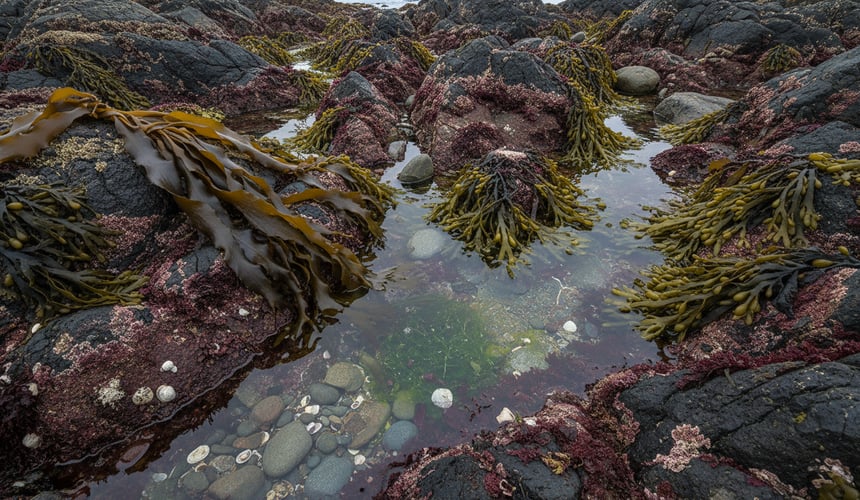
When considering seaweeds for agricultural applications, recognizing the differences in their bioactive compound profiles is relevant. Brown, red, and green seaweeds each possess a distinct array of compounds that can affect plant physiology. The question arises: What makes brown, red, and green seaweeds different in terms of the beneficial compounds they contain, and how do these differences affect their use as biostimulants?
Cropenta Insight
Understanding the particular bioactive compounds found in brown, red, and green seaweeds allows for a more targeted approach in developing biostimulant formulations. Different marine polysaccharides and polyphenolic compounds may offer distinct physiological effects, which can help professionals interpret research findings on seaweed extracts more effectively.
Diverse Bioactive Compounds Across Seaweed Types
Seaweeds are known for a wide range of bioactive molecules, including polyphenols, polysaccharides, and sterols [1]. These compounds are a significant part of their functional properties. However, the specific composition can vary substantially between the main classifications: brown, red, and green algae [2].
Brown seaweeds, such as Ascophyllum nodosum, are characterized by polysaccharides like alginic acid, laminarin, and fucoidans, alongside mannitol. These compounds may contribute to osmotic balance and stress responses in plants. Polyphenolic compounds are also present in brown seaweeds [3].
Red seaweeds contain different types of polysaccharides, such as carrageenans and agar, which are structurally distinct from those found in brown seaweeds. They also contain characteristic pigments like phycobiliproteins. These compounds may influence diverse physiological pathways in plants.
Green seaweeds, while sharing some common compounds with their brown and red counterparts, are noted for their high concentrations of antioxidant compounds, including various polyphenols [3]. Their polysaccharide profiles often include ulvans. Like other seaweeds, green algae also contain essential fatty acids, dietary fibers, and carotenoids, which are recognized for their bioactive potential [4].
Implications for Agricultural Biostimulants
The variations in bioactive compounds mean that extracts from different seaweed types may elicit distinct physiological responses in crops. For instance, the specific marine polysaccharides found in brown seaweeds may play a role in water management and root activity, while the polyphenols prevalent in green seaweeds could be relevant in managing oxidative pressure. These differences suggest that not all seaweed extracts can be considered interchangeable, and results observed with one seaweed species or extract may not automatically apply to others.
Understanding these distinctions allows for a more informed selection of seaweed-derived raw materials for biostimulant formulations, potentially enabling more targeted approaches to specific crop challenges or physiological processes. The functional value of each seaweed type is associated with its specific set of bioactive compounds [2].
Technical Summary
Brown, red, and green seaweeds possess distinct profiles of bioactive compounds, including various marine polysaccharides, polyphenols, and pigments. Brown seaweeds feature alginic acid, laminarin, and fucoidans, while red seaweeds contain carrageenans and agar. Green seaweeds are known for ulvans and high antioxidant polyphenol content. These chemical differences may lead to varying physiological effects when used as agricultural biostimulants.
Disclaimer
This article has been prepared with AI assistance using publicly available sources and is intended solely for general technical and educational purposes. It does not constitute professional advice or recommendations for specific applications. Cropenta makes no warranties regarding the accuracy, completeness or applicability of the information. No rights may be derived from its contents, and Cropenta accepts no liability for its use to the extent permitted by law.
Technical Questions
How do marine polysaccharides from different seaweeds vary?
Marine polysaccharides vary significantly by seaweed type. Brown seaweeds contain alginic acid, laminarin, and fucoidans. Red seaweeds typically feature carrageenans and agar. Green seaweeds are often characterized by ulvans. These structural differences in polysaccharides can influence their interactions with plant tissues and their potential physiological roles as biostimulants.
What role do polyphenolic compounds play in seaweed biostimulants?
Polyphenolic compounds, abundant in various seaweeds, especially green types, are recognized for their antioxidant properties. In agriculture, these compounds may contribute to a plant's capacity to manage oxidative pressure from environmental factors. Their presence can influence overall physiological responses, but specific mechanisms can vary based on the compound's structure and concentration.
Can extracts from one seaweed type substitute for another in agriculture?
No, extracts from different seaweed types cannot automatically substitute for one another. Due to distinct profiles of bioactive compounds, such as specific polysaccharides, pigments, and secondary metabolites, their physiological effects on crops may differ. Research findings specific to one seaweed species or extract may not be generalizable to others, necessitating a nuanced approach.
Related articles
Related Products



Looking for something specific?
Our team is there to help you find the right raw materials and solutions for your formulations

