Evaluating Rumen-Protected Protein Quality for Dairy Rations
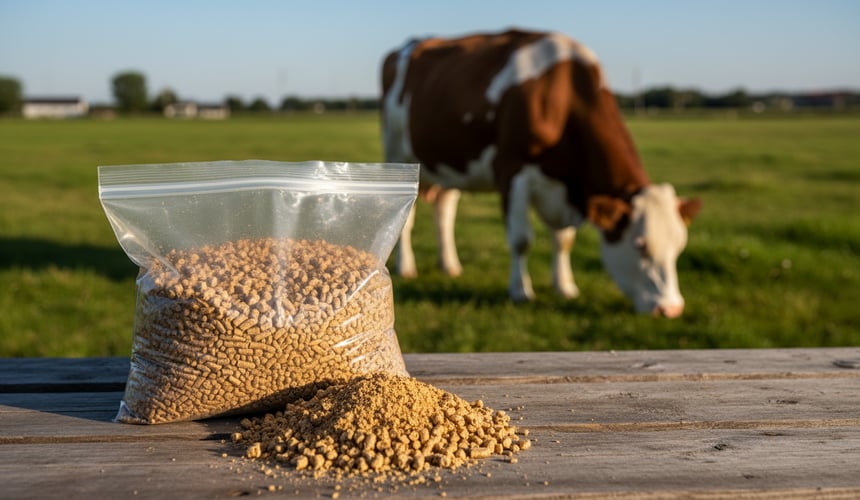
Optimizing dairy rations for protein efficiency and animal performance is a constant goal for feed manufacturers, with the accurate evaluation of rumen-protected proteins being a critical aspect. These specialized proteins are designed to bypass microbial degradation in the rumen, delivering more amino acids directly to the small intestine for absorption [1]. However, merely considering the rumen-undegradable protein (RUP) percentage is often insufficient to determine the true nutritional quality and formulation value of these ingredients.
Cropenta Insight
Beyond basic RUP percentages, a key insight into rumen-protected proteins lies in understanding how specific processing methods critically influence both rumen bypass and subsequent intestinal digestibility. For instance, specific heat treatments or controlled Maillard reactions can improve rumen protection while maintaining amino acid availability. This distinction is crucial for formulators to correctly value an ingredient's contribution to metabolizable protein, moving beyond simple crude protein content, and ensuring optimal nutrient delivery for dairy cattle without over- or under-supplying essential amino acids.
Understanding Rumen Degradation and Intestinal Digestibility
Dietary protein in dairy cows undergoes significant microbial degradation in the rumen, with the resulting ammonia and peptides utilized for microbial protein synthesis. The remaining protein, known as rumen-undegradable protein (RUP), passes to the small intestine. High-quality microbial protein is a vital amino acid source for the cow; however, for high-producing dairy cows, additional RUP is often necessary to meet metabolizable protein requirements [2].
Evaluating rumen-protected proteins involves distinct measurements. Rumen degradation kinetics, often determined using in-situ (nylon bag) incubation in rumen-fistulated cows, characterizes how much protein is degraded in the rumen and at what rate. Key parameters include the soluble fraction (S), the washable but insoluble fraction (W-S), the potentially degradable fraction (D), and the undegradable fraction (U), alongside the fractional degradation rate (Kd). The assumed fractional passage rate (Kp), estimated from factors like intake, influences the calculated RUP.
However, a high RUP value alone does not guarantee nutritional value. The rumen-undegraded protein must also be highly digestible in the small intestine. An ingredient with high RUP but low intestinal digestibility will provide limited usable protein to the animal.
The Role of Processing and Nutritional Valuation Systems
Various methods are employed to create rumen-protected proteins, including heat treatments and controlled Maillard reactions, where reducing sugars react with amino groups to form melanoidins.
Once degradation and digestibility characteristics are measured, they are integrated into nutritional protein valuation systems. These systems translate raw data into practical formulation values, such as the Dutch DVE/OEB system (intestinal digestible protein and rumen protein balance), the German nXP/RNB system, INRA PDI, or CNCPS metabolizable protein. These calculated values vary between systems and depend on the assumed passage rate, providing a comprehensive assessment of an ingredient’s contribution to the animal's metabolizable protein supply. For instance, according to the product documentation for Bypass Soy Protein MP, the calculated RUP is above 80% at a 6%/h passage rate with nearly 100% intestinal digestibility.
Practical Implications for Ration Formulation
Accurately evaluating rumen-protected proteins through in-situ degradation and intestinal digestibility allows formulators to move beyond simple crude protein levels and precisely optimize the amino acid supply to dairy cows. This approach can contribute to improved nitrogen utilization efficiency and may support better management of ruminal ammonia levels. For example, cows fed rations with lower protein sources but supplemented with rumen-protected amino acids may exhibit improved nitrogen utilization efficiency and reduced ruminal ammonia concentrations [1, 3].
Understanding the interplay between RUP values, intestinal digestibility, and the assumed passage rate (Kp) is critical. A high RUP percentage without corresponding high intestinal digestibility provides little nutritional benefit. This approach enables more precise ration formulation, helping to balance protein supply and support animal performance.
Technical Summary
Evaluating rumen-protected protein quality for dairy rations necessitates a comprehensive understanding of rumen bypass and intestinal digestibility. Key methods involve in-situ degradation kinetics and mobile nylon bag techniques. These in-vivo assessments provide reliable data, integrated into nutritional valuation systems like DVE/OEB, to calculate metabolizable protein and account for assumed passage rates. Such detailed analysis supports feed manufacturers in optimizing protein efficiency and precisely tailoring amino acid supply in dairy cattle rations.
Disclaimer
This article has been prepared with AI assistance using publicly available sources and is intended solely for general technical and educational purposes. It does not constitute professional advice or recommendations for specific applications. Cropenta makes no warranties regarding the accuracy, completeness or applicability of the information. No rights may be derived from its contents, and Cropenta accepts no liability for its use to the extent permitted by law.
Technical Questions
Why are in-situ measurements preferred over in-vitro tests for protected proteins?
In-situ measurements in rumen-fistulated cows are preferred because they accurately simulate the complex microbial environment and physical dynamics of the rumen.
How does the assumed passage rate (Kp) impact the calculated RUP value?
The assumed passage rate (Kp) is a critical factor in calculating RUP. A faster Kp means less time for protein degradation in the rumen, resulting in a higher calculated RUP.
What is the significance of reactive lysine in evaluating protected protein quality?
Reactive lysine, with a free epsilon-amino group, is crucial for absorption. Processing, especially Maillard reactions, can bind this lysine, reducing its bioavailability despite total lysine levels remaining constant. Its presence is a key indicator of the ingredient's nutritional value.
How do nutritional protein valuation systems like DVE/OEB translate scientific data?
Nutritional protein valuation systems integrate measured rumen degradation and intestinal digestibility data to calculate formulation values like intestinal digestible protein and rumen protein balance. These systems provide a comprehensive framework to assess an ingredient's overall contribution to the animal's amino acid requirements, moving beyond isolated RUP or crude protein percentages to guide balanced ration formulation.
Related articles



Related Products

Looking for something specific?
Our team is there to help you find the right raw materials and solutions for your formulations

