How Does Silicon Reinforce Plant Cell Walls Against Environmental Stress?
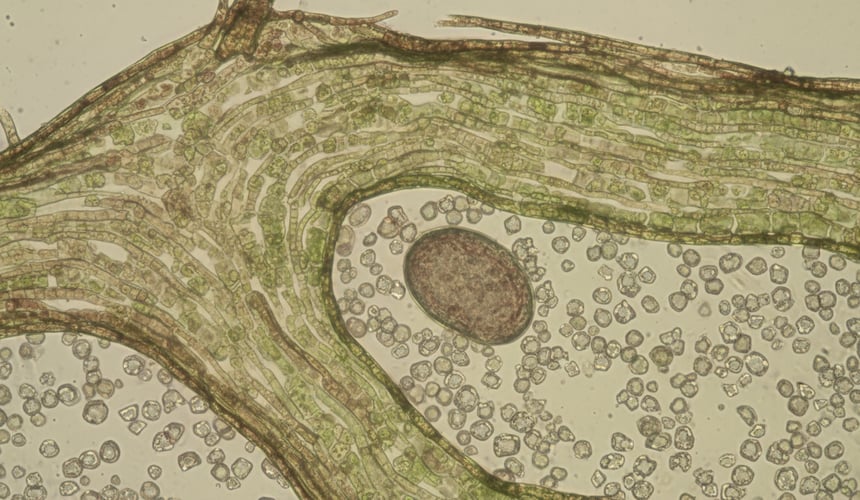
Beyond general resilience to stressors, understanding how silicon specifically strengthens plant cell walls provides insight into crop resilience. The integration of silicon into plant structures is proposed to increase mechanical strength and the ability of crops to maintain structural integrity under various environmental challenges [1].
Cropenta Insight
The precise mechanisms of silicon deposition in plant cell walls are key to understanding its role in structural resilience.
Silicon Deposition and Cell Wall Integrity
Silicon is known to be deposited in plant cell walls, influencing their composition and organization [1, 2]. This deposition can occur as silicon dioxide (SiO2) within the cell wall matrix, forming a rigid layer that may contribute to the wall’s mechanical properties. This structural reinforcement is considered a key mechanism by which silicon can modulate plant responses to environmental pressures [3].
The physical presence of silicon within the cell wall is associated with increased rigidity, which may provide physical barriers against external factors. This enhancement of cell wall integrity is observed to vary across plant species, though the extent of silicon uptake and accumulation varies considerably between them [1]. For instance, high silicon accumulators like rice exhibit distinct effects compared to other crops.
Physiological Role in Stress Modulation
The reinforcement of cell walls by silicon is not merely a passive structural change. It can be linked to a plant’s broader physiological responses to environmental pressure. By contributing to cell wall stability, silicon may support cellular and tissue integrity under conditions of osmotic, salt, or drought pressure [3, 4]. The stabilized cell membranes and scavenging of reactive oxygen species (ROS) are also factors associated with silicon’s presence, which collectively may contribute to improved nutrient uptake and physiological resilience, potentially leading to enhanced plant performance under specific stress conditions [1].
Specifically, during conditions such as salinity, silicon may help to regulate ion homeostasis and modulate key ion transporters, further contributing to structural resilience. These mechanisms collectively suggest a role for silicon in enhancing the plant's capacity to endure challenging environmental conditions, particularly through its contribution to the physical and chemical properties of cell walls [3].
Considering Crop-Specific Responses
It is important to acknowledge that the effectiveness and specific mechanisms of silicon’s action are proposed to vary between crop species, largely depending on their silicon uptake efficiency and accumulation patterns [1]. Results observed in high-accumulating crops may not directly apply to those with lower silicon uptake capabilities. Therefore, understanding the crop-specific physiological responses and the extent of silicon integration into cell walls is crucial for assessing its practical implications in different agricultural systems.
Technical Summary
Silicon is proposed to contribute to crop resilience by reinforcing plant cell walls through deposition, influencing mechanical strength and overall structural integrity. This process may aid in maintaining cellular stability under various environmental pressures, such as osmotic and salt stress, and is associated with improved physiological functions like nutrient uptake. Understanding crop-specific responses and uptake efficiencies is crucial for assessing practical implications.
Disclaimer
This article has been prepared with AI assistance using publicly available sources and is intended solely for general technical and educational purposes. It does not constitute professional advice or recommendations for specific applications. Cropenta makes no warranties regarding the accuracy, completeness or applicability of the information. No rights may be derived from its contents, and Cropenta accepts no liability for its use to the extent permitted by law.
Technical Questions
What is the primary form of silicon taken up by plants?
This process is crucial for silicon's functions.
How does silicon deposition physically strengthen the cell wall?
Silicon deposits within the plant cell wall, often as amorphous silicon dioxide (SiO2). This forms a protective layer, increasing the rigidity and mechanical strength of the cell wall. This physical reinforcement is believed to enhance the plant's structural integrity, contributing to its resilience against external pressures.
Are all crops equally responsive to silicon application?
No, responsiveness to silicon varies significantly among crop species. Some plants, like rice, are strong silicon accumulators with highly efficient uptake mechanisms, showing pronounced benefits. Other crops may accumulate less silicon and exhibit different physiological responses, making species-specific assessment important.
Related articles

Related Products


Looking for something specific?
Our team is there to help you find the right raw materials and solutions for your formulations

