What is Glycine Betaine and What Does It Do in Plants?
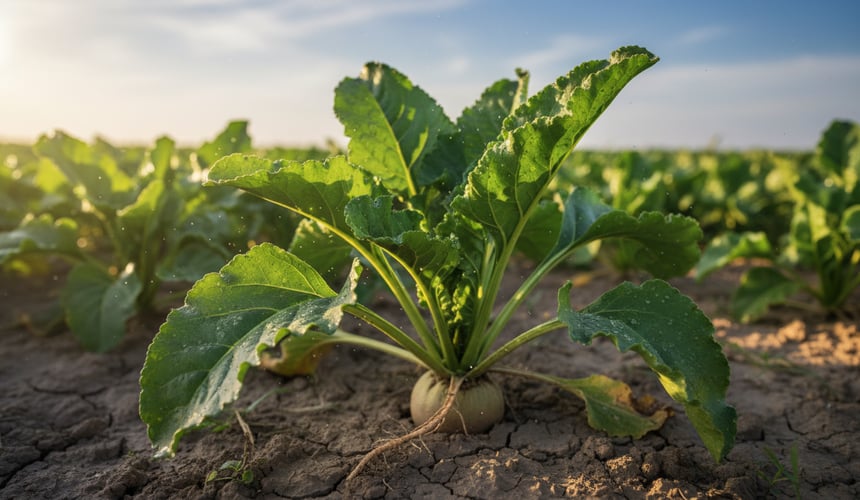
When plants encounter environmental challenges like drought or salinity, maintaining cellular water balance becomes critical for survival and continued function. One key compound involved in this process is glycine betaine, a naturally occurring molecule that helps plants regulate their internal osmotic conditions. Its role as a compatible solute allows plant cells to adjust their water potential without disrupting normal metabolic activities.
Cropenta Insight
Understanding glycine betaine’s precise role in osmotic adjustment helps clarify its potential contributions to plant resilience. It allows professionals to differentiate between the general concept of a plant's ability to withstand adversity and the specific physiological mechanisms at play, such as membrane stabilization and photosynthetic protection under conditions of water deficit. This distinction is important for evaluating plant responses to various environmental pressures.
Glycine Betaine as an Osmoprotectant
Glycine betaine is classified as a compatible solute, or osmoprotectant, meaning it can accumulate in high concentrations within plant cells without interfering with enzymatic processes or cellular functions [1, 2]. This accumulation is particularly important under osmotic stress conditions, such as those caused by drought or salinity, where external water potential is low [1]. By increasing the solute concentration inside the cell, glycine betaine helps to lower the cell's water potential, facilitating water uptake or retention even when external water availability is limited [1, 2].
Mechanisms of Osmotic Adjustment in Plants
The primary function of glycine betaine in plants under stress involves osmotic adjustment. This physiological process enables plants to maintain turgor and cellular function by balancing water movement across cell membranes . Under drought or salinity, plants synthesize or absorb glycine betaine, which then accumulates in the cytoplasm. This accumulation helps stabilize cellular components, including proteins and membranes, protecting them from damage that might otherwise occur due to water loss or high salt concentrations [1].
Research suggests that glycine betaine contributes to the stabilization of membranes and macromolecules within plant cells. This stabilization is considered essential for safeguarding photosynthetic processes, which are often compromised under abiotic stress conditions [1]. Beyond osmotic regulation, glycine betaine may also play a role in modulating stress hormones and reactive oxygen species, further supporting plant responses to environmental pressures [3, 4].
Supporting Plant Physiological Function Under Stress
The presence of glycine betaine may assist plants in sustaining various physiological functions when exposed to drought, salinity, or heat [4]. Its ability to maintain cellular water balance helps ensure that metabolic pathways, including photosynthesis and respiration, can continue with reduced disruption [1]. This contributes to the overall resilience of plants facing challenging growing environments, allowing them to better cope with water-deficit conditions and other related abiotic stressors.
Technical Summary
Glycine betaine functions as a compatible solute, enabling plants to adjust cellular osmotic potential under stress. Its accumulation helps stabilize cell membranes and macromolecules, protecting photosynthetic machinery from damage. This mechanism contributes to maintaining cellular water balance, supporting physiological functions, and potentially assisting plant resilience under conditions such as drought, salinity, and heat stress.
Disclaimer
This article has been prepared with AI assistance using publicly available sources and is intended solely for general technical and educational purposes. It does not constitute professional advice or recommendations for specific applications. Cropenta makes no warranties regarding the accuracy, completeness or applicability of the information. No rights may be derived from its contents, and Cropenta accepts no liability for its use to the extent permitted by law.
Technical Questions
Does glycine betaine accumulate in all plant species?
The capacity to synthesize and accumulate glycine betaine varies considerably among plant species. Some plants, known as glycine betaine accumulators, naturally produce and store significant amounts, while others produce very little or none. This difference influences their natural ability to cope with osmotic stress through this particular mechanism.
How does external application of glycine betaine affect plants?
External application of glycine betaine is considered in various agronomic contexts to support plants under stress. However, its effectiveness can depend on factors such as crop type, application timing, concentration, and the specific environmental conditions. The physiological responses observed are often linked to its role in cellular osmotic adjustment and protection mechanisms.
Is glycine betaine the only compound involved in osmotic adjustment?
No, glycine betaine is one of several compatible solutes plants utilize for osmotic adjustment. Other compounds include proline, sugars like sucrose, and various sugar alcohols. The specific mix and concentration of these osmolytes can vary depending on the plant species, the type of stress encountered, and the environmental conditions.
Related articles

Related Products



Looking for something specific?
Our team is there to help you find the right raw materials and solutions for your formulations

