Why Lecithin-Oil Blends Perform Differently Across Poultry, Swine, and Ruminants
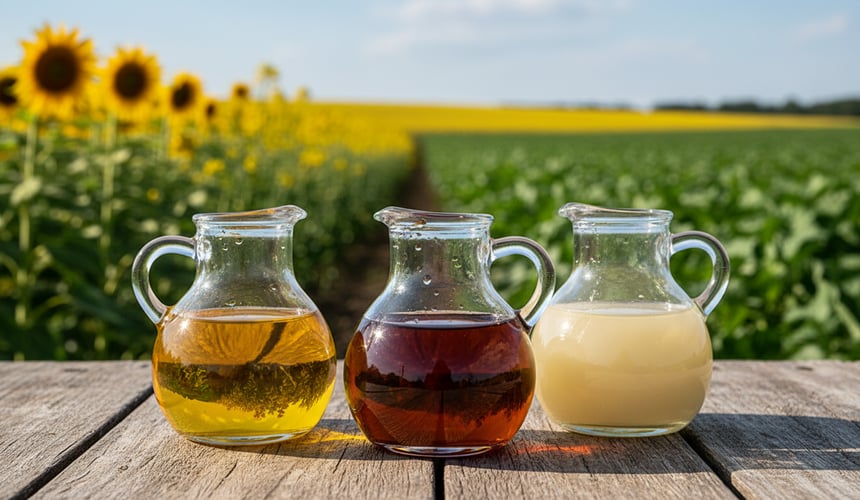
Lecithin-oil combinations sometimes perform differently in terms of fat digestibility and energy delivery across poultry, pigs, and ruminants due to fundamental physiological variations in their fat digestion and absorption mechanisms. These differences affect how effectively the phospholipids in lecithin can aid the emulsification and hydrolysis of dietary fats, ultimately influencing nutrient availability and energy value from the blend.
Cropenta Insight
Understanding the physiological nuances of fat digestion across species is crucial for optimizing lecithin-oil blends. For formulators, this means moving beyond general emulsifier concepts to evaluate how specific blend compositions interact with an animal's endogenous bile salts and lipase activity. Such tailored approaches help ensure predictable energy delivery and nutrient utilization in diverse animal feed applications.
Fat Digestion Mechanisms Across Species
Fat digestion begins with emulsification, a process where dietary fats are broken down into smaller droplets, increasing the surface area for lipase enzymes. Bile salts and phospholipids are key endogenous emulsifiers. However, the production and activity of these substances vary considerably among animal species, especially in young animals. Lecithin, a mixture of phospholipids, glycolipids, triglycerides, and other components, can supplement these endogenous emulsifiers and supply fatty acids and energy [1].
In young animals, such as piglets and chicks, the production of bile salts and pancreatic lipase is often limited, leading to lower fat digestibility. As these animals mature, their digestive systems become more efficient. Saturated fats, with their higher melting points, are particularly challenging for young animals to digest compared to unsaturated oils [2]. The fatty acid composition of dietary fat, including chain length and saturation, significantly impacts its melting point, digestibility, and oxidative stability [1].
Ruminant Specifics: Rumen Metabolism and Abomasal Infusion Studies
In ruminants, fat digestion is distinctive due to the rumen environment. Dietary fats undergo biohydrogenation by rumen microbes, altering their fatty acid profile before reaching the small intestine. Research on ruminants, such as the study by Gutierrez-Oviedo et al. (2024), has investigated the effects of abomasal infusion of soybean or sunflower lecithin to bypass rumen degradation, assessing their impact on fatty acid digestibility and milk production in cattle [1]. This approach allows for a clearer understanding of post-ruminal fat digestion, separate from rumen microbial interference.
The Gutierrez-Oviedo study focused on the fatty acid and phospholipid composition of dietary lecithin and its potential to influence fatty acid digestibility and milk production. While lecithin acts as an emulsifier, its primary role in ruminants, particularly when rumen-protected or infused post-ruminally, may extend to directly providing digestible fatty acids and phospholipids that support metabolic processes . The study's findings indicate that the specific fatty acid profile of the lecithin source could modulate its effects on overall fat digestibility, underscoring that not all lecithin-oil blends will yield identical results in ruminant diets [1].
Poultry and Swine: Enhancing Intestinal Digestion
For monogastric animals like poultry and swine, lecithin's role in the small intestine is more direct. It acts to emulsify fats, facilitating the action of pancreatic lipase and the formation of micelles necessary for absorption. Studies have shown that emulsifiers can enhance nutrient digestibility in animals, particularly when fed diets containing certain fat sources [3]. However, the extent of this enhancement can depend on the type of fat and the age of the animal.
For instance, some research suggests that while lecithin can improve the apparent digestibility of dietary fat in calves and humans, its effect in pigs may be less pronounced across the whole digestive tract, though it may influence the small intestine [4]. Other studies found no significant effect of dietary lecithin on fat digestibility in certain contexts, but observed tendencies for interaction between lecithin and the dietary fat type [2]. This highlights that the efficacy of lecithin-oil blends in poultry and swine is not uniform and may depend on factors such as the fat source's saturation level, the animal's age, and the overall diet composition.
Practical Implications for Formulation
The varying responses across species demonstrate that a generic application of lecithin-oil blends is unlikely to yield optimal results in all animal feed formulations. For ruminants, considerations must extend to the degree of rumen protection or the specific composition of fatty acids and phospholipids that bypass the rumen [1]. For monogastrics, the focus remains on supporting intestinal emulsification, especially in young animals or when incorporating fats with lower inherent digestibility, such as more saturated options [2, 3].
Understanding these species-specific physiological and biochemical factors is key to tailoring lecithin-oil blend compositions. Formulators must consider the animal's age, the other dietary fat sources, and the target energy system (e.g., digestible energy, metabolisable energy, net energy) to accurately predict the blend's contribution to fat digestibility and overall energy supply [1].
Technical Summary
Fat digestibility from lecithin-oil blends varies significantly across poultry, swine, and ruminants due to species-specific physiological differences in fat digestion, bile salt production, and lipase activity. Ruminant digestion is influenced by rumen biohydrogenation, while monogastrics rely on intestinal emulsification, which is especially critical in young animals. The efficacy of blends depends on their phospholipid and fatty acid composition, interacting uniquely with each species' digestive processes and dietary fat types.
Disclaimer
This article has been prepared with AI assistance using publicly available sources and is intended solely for general technical and educational purposes. It does not constitute professional advice or recommendations for specific applications. Cropenta makes no warranties regarding the accuracy, completeness or applicability of the information. No rights may be derived from its contents, and Cropenta accepts no liability for its use to the extent permitted by law.
Technical Questions
How does the fatty acid composition of lecithin influence its efficacy in animal feed?
The fatty acid composition, including saturation and chain length, of phospholipids in lecithin can impact its emulsifying properties and how readily its constituent fatty acids are digested. For example, highly unsaturated lecithins may support better emulsification and provide more digestible energy, while saturated ones might be less effective in certain species or younger animals, affecting overall fat digestibility and energy delivery.
What is the role of endogenous bile salts compared to supplemental lecithin in fat digestion?
Endogenous bile salts are crucial for initial fat emulsification and micelle formation. Supplemental lecithin acts synergistically, enhancing this natural process. Lecithin's phospholipids can augment the emulsifying capacity, especially when endogenous bile salt production is limited, such as in young animals or during periods of high fat intake, thereby supporting more efficient fat hydrolysis by lipase.
How do lecithin-oil blends affect the energy value calculations in feed formulations?
Lecithin-oil blends contribute energy through their fatty acid content and by enhancing the digestibility of other dietary fats. Formulators must consider the blend's specific composition and the target animal's digestive physiology to accurately calculate digestible, metabolizable, or net energy values. Improved fat digestibility often translates to higher energy utilization, but this must be assessed within the context of the chosen energy system and species.
Related articles


Related Products


Looking for something specific?
Our team is there to help you find the right raw materials and solutions for your formulations

