How Raw Material Dissolution Affects Liquid Fertilizer Performance
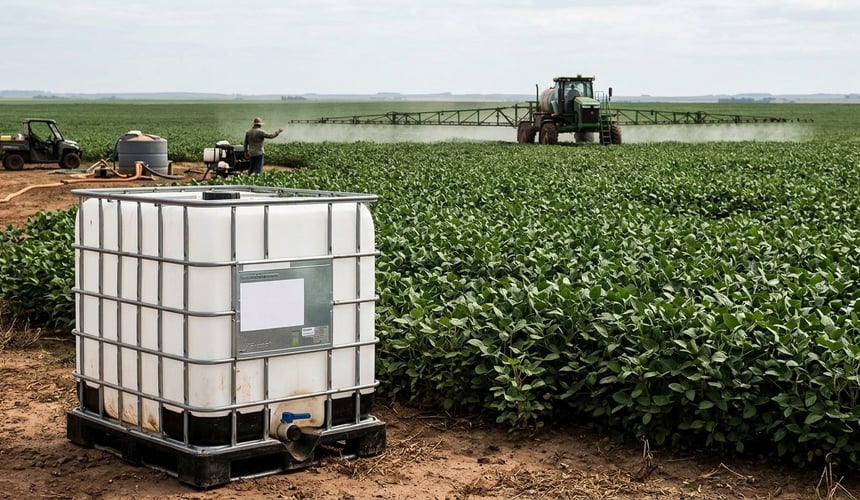
Why do some raw materials dissolve better than others in liquid fertilizers, and how does this affect the fertilizer's effectiveness? The dissolution characteristics of raw materials are central to the stability and performance of liquid fertilizer formulations. Variations in solubility can significantly impact how well a fertilizer functions and how readily nutrients become available to plants.
Cropenta Insight
In liquid fertilizer formulations, the quality and dissolution properties of raw materials are paramount. Understanding factors like particle size, purity, and the chemical nature of ingredients is crucial for formulators.
Factors Influencing Raw Material Dissolution
The dissolution rate and completeness of raw materials in liquid fertilizer formulations are influenced by several key factors. These include the physical form, chemical properties, and purity of the raw material. For example, materials in a finer powder form generally dissolve more quickly than coarser granules due to increased surface area [1]. However, beyond physical form, the intrinsic chemical structure and any impurities present can either facilitate or hinder the dissolution process.
For instance, some organic raw materials may undergo excessive purification processes, which can sometimes alter their natural properties, affecting how they interact within a formulation [1]. While purity is often associated with quality, the specific processing methods can influence a material's solubility and overall suitability for liquid applications. If raw materials do not dissolve completely, they can lead to sedimentation or crystallization, compromising the stability of the liquid fertilizer.
Impact on Formulation Stability and Nutrient Availability
Incomplete dissolution of raw materials can lead to several challenges in liquid fertilizer formulations. Undissolved particles can clog spray nozzles, accumulate in tanks, and reduce the uniformity of nutrient application. Over time, these issues can result in significant maintenance problems and inconsistent nutrient delivery to crops [2].
Furthermore, if nutrients are not fully dissolved, their availability to plants is compromised. Plants can only absorb nutrients that are in a soluble form [3]. A liquid fertilizer that appears stable but contains partially dissolved or precipitated components will not deliver its full nutrient potential. This means that even if a formulation contains the correct amount of a specific nutrient, its effectiveness on the plant may be diminished if the raw material has not properly dissolved.
The choice of raw materials with optimal dissolution properties is thus critical for ensuring both the physical stability of the liquid fertilizer and the biological availability of its nutrients. This balance between formulation integrity and agronomic effectiveness is a central consideration in developing high-quality crop nutrition products [4].
Technical Summary
The dissolution properties of raw materials are critical for liquid fertilizer performance. Factors such as physical form, purity, and processing impact solubility, directly influencing formulation stability and nutrient availability to plants. Incomplete dissolution can lead to application issues and reduced nutrient effectiveness, underscoring the importance of selecting raw materials that dissolve completely for optimal agronomic outcomes.
Disclaimer
This article has been prepared with AI assistance using publicly available sources and is intended solely for general technical and educational purposes. It does not constitute professional advice or recommendations for specific applications. Cropenta makes no warranties regarding the accuracy, completeness or applicability of the information. No rights may be derived from its contents, and Cropenta accepts no liability for its use to the extent permitted by law.
Technical Questions
What role does particle size play in raw material dissolution?
Smaller particle sizes generally lead to faster and more complete dissolution due to increased surface area interacting with the solvent. This can significantly reduce the risk of sedimentation and improve the homogeneity of liquid fertilizer formulations, ensuring more uniform nutrient distribution during application.
How do impurities affect the dissolution of raw materials in fertilizers?
Impurities can interfere with the dissolution process by forming precipitates or creating insoluble complexes. This can reduce the amount of available nutrient in the solution and compromise the long-term stability of the fertilizer. High-quality raw materials with minimal impurities are often preferred for this reason.
Can processing methods influence a raw material's solubility?
Yes, the processing of raw materials, such as excessive purification, can sometimes alter their natural properties, impacting solubility. Milder processing methods may preserve the material's inherent characteristics that are conducive to better dissolution and integration within liquid formulations.
- 1.Unrefined plant raw materials are key to nutritious food by T Germerdonk · 2025
- 2.Controlled-release fertiliser: Recent developments and by S Govil · 2024
- 3.Controlled Release Fertilizers: A Review on Coating Materials by D Lawrencia · 2021
- 4.Review of research and innovation on novel fertilizers for by TMC Maaz · 2025
Related articles
Related Products



Looking for something specific?
Our team is there to help you find the right raw materials and solutions for your formulations

