Extrusion's Impact on Starch and Fiber in Full-Fat Soybeans
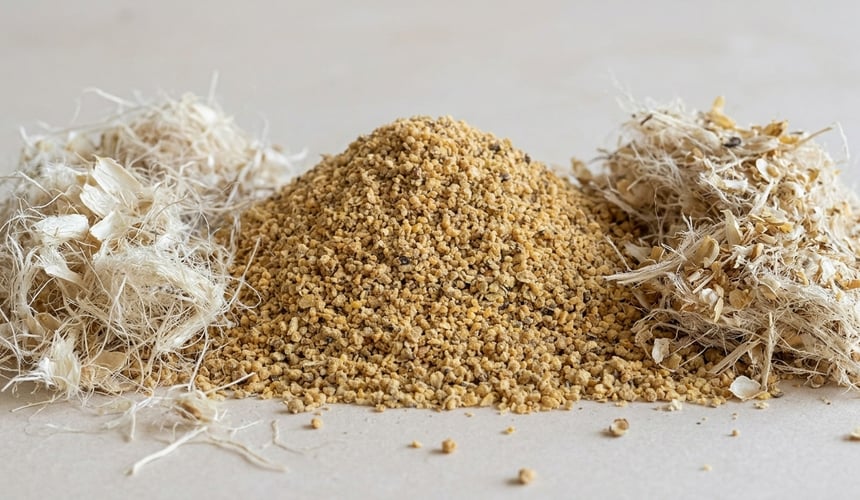
When full-fat soybeans undergo extrusion, the process induces specific thermo-mechanical changes in their starch and fiber components, offering nutritional implications distinct from the more commonly discussed effects on protein. This transformation goes beyond simply reducing anti-nutritional factors and impacts how animals can utilize the carbohydrate fraction of the ingredient.
Cropenta Insight
Extrusion's nuanced effects on starch and fiber highlight the importance of understanding ingredient processing history. For formulators, recognizing the specific thermo-mechanical changes in full-fat soybeans is essential to accurately evaluate their energy contribution. This detailed insight into carbohydrate modification, separate from protein effects, allows for a more precise assessment of extruded soybeans' value in diverse animal nutrition applications, supporting informed sourcing decisions for feed ingredient suppliers.
Thermo-Mechanical Effects on Starch Gelatinization
Extrusion subjects full-fat soybeans to high temperatures, pressure, and shear forces, leading to significant structural changes in starch. The primary alteration for starch is gelatinization, where the organized crystalline structure of starch granules is disrupted, and amylose and amylopectin molecules swell and leach out. This process increases the susceptibility of starch to enzymatic digestion, thereby enhancing its digestibility for monogastric animals like pigs and poultry [1, 2].
The degree of starch gelatinization is influenced by several extrusion parameters, including barrel temperature, moisture content, and screw speed . Studies indicate that higher temperatures and optimal moisture levels generally promote more complete gelatinization. This structural change is critical because raw starch in soybeans has limited digestibility, particularly for younger animals whose digestive systems may not efficiently break down complex carbohydrates. Extrusion, therefore, makes the starch more accessible, contributing to a higher digestible and metabolizable energy content [1].
Modification of Fiber Components
Beyond starch, extrusion also impacts the fibrous components of full-fat soybeans, which primarily consist of non-starch polysaccharides (NSP). The thermo-mechanical forces can lead to a partial degradation and solubilization of these fiber fractions. This modification can alter the physical properties of the fiber, such as water-holding capacity and viscosity [3]. While the overall crude fiber content may not change dramatically, the structural modification can influence gut motility and nutrient absorption.
For monogastric animals, fiber modification may contribute to a different digestive environment. Reduced viscosity from partially degraded NSP could theoretically impact nutrient diffusion and absorption, though extensive degradation of structural carbohydrates is not the primary goal of extrusion for full-fat soybeans [3]. For ruminants, changes in fiber structure might affect the rate and extent of microbial fermentation in the rumen.
Nutritional Implications for Animal Feed
The changes in starch gelatinization and fiber modification directly influence the nutritional value of extruded full-fat soybeans. For monogastric animals, the enhanced starch digestibility means more glucose is available for energy, contributing to higher digestible energy (DE) and metabolizable energy (ME) values [1, 2]. This positions extruded full-fat soybeans as an energy source that can be incorporated into feed formulations.
While protein effects are often highlighted, the improved carbohydrate availability complements the protein contribution, offering a balanced energy and protein ingredient. The combined effects of processing on starch, fiber, and fat contribute to the overall energy density and nutrient utilization.
Distinction from Protein Effects and Other Processing Methods
It is important to differentiate these carbohydrate changes from the effects of extrusion on protein. While extrusion also reduces anti-nutritional factors like trypsin inhibitors and can alter protein structure to improve amino acid digestibility, the specific mechanisms affecting starch and fiber are distinct [1, 3]. Starch gelatinization and fiber modification primarily enhance carbohydrate availability, whereas protein changes focus on improving amino acid release and reducing anti-nutritional protein activity. Optimal processing aims for a balance, where anti-nutritional factors are reduced without over-processing that could damage protein or extensively degrade beneficial fiber components.
Comparing extrusion to other thermal treatments like toasting reveals different impacts on carbohydrates. Extrusion, as a thermo-mechanical process, can induce significant gelatinization and structural changes due to the combination of heat, moisture, pressure, and shear forces.
Technical Summary
Extrusion significantly alters starch and fiber in full-fat soybeans. Starch undergoes gelatinization, improving enzymatic digestibility and energy availability for monogastric animals. Fiber components experience structural modification and partial degradation, influencing physical properties and potentially nutrient diffusion. These carbohydrate changes, distinct from protein effects, contribute to the overall nutritional value and energy density of extruded full-fat soybeans in animal feed formulations.
Disclaimer
This article has been prepared with AI assistance using publicly available sources and is intended solely for general technical and educational purposes. It does not constitute professional advice or recommendations for specific applications. Cropenta makes no warranties regarding the accuracy, completeness or applicability of the information. No rights may be derived from its contents, and Cropenta accepts no liability for its use to the extent permitted by law.
Technical Questions
What is the primary effect of extrusion on starch in full-fat soybeans?
The primary effect is starch gelatinization, where the ordered crystalline structure of starch granules is disrupted. This process makes the starch more accessible to digestive enzymes, thereby improving its digestibility and increasing the energy available for monogastric animals. Key extrusion parameters like temperature and moisture content influence the extent of gelatinization.
How does extrusion affect the fiber components of full-fat soybeans?
Extrusion induces structural modifications in the fiber components, primarily non-starch polysaccharides (NSP). These thermo-mechanical forces can lead to partial degradation and solubilization of fiber fractions, altering properties such as water-holding capacity. While crude fiber content may not change significantly, these modifications can influence gut physiology and nutrient absorption.
What is the nutritional advantage of extruded full-fat soybeans regarding their carbohydrate content?
The nutritional advantage lies in the enhanced digestibility of starch and modified fiber. For monogastric animals, this leads to higher digestible and metabolizable energy values. The increased availability of glucose for energy, alongside the high fat content, positions extruded full-fat soybeans as an efficient combined protein and energy ingredient in feed formulations.
Related articles

Related Products


Looking for something specific?
Our team is there to help you find the right raw materials and solutions for your formulations

