Why Feed Mills Need Consistent Rumen-Protected Soy Protein Quality
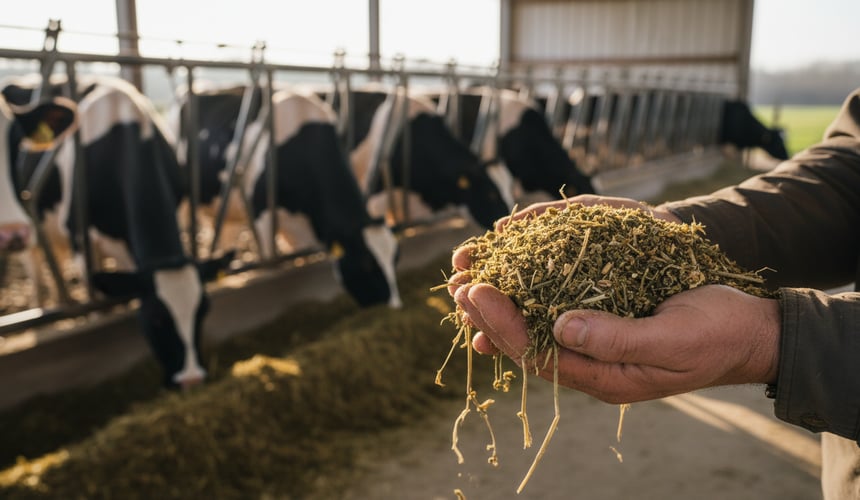
Variability in the quality of rumen-protected soy protein can significantly affect the predictability of metabolizable protein supply in dairy rations. Feed manufacturers rely on consistent ingredient performance to formulate precise diets that meet the nutritional needs of high-producing dairy cows. When the protection or intestinal digestibility of bypass protein sources is inconsistent, it introduces uncertainty into the predicted nutrient supply, potentially impacting animal performance and feed efficiency.
Cropenta Insight
Understanding how different processing methods influence protein bypass and subsequent intestinal absorption is crucial. Formulators must consider these mechanistic factors, beyond simply stated RUP values, to select ingredients that consistently deliver metabolizable protein. This approach supports precise ration balancing and helps optimize animal performance in modern dairy production.
The Challenge of Variability in Bypass Protein Quality
Rumen-undegradable protein (RUP), also known as bypass protein, is designed to escape degradation by rumen microbes and instead be digested in the small intestine, providing amino acids directly to the animal. While the concept of protein protection is straightforward, the effectiveness and consistency of this protection in commercial ingredients can vary significantly [1]. Factors influencing this variability include the source material, the specific protection method employed, and the control over processing conditions.
For example, protein protection methods often involve heat or chemical treatments. According to some suppliers, a controlled Maillard reaction, involving reducing sugars such as molasses, aims to make protein resistant to rumen microbial degradation while preserving amino acid availability in the small intestine. However, inadequate or excessive processing can compromise this balance. According to some research, over-processing may lead to reduced intestinal digestibility of the protein, even if rumen bypass is high, thereby limiting the actual amino acid supply to the cow [2].
Impact on Feed Formulation and Dairy Cow Nutrition
Inconsistent quality in rumen-protected soy protein directly translates into unreliable metabolizable protein (MP) supply. Nutritional protein valuation systems, such as the Dutch DVE/OEB system or the CNCPS metabolizable protein system, calculate MP based on assumed RUP values and intestinal digestibility. If the actual RUP or its intestinal digestibility deviates from these assumed values, the MP supply to the cow will be either insufficient or in excess of what was formulated.
This unpredictability can lead to several negative outcomes for dairy operations. An underestimation of MP supply may result in lower milk protein yield, reduced nitrogen utilization efficiency, and potentially compromise overall animal health and productivity. Conversely, an overestimation could lead to excess nitrogen excretion, increasing feed costs and environmental impact [1]. Studies suggest that formulating rations using rumen-protected amino acids may improve nitrogen utilization by reducing overall nitrogen intake while maintaining production parameters [1, 3].
Furthermore, the reliance on in-vitro methods for assessing protein quality can contribute to this variability. According to some studies, in-vitro degradation tests may not accurately reflect in-situ measurements in rumen-fistulated cows, particularly for heat- and Maillard-protected proteins. These tests can overstate rumen protection compared to in-vivo measurements, creating a disconnect between declared values and actual performance in the animal [2]. This highlights the importance of using robust, in-situ and in-vivo techniques for accurate characterization.
Ensuring Consistency Through Quality Control
For feed mills, ensuring consistent quality of rumen-protected soy protein requires rigorous quality control measures that extend beyond simply checking crude protein content. It necessitates a focus on the consistency of the protection process itself and the resulting intestinal digestibility. Parameters such as reactive lysine content, which reflects the degree of Maillard reaction, can offer insights into the quality of protection. Total lysine may remain unchanged even if reactive lysine, and thus amino acid digestibility, is compromised by over-processing [4].
According to some researchers, measurements of rumen degradation kinetics (S, W-S, D, U, Kd) and intestinal digestibility, performed using techniques like the mobile nylon bag method in cannulated cows, provide a comprehensive assessment of a protein source's nutritional value.
Such rigorous characterization, supported by independent research, provides feed formulators with more accurate data for precise ration balancing.
In contrast, studies have shown that some treated rapeseed meals, despite declared high RUP values, had significantly lower in-situ UDP than expected when measured in rumen-fistulated cows [5]. This suggests that without proper in-vivo verification, the actual bypass protein contribution can be substantially overestimated, leading to nutritional shortfalls in dairy rations. Therefore, feed manufacturers need to prioritize suppliers who can demonstrate consistent quality through comprehensive, validated analytical methods, ensuring the predictable metabolizable protein supply essential for modern dairy production.
Technical Summary
Achieving precise dairy feed formulations demands consistent rumen-protected soy protein quality. Inconsistent processing or over-reliance on less accurate in-vitro methods can lead to unpredictable amino acid supply. Therefore, feed mills should prioritize rigorous quality control, emphasizing in-situ and in-vivo measurements of rumen degradation kinetics and intestinal digestibility to ensure dependable ingredient performance and optimize nitrogen utilization.
Disclaimer
This article has been prepared with AI assistance using publicly available sources and is intended solely for general technical and educational purposes. It does not constitute professional advice or recommendations for specific applications. Cropenta makes no warranties regarding the accuracy, completeness or applicability of the information. No rights may be derived from its contents, and Cropenta accepts no liability for its use to the extent permitted by law.
Technical Questions
How do Maillard reactions contribute to rumen protection in soy protein?
Controlled Maillard reactions, according to some experts, involve reducing sugars like molasses that bind protein to form melanoidins.
Why are in-situ and in-vivo methods preferred over in-vitro tests for protected proteins?
According to research, in-vitro tests, often enzymatic, may overstate rumen protection for heat- and Maillard-protected proteins compared to in-situ measurements in rumen-fistulated cows.
What is the relationship between RUP, intestinal digestibility, and metabolizable protein?
RUP is the fraction of protein escaping rumen degradation, calculated at an assumed passage rate. Intestinal digestibility is the proportion of this RUP that is actually digested and absorbed in the small intestine. Metabolizable protein represents the total amino acids available to the cow. A high RUP with low intestinal digestibility yields less usable metabolizable protein.
How does inconsistent bypass protein quality affect nitrogen utilization efficiency in dairy cattle?
Inconsistent quality leads to unpredictable metabolizable protein supply. If less protein bypasses or is digested than formulated, the cow may not receive sufficient amino acids for optimal milk protein synthesis, which can reduce nitrogen utilization. Conversely, excessive bypass protein can lead to increased nitrogen excretion, indicating less efficient use and potentially higher feed costs.
- 1.The use of rumen-protected amino acids and fibrous by- ...
- 2.Cropenta product documentation: Bypass Soy Protein MP
- 3.The use of rumen-protected amino acids and fibrous by ... - PMC
- 4.In Vitro Methods of Assessing Protein Quality for Poultry - PMC
- 5.Geschützte Rapsextraktionsschrote im Fütterungsversuch (proteinmarkt.de)
Related articles

Related Products

Looking for something specific?
Our team is there to help you find the right raw materials and solutions for your formulations

