How Water Hardness and pH Affect Compatibility of Liquid Fertilizers
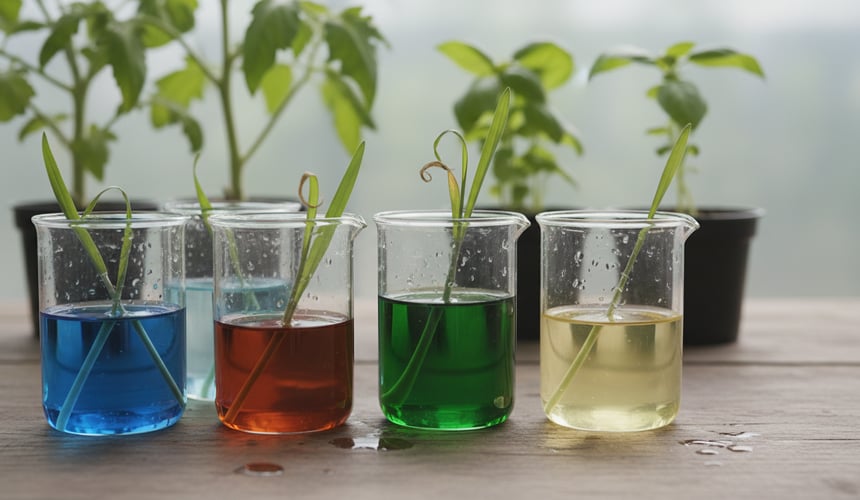
When preparing liquid fertilizer and biostimulant solutions, the quality of the mixing water can significantly influence the physical stability and compatibility of the final product. Factors such as water hardness, pH, and the presence of dissolved salts are critical considerations that can lead to unexpected reactions, reduced effectiveness, and even application issues. Such considerations are important for nutrient management to protect water quality, as highlighted in a study on managing agricultural nitrogen and phosphorus [1].
Cropenta Insight
Understanding the interaction between water quality and raw material characteristics is crucial for formulating stable liquid fertilizers and biostimulants. Formulators must consider these factors to select raw materials that maintain solubility and chemical integrity, ensuring the final product performs as intended in diverse agricultural settings.
Water Quality Parameters and Their Effects
Water hardness, primarily caused by dissolved calcium (Ca2+) and magnesium (Mg2+) ions, can interfere with liquid fertilizer formulations. These divalent cations can react with certain fertilizer components, leading to precipitation. For instance, phosphates, sulfates, and some organic acids found in biostimulants may form insoluble salts with calcium and magnesium, causing physical incompatibility in the spray tank or irrigation system. This precipitation can reduce the availability of nutrients to plants and clog nozzles or filters. The total dissolved solids (TDS) in water, which include these salts, contribute to a higher electrical conductivity (EC), further complicating compatibility issues.
The pH of the mixing water also plays a crucial role in the stability of liquid fertilizers and biostimulants. Many agricultural compounds are pH-sensitive; their solubility and chemical form can change significantly with varying pH levels. An overly acidic or alkaline water pH can lead to the hydrolysis or degradation of active ingredients, particularly in biostimulant formulations, thereby reducing their biological efficacy. In certain contexts, the interaction between fertilizer form and soil chemistry, including localized pH effects at the microsite, governs nutrient efficiency [2].
Dissolved Salts and Ion Interactions
Beyond hardness ions, other dissolved salts in mixing water, such as bicarbonates, chlorides, and sodium, can contribute to compatibility problems. Bicarbonates, in particular, can increase the alkalinity of the water, raising its pH and promoting the precipitation of calcium and magnesium. High concentrations of salts can also lead to osmotic effects in the spray solution, potentially affecting the uptake efficiency of foliar-applied products or causing phytotoxicity. Such interactions highlight the importance of assessing water quality before mixing, as the combined effect of multiple ions can be complex.
In agricultural practices, managing water and nutrient coupling has been observed to have synergistic effects on crop growth, yield, and quality [3]. However, the presence of specific salts, such as those contributing to water hardness, can directly influence the effectiveness of other agricultural inputs, as seen with glyphosate applications where increasing water hardness affected plant chlorophyll content in tomatoes [4]. This illustrates how water impurities can alter plant physiological responses to applied substances, indicating a broader impact beyond just physical compatibility in the tank.
Practical Implications for Agricultural Mixing
Adjusting the pH of the mixing water to an optimal range for the specific products being used can often prevent precipitation and degradation. Water conditioners or pH adjusters may be necessary to achieve the desired water quality.
Understanding and managing water quality parameters such as hardness, pH, and dissolved salt content are fundamental for ensuring the stability and effectiveness of liquid fertilizers and biostimulants. Proactive assessment and appropriate adjustments can prevent application problems, maintain nutrient availability, and preserve the intended biological activity of applied products, ultimately supporting improved agronomic outcomes.
Technical Summary
Water hardness, pH, and dissolved salts are critical factors influencing the compatibility and stability of liquid fertilizers and biostimulants. Hardness ions like calcium and magnesium can cause precipitation, while pH affects solubility and chemical integrity of active ingredients. Dissolved bicarbonates and other salts contribute to alkalinity and osmotic effects. Understanding these raw material interactions in mixing water is essential to prevent product degradation, maintain nutrient availability, and ensure efficient application.
Disclaimer
This article has been prepared with AI assistance using publicly available sources and is intended solely for general technical and educational purposes. It does not constitute professional advice or recommendations for specific applications. Cropenta makes no warranties regarding the accuracy, completeness or applicability of the information. No rights may be derived from its contents, and Cropenta accepts no liability for its use to the extent permitted by law.
Technical Questions
What is the primary concern with water hardness when mixing liquid fertilizers?
The main concern with water hardness is the reaction of dissolved calcium and magnesium ions with certain fertilizer components, such as phosphates and sulfates. This can lead to the formation of insoluble precipitates, reducing nutrient availability, and potentially causing blockages in sprayers or irrigation systems.
How does water pH affect the stability of biostimulants?
Water pH can significantly impact biostimulant stability because many active ingredients are pH-sensitive. Extreme pH values (too acidic or too alkaline) can cause hydrolysis or degradation of these compounds, diminishing their biological efficacy and overall performance in the field.
Related articles

Related Products




Looking for something specific?
Our team is there to help you find the right raw materials and solutions for your formulations

