UV Radiation and Microbial Survival in Biostimulant Formulations
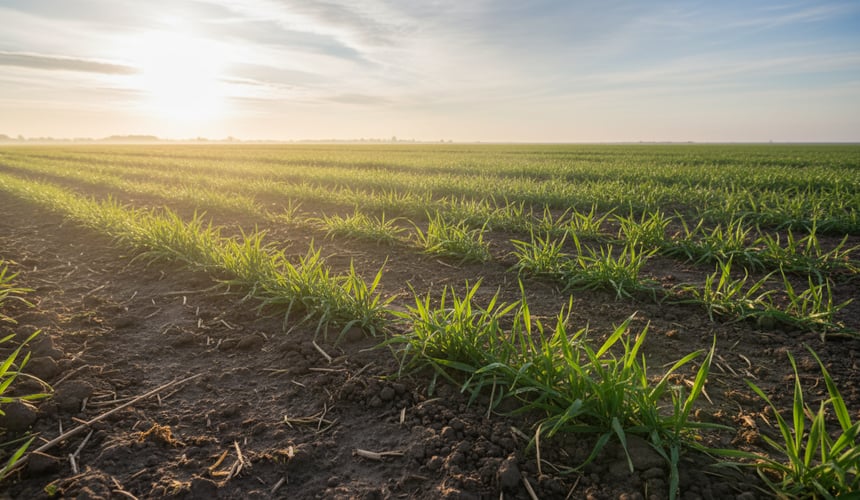
Microbial biostimulants offer various physiological advantages to crops, yet their effectiveness depends heavily on the survival and activity of the microorganisms they contain. A critical factor influencing microbial viability, especially during field application and after exposure, is ultraviolet (UV) radiation.
Cropenta Insight
Understanding how UV radiation impacts microbial survival in biostimulants is vital for formulating robust products. Formulators often consider protective carriers or encapsulating technologies that shield microbes from UV degradation, ensuring higher viability post-application. This focus on microbial resilience under field conditions contributes to more consistent product performance and improved nutrient mobilization.
Mechanisms of UV Damage to Microbial Biostimulants
UV radiation, particularly UV-B and UV-C, can cause significant damage to microbial cells. This damage primarily involves nucleic acids, proteins, and cell membranes. DNA is particularly susceptible to UV radiation, which can induce the formation of pyrimidine dimers. These dimers interfere with DNA replication and transcription, potentially leading to mutations or cell death. Proteins, essential for microbial metabolic activity and structural integrity, can also undergo conformational changes or degradation when exposed to UV light, impairing their function. Furthermore, UV radiation can compromise the integrity of cell membranes, leading to leakage of intracellular contents and ultimately cell lysis [1].
Beyond direct cellular damage, UV exposure can also trigger oxidative stress within microbial cells. This occurs when UV radiation generates reactive oxygen species (ROS), such as superoxide radicals and hydrogen peroxide. ROS can cause widespread damage to cellular components, including lipids, proteins, and DNA, further reducing microbial viability [1].
Considering UV Stress for Microbial Biostimulants
Considering UV radiation in microbial biostimulant development and application is important for maintaining their effectiveness. Various strategies can be employed, starting from the formulation stage through to application methods.
Formulation Strategies
Formulation plays a significant role in enhancing microbial survival. Some polysaccharides, proteins, or inert minerals can act as physical barriers or absorb UV radiation, which may reduce its penetration to microbial cells. Encapsulation technologies, where microbial cells are encased within a protective matrix, may also be relevant for UV considerations. This matrix can be composed of various materials that offer physical defense and may include substances with UV-absorbing properties [1].
Application and Packaging Solutions
Application timing can influence the exposure of microbial biostimulants to UV radiation. Applying products during periods of lower UV intensity, such as early morning or late evening, may help mitigate damage. Furthermore, direct application to the root zone or soil rather than foliar application can naturally reduce UV exposure, as the soil matrix provides a protective environment [1, 2].
Packaging also contributes to considering microbial biostimulants for UV degradation during storage and transport. Opaque or UV-blocking packaging materials can prevent light from reaching the product, thereby preserving microbial viability before use [1].
Impact on Field Performance
The ability of microbial biostimulants to survive UV exposure directly affects their field performance and efficacy. Microorganisms that maintain high viability after application are more likely to establish themselves in the rhizosphere, carry out their intended functions, and contribute to plant physiological processes. Conversely, significant reductions in microbial viability due to UV radiation can lead to inconsistent or diminished agronomic results, underlining the importance of protective measures [1, 3]. Temperature and moisture are additional factors that can interact with UV radiation to affect microbial function and survival [4].
Technical Summary
UV radiation can significantly reduce the viability of beneficial microorganisms in biostimulant formulations by damaging DNA, proteins, and cell membranes, and by inducing oxidative stress. Measures for mitigating UV damage may include incorporating UV-absorbing or protective compounds into formulations, employing encapsulation technologies, optimizing application timing to periods of lower UV intensity, and utilizing opaque or UV-blocking packaging. These measures are critical for ensuring consistent microbial survival and efficacy in agricultural applications.
Disclaimer
This article has been prepared with AI assistance using publicly available sources and is intended solely for general technical and educational purposes. It does not constitute professional advice or recommendations for specific applications. Cropenta makes no warranties regarding the accuracy, completeness or applicability of the information. No rights may be derived from its contents, and Cropenta accepts no liability for its use to the extent permitted by law.
Technical Questions
What specific types of UV radiation are most detrimental to microbial biostimulants?
UV-B and UV-C radiation are primarily responsible for damaging microbial cells. These wavelengths carry sufficient energy to disrupt cellular components, including nucleic acids and proteins. While UV-A also contributes, its lower energy typically causes less severe direct damage compared to UV-B and UV-C, making these shorter wavelengths the main concern for microbial viability.
How do formulation additives protect microorganisms from UV degradation?
Formulation additives can protect microorganisms by acting as physical barriers or UV absorbers. Materials like certain polysaccharides, proteins, or inert minerals can shield microbial cells from direct radiation. Some compounds can also dissipate UV energy or scavenge reactive oxygen species, thereby reducing indirect damage and helping to maintain microbial viability in the presence of UV light.
Why is application timing relevant for the efficacy of microbial biostimulants?
Applying microbial biostimulants during periods of lower UV intensity, such as early morning or late evening, may reduce the immediate exposure of the microorganisms to harmful radiation. This strategy can increase the initial survival rate of the microbes, allowing them more time to establish themselves in the soil or on plant surfaces before being subjected to higher UV levels later in the day, thereby supporting their sustained activity.
Related articles

Related Products

Looking for something specific?
Our team is there to help you find the right raw materials and solutions for your formulations

