Why Rumen-Protected Soy Protein Trials Show Varying Milk Responses
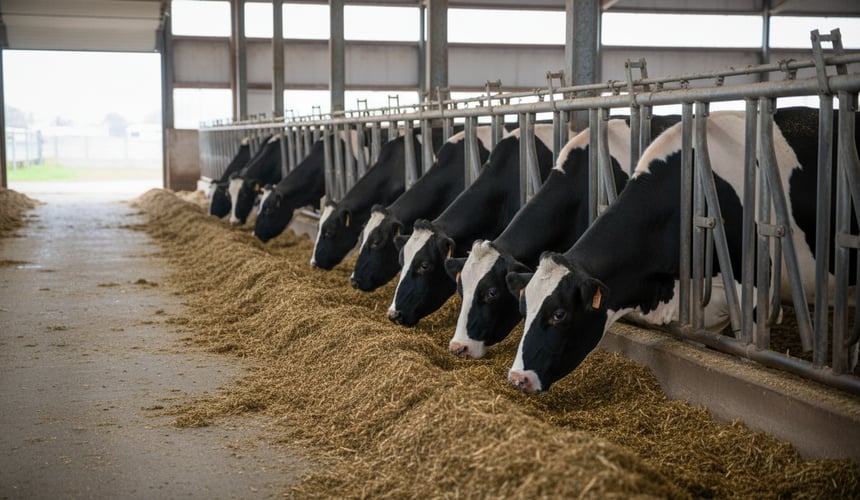
When dairy farm trials investigate rumen-protected soy protein, observations of milk production can vary considerably. Some studies report substantial responses in milk yield, while others show only minor differences or no significant change. This variability prompts a crucial question: What factors contribute to these inconsistent milk production responses in dairy cow feeding trials?
Cropenta Insight
Understanding the variability in milk production responses from rumen-protected soy protein trials helps nutritionists interpret data more critically. Factors such as basal diet composition, the cow's physiological stage, and precise amino acid supply influence outcomes. This nuanced approach supports more effective formulation strategies tailored to specific herd needs and nutritional goals, considering the complex interactions within dairy cow metabolism and dietary components.
The Role of Metabolizable Protein and Amino Acid Supply
The primary goal of supplementing rumen-protected protein, such as rumen-protected soy protein, is to increase the supply of metabolizable protein (MP) and essential amino acids to the small intestine, thereby supporting milk production and protein synthesis in dairy cows. The metabolizable protein system considers both microbial protein synthesized in the rumen from rumen-degradable protein (RDP) and rumen-undegradable protein (RUP) that bypasses rumen degradation and is digested in the small intestine [1]. However, the extent to which additional RUP translates into milk output depends heavily on whether the cow's existing diet is truly limiting in MP or specific amino acids.
For instance, if the basal diet already provides sufficient metabolizable protein and a balanced amino acid profile, adding more rumen-protected protein may not elicit a substantial response in milk production. In such cases, the cow's system may not be able to utilize the excess protein for further milk synthesis, or other nutrients, such as energy, may become limiting. A study noted that optimizing the balance between dietary proteins and energy is key to influencing milk production efficiency [1, 2]. Furthermore, the specific amino acid profile of the protected protein matters. While soy protein is rich in lysine, if the cow's diet is more limiting in methionine, supplementing with only protected soy protein may yield a limited response [3].
Influence of Basal Diet and Energy Status
The composition of the basal diet plays a significant role in determining the efficacy of rumen-protected soy protein. The amount of fermentable energy and RDP in the basal diet directly affects microbial protein synthesis (MPS) in the rumen. A diet high in fermentable carbohydrates and RDP allows for robust MPS, providing a substantial portion of the cow's metabolizable protein. If MPS is already high, the incremental benefit from additional RUP might be smaller [1].
Conversely, in diets where RDP or fermentable energy is limiting, MPS might be suboptimal, creating a larger deficit in metabolizable protein that rumen-protected soy protein can help address. The energy status of the cow is also critical. High-producing dairy cows require considerable energy for milk synthesis. If energy intake is insufficient, even an ample supply of amino acids may not translate into milk production because the energetic demands cannot be met. This highlights the interconnectedness of protein and energy nutrition in dairy rations [1].
Animal-Specific Factors and Physiological Stage
Individual cow variability and physiological stage significantly impact responses to protein supplementation. Early lactation cows, with their high nutrient demands for peak milk production, may be more responsive to increased metabolizable protein supply compared to cows in mid or late lactation, where nutrient requirements might be lower or more easily met by the basal diet. Genetic potential for milk production also varies among cows; those with higher genetic potential may respond more favorably to nutritional interventions aimed at influencing milk yield.
Metabolic adaptations and individual differences in rumen function, nutrient absorption, and amino acid metabolism can also lead to varying responses. Factors such as dry matter intake and overall health status can modulate how effectively a cow utilizes supplemented protein, further contributing to the observed variability in trial results [1].
Processing and Characteristics of Rumen-Protected Soy Protein
The effectiveness of rumen-protected soy protein itself can vary based on its processing method. Protein protection aims to reduce rumen degradation, allowing more protein to bypass the rumen and be digested in the small intestine. Common methods include heat treatment or Maillard reactions with reducing sugars, which bind protein to resist microbial breakdown [1]. However, the extent of protection and the subsequent intestinal digestibility are critical. Supplier documentation indicates that over-processing can reduce intestinal digestibility, making the bypassed protein less available to the cow [4].
According to some research, rumen-undegradable protein (RUP) values are calculated from measured degradation characteristics at an assumed passage rate (Kp). The calculated RUP value is directly influenced by the assumed fractional passage rate (Kp). Therefore, RUP values for different ingredients or studies are only comparable when the same Kp is used for their calculation. This illustrates that both effective rumen protection and high intestinal digestibility are crucial for a successful bypass protein ingredient.
It is also important to note that, according to some studies, in-vitro protein degradation tests can sometimes overstate rumen protection for Maillard-protected proteins compared to in-vivo measurements. Research has shown discrepancies between declared RUP values and those measured in situ, with some treated protein meals showing lower actual bypass than expected, influencing milk protein output [5]. According to other research, for Maillard-protected proteins, which rely on specific chemical bonds formed during controlled heating with sugars, in-vitro methods can sometimes overestimate the degree of rumen protection compared to in-situ measurements.
Conclusion
The variable milk production responses observed in dairy cow feeding trials with rumen-protected soy protein stem from a complex interplay of nutritional, animal-specific, and ingredient-related factors. The cow's existing metabolizable protein and amino acid supply, the balance of energy and protein in the basal diet, the physiological stage of the animal, and the quality of the rumen protection and intestinal digestibility of the protein all contribute to the outcome. Critically interpreting trial data requires considering these factors to optimize protein supplementation for milk production efficiency.
Technical Summary
Variability in dairy cow milk production responses to rumen-protected soy protein supplementation is common. This arises from the cow's basal diet protein and energy status, metabolizable protein adequacy, amino acid balance, and physiological stage, particularly lactation phase. The efficacy also depends on the rumen-protected protein's true rumen bypass and intestinal digestibility, which can differ based on processing and measurement methods. Understanding these factors is crucial for accurately interpreting trial data and optimizing protein supplementation strategies.
Disclaimer
This article has been prepared with AI assistance using publicly available sources and is intended solely for general technical and educational purposes. It does not constitute professional advice or recommendations for specific applications. Cropenta makes no warranties regarding the accuracy, completeness or applicability of the information. No rights may be derived from its contents, and Cropenta accepts no liability for its use to the extent permitted by law.
Technical Questions
How does the assumed passage rate (Kp) affect the reported RUP value of rumen-protected soy protein?
According to some research, the calculated RUP value is directly influenced by the assumed fractional passage rate (Kp). A higher Kp, representing faster feed passage through the rumen, typically results in a higher calculated RUP because less time is available for microbial degradation. Therefore, RUP values for different ingredients or studies are only comparable when the same Kp is used for their calculation.
What is the significance of intestinal digestibility for rumen-protected proteins?
Intestinal digestibility is crucial because a high RUP value alone does not guarantee nutrient availability. If the rumen-undegraded protein is not digestible in the small intestine, it provides little nutritional value to the animal. According to one supplier's documentation, over-processing during protection can sometimes reduce intestinal digestibility, making the protein unavailable even if it bypasses the rumen effectively.
Why are in-vitro protein degradation tests often unreliable for Maillard-protected proteins?
In-vitro tests, which typically use enzymatic or chemical methods, may not accurately mimic the complex biological processes within the rumen. According to some research, for Maillard-protected proteins, which rely on specific chemical bonds formed during controlled heating with sugars, in-vitro methods can sometimes overestimate the degree of rumen protection compared to in-situ measurements conducted in live, rumen-fistulated cows.
Beyond crude protein, what other factors are important when evaluating a rumen-protected soy protein ingredient for dairy rations?
Beyond crude protein and RUP, formulators should consider the amino acid profile, particularly levels of limiting amino acids like lysine and methionine, and the intestinal digestibility of these amino acids. The consistency of the protection process and the lack of anti-nutritional factors are also key. These details help ensure the ingredient truly supports the cow's metabolizable protein and amino acid requirements.
- 1.The use of rumen-protected amino acids and fibrous by- ...
- 2.The use of rumen-protected amino acids and fibrous by ... - PMC
- 3.Systematic review and meta-analysis of dairy cow responses ...
- 4.Cropenta product documentation: Bypass Soy Protein MP
- 5.Geschützte Rapsextraktionsschrote im Fütterungsversuch (proteinmarkt.de)
Related articles



Related Products

Looking for something specific?
Our team is there to help you find the right raw materials and solutions for your formulations

