Why Are Sulfur and Nitrogen Essential for Crop Protein Formation?
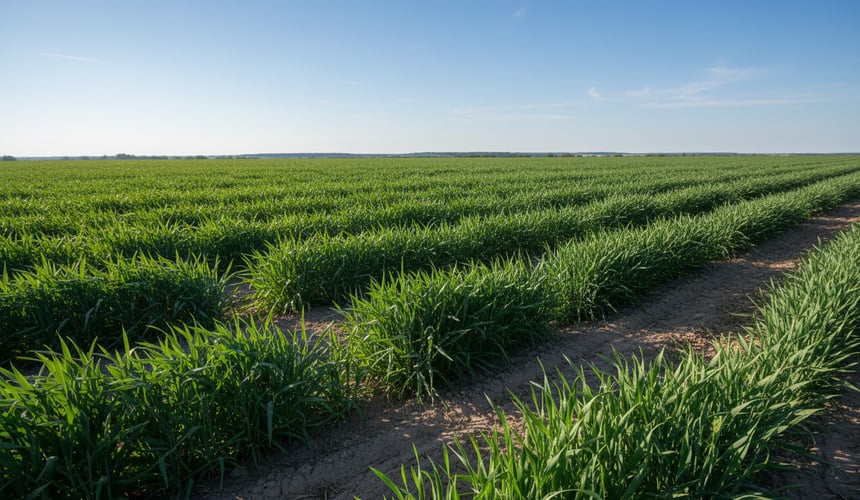
Understanding how sulfur and nitrogen work together within crop plants to build proteins is fundamental for optimizing crop quality. The balance between these two essential nutrients is not merely additive; it is a synergistic relationship where the availability of one can significantly influence the utilization and effectiveness of the other in protein synthesis pathways.
Cropenta Insight
The close metabolic link between sulfur and nitrogen in crop plants underscores a critical aspect of nutrient management: the sulfur-to-nitrogen ratio. Achieving an optimal balance is more nuanced than ensuring sufficient individual supply; it involves understanding how one nutrient's availability directly impacts the plant's capacity to utilize the other for essential processes like protein formation. This interdependent relationship is particularly relevant for formulators and agronomists developing strategies aimed at maximizing crop protein content and nutritional quality, emphasizing the role of sulfur in supporting nitrogen assimilation.
The Biochemical Connection Between Sulfur and Nitrogen
Sulfur and nitrogen are both integral components of plant metabolism, especially in the synthesis of amino acids and proteins. Nitrogen, primarily assimilated as nitrate or ammonium, is a core constituent of all amino acids, the building blocks of proteins. Sulfur, on the other hand, is a vital component of sulfur-containing amino acids such as methionine and cysteine. These amino acids are not only essential for protein structure but also serve as precursors for various other organic sulfur compounds crucial for plant growth, development, and resilience [1].
The assimilation of inorganic sulfur by plants and its subsequent metabolism into organic sulfur compounds is a complex process. This process is closely linked with nitrogen metabolism, particularly the synthesis of amino acids. For instance, the conversion of inorganic nitrogen into organic forms (e.g., amino acids) often requires the presence of sulfur-containing compounds. When sulfur supply is suboptimal, the plant's ability to synthesize these crucial sulfur-containing amino acids is impaired. This, in turn, can limit the plant's capacity to effectively utilize available nitrogen for overall protein synthesis, even if nitrogen is abundant [2, 3].
Impact on Protein Formation and Crop Quality
Research indicates that proper sulfur nutrition can improve both grain yield and protein yield in agronomically important plants like wheat [4]. This observation highlights the direct consequence of the sulfur-nitrogen synergy: when sulfur availability limits the production of sulfur-containing amino acids, the synthesis of complete proteins may be compromised. The resulting proteins may have a lower nutritional quality due to an unfavorable amino acid profile, even if the total nitrogen content appears adequate.
Maintaining an optimal balance between sulfur and nitrogen is therefore critical for crop quality. An imbalance, particularly a deficiency in sulfur, can lead to inefficient nitrogen utilization. This means that plants may absorb nitrogen, but without sufficient sulfur, they cannot fully convert it into high-quality proteins. This interconnectedness impacts not only the quantity of protein produced but also its composition, affecting attributes such as digestibility and nutritional value for downstream applications.
Conclusion
The intricate relationship between sulfur and nitrogen is central to protein formation in crop plants. These nutrients do not function independently but are metabolically intertwined, with sulfur playing a key role in enabling the efficient utilization of nitrogen for amino acid and protein synthesis. A balanced supply of both sulfur and nitrogen is crucial for achieving optimal protein content and quality in crops, underscoring the need for integrated nutrient management strategies that consider their synergistic requirements.
Technical Summary
Sulfur and nitrogen are synergistically essential for crop protein formation. Nitrogen forms the backbone of amino acids, while sulfur is integral to methionine and cysteine synthesis. An optimal sulfur-to-nitrogen ratio is critical; sulfur deficiency can impair nitrogen assimilation into complete proteins, reducing both protein quantity and quality, as observed in studies on grain crops like wheat. Balanced nutrition is vital for efficient nitrogen utilization and crop nutritional value.
Disclaimer
This article has been prepared with AI assistance using publicly available sources and is intended solely for general technical and educational purposes. It does not constitute professional advice or recommendations for specific applications. Cropenta makes no warranties regarding the accuracy, completeness or applicability of the information. No rights may be derived from its contents, and Cropenta accepts no liability for its use to the extent permitted by law.
Technical Questions
What happens in a crop when nitrogen is abundant but sulfur is deficient?
When nitrogen is plentiful but sulfur is deficient, crops may accumulate non-protein nitrogen compounds. The plant struggles to synthesize the sulfur-containing amino acids (cysteine and methionine) essential for building complete proteins. This inefficiency reduces the overall protein content and quality, even with ample nitrogen, as the nitrogen cannot be fully converted into functional proteins.
How does the sulfur-to-nitrogen ratio influence crop nutritional value?
The sulfur-to-nitrogen ratio is critical for crop nutritional value because it directly influences the synthesis of essential sulfur-containing amino acids. An imbalanced ratio, especially insufficient sulfur, can lead to proteins with a suboptimal amino acid profile. This can impact the digestibility and biological value of the protein, affecting its suitability for human and animal consumption.
Related articles



Related Products



Looking for something specific?
Our team is there to help you find the right raw materials and solutions for your formulations

