How Silicon Boosts Plant Defenses Against Fungal Pathogens
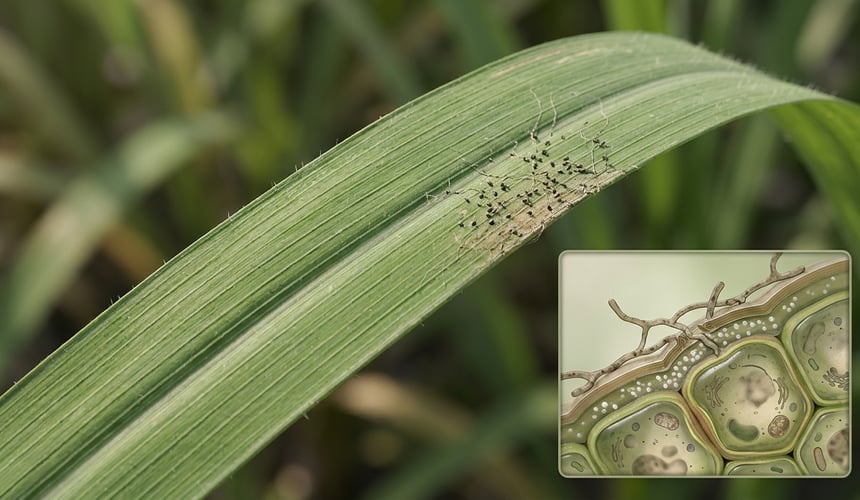
When a fungus lands on a leaf, the outcome depends less on the plant's ability to kill the invader outright and more on how quickly it can build obstacles. Silicon, although not classified as an essential nutrient for most plants, is increasingly studied for its role in that response. The question is not whether silicon acts as a fungicide—it does not—but which physical and biochemical mechanisms have been described in the scientific literature once the element is inside the plant.
Cropenta Insight
Silicon research is often clouded by the assumption that any soluble silicon source will deliver the same result. In practice, the chemical form in the tank and the plant's own uptake capacity are considered to determine how much silicon reaches the tissue where defense responses unfold. Distinguishing silicon accumulation from silicon-induced defense is central when interpreting trial results across species.
What silicon does once it enters the plant
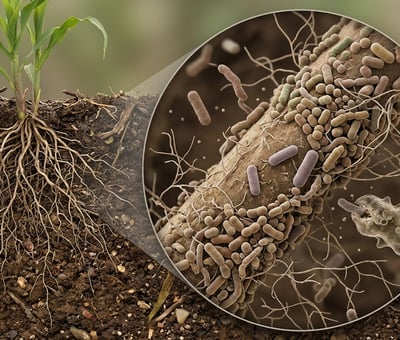
According to published plant physiology, plants take up silicon primarily as monosilicic acid, a small uncharged molecule that moves through specific transporters in the root. Once deposited in tissues, it accumulates as amorphous silica, particularly in cell walls, epidermal layers and specialized structures. Published reviews describe this deposition as part of the physical architecture of the plant, and that architecture is commonly considered in relation to how pathogens encounter host tissue.[1]
The distinction between silicon-accumulating and non-accumulating species matters here. Rice and other grasses take up large amounts of silicon and deposit it heavily; many dicots do so at much lower levels. It has not been established that defense effects observed in strong accumulators apply equally to species with limited uptake.[1]
Physical barriers: silicon in the cell wall
The most direct defense role discussed for silicon is structural. When silica is deposited in cell walls, it is considered to make the tissue less accessible to penetrating fungal hyphae. Published reviews describe silicon as contributing to cell wall reinforcement that is associated with slower or deflected attempted penetration.[2] This is not a toxic effect on the fungus; it is a change in the physical terrain.
Whether silicon accumulation around infection sites occurs as a localized response rather than uniform distribution has been reported in some pathosystems, but has not been demonstrated consistently. The practical consideration is that physical protection is thought to depend on whether silicon reaches the right tissue at the right time, which in turn depends on the crop's uptake capacity and the form supplied.
Biochemical responses: signaling and defense compounds
Beyond structure, silicon is associated with changes in how plants perceive and respond to fungal attack. Published reviews summarize evidence that silicon can be discussed in relation to the expression of defense-related genes and the activity of enzymes involved in producing protective compounds.[1] These responses are not exclusive to silicon—they overlap with general induced defense pathways—but silicon is considered to modulate their speed or intensity in some systems.
The role of silicon in plant–attacker interactions has been discussed across fungi, bacteria and other attackers, but the strength of the biochemical response is commonly reported to vary with the host and the attacker.[2] This variability is important: a response demonstrated in one crop–attacker combination does not automatically transfer to another.
What the evidence shows and what it does not
Much of the mechanistic work on silicon and fungal defense comes from controlled environments—lab and greenhouse studies—where silicon supply and fungal pressure can be tightly managed. Whether these effects hold at field scale has not been demonstrated consistently, and results are commonly reported to depend on soil silicon status, application form and crop species.[1] Positive impacts of silicon on plant condition under biological pressure have been reported, but outcomes are described as context-dependent.[3]
It is also important to separate silicon's role in defense from any claim of fungal control. Silicon does not eradicate fungi; it may be associated with slower progress or reduced symptom severity in some cases. The evidence supports a contributory role in defense, not a replacement for integrated crop management.
Uptake differences that change the outcome
Because silicon defense depends on silicon reaching the tissue, the crop's uptake physiology is central. Species differ widely in their ability to accumulate silicon, and those differences are commonly considered when evaluating whether defense effects are observed.[1] A treatment that shows effects in a strong accumulator may show little effect in a species with low uptake.
Silicon also interacts with other nutrients in the rhizosphere, which can be discussed in relation to availability and uptake.[4] This means the form and context of silicon supply matter, not just the amount applied.
Technical Summary
Silicon contributes to plant defense against fungal attackers through two main routes discussed in the literature: physical reinforcement of cell walls and modulation of biochemical defense responses. These effects are documented mainly in controlled studies and vary with crop species, silicon uptake capacity and attacker. Silicon is not a fungicide; it is a defense-supporting element whose practical impact depends on whether it reaches the right tissue in the right form.
This article was created with the help of AI and reviewed by the Cropenta editorial team. It is general information, not professional advice.
Technical Questions
Does silicon work as a fungicide?
No. Silicon does not kill or eradicate fungal attackers. It supports the plant's own defense through cell wall reinforcement and modulation of biochemical responses described in the literature. The evidence shows a contributory role in reducing symptom severity in some crop–attacker systems, not direct antifungal action.
Why do results differ between crops?
Crop species vary widely in their ability to take up and accumulate silicon. Strong accumulators like rice deposit large amounts in tissues, while many dicots take up much less. Defense effects observed in one species cannot be assumed to apply to another with different uptake physiology.
What form of silicon is taken up by plants?
Published plant physiology describes uptake primarily as monosilicic acid, a small uncharged molecule, moving through specific transporters in the root. Once inside, it is deposited as amorphous silica in tissues. The chemical form supplied and its stability in solution are considered to affect how much silicon reaches the plant.
Is field evidence as strong as greenhouse evidence?
Mechanistic studies on silicon and fungal defense are mostly from controlled environments where silicon supply and fungal pressure are managed. Field validation is more limited, and outcomes depend on soil silicon status, application form and crop species. Field results should be interpreted with those variables in mind.
Looking for something specific?
Our team is there to help you find the right raw materials and solutions for your formulations