What Determines the Oxidative Stability of Lecithin-Containing Feed Oils?
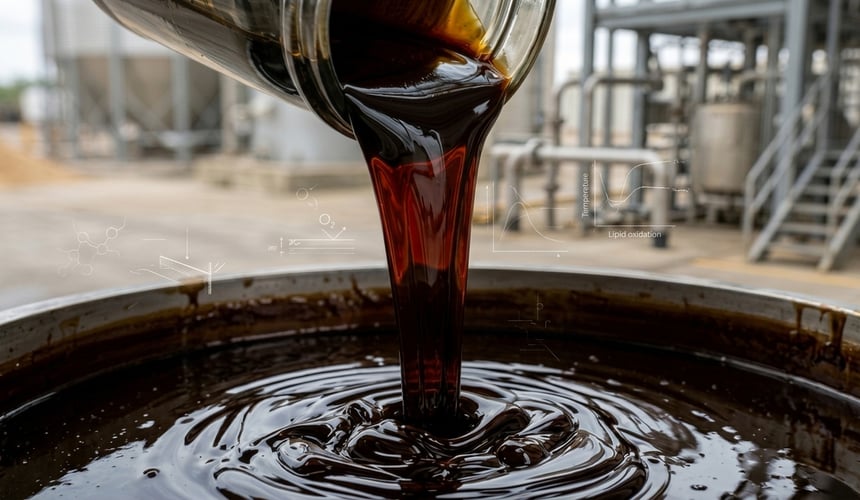
Lecithin-containing feed oils serve as crucial energy sources in animal diets. However, why do some lecithin-containing feed oils go rancid faster than others, and what can be done to maintain their quality? The answer lies in a complex interplay of chemical composition, processing, and storage conditions that dictate their oxidative stability. Understanding these factors is essential for animal nutritionists, formulators, and feed producers to ensure the nutritional integrity and shelf life of feed ingredients.
Cropenta Insight
For feed mills and formulators, recognizing the specific chemical and physical factors affecting the oxidative stability of lecithin-containing feed oils is paramount for ingredient selection and processing. This knowledge helps identify vulnerabilities to lipid oxidation, enabling the implementation of targeted quality preservation strategies. Focusing on the fatty acid profile and managing pro-oxidant exposure allows for more effective formulation and storage practices, ensuring consistent nutritional value in finished feeds.
Understanding Oxidative Stability in Feed Oils
Oxidative stability refers to a fat's resistance to oxidation, a process that leads to rancidity and degrades nutritional quality. Lecithins, recognized for their safety and efficacy in animal nutrition[1], are not pure substances; they are complex mixtures of phospholipids, glycolipids, triglycerides, and other components, with their exact composition varying by source and processing[2]. When blended with oils, these lecithins introduce their own fatty acid profiles, which become part of the overall stability equation for the blend.
The Role of Lecithin and Fatty Acid Composition
The primary determinant of a feed oil's oxidative stability, whether it contains lecithin or not, is its fatty acid composition and saturation. Unsaturated fatty acids, particularly polyunsaturated fatty acids (PUFAs) with multiple double bonds, are highly susceptible to oxidation. These double bonds are vulnerable sites where oxygen can react, initiating a cascade of free radical reactions. Lecithins themselves, depending on their raw material (e.g., soy, rapeseed, sunflower), contribute various fatty acids, including PUFAs, to the blend. A higher proportion of PUFAs in the overall lecithin-oil blend generally means lower oxidative stability.
Triglycerides, free fatty acids, and phospholipids each play a distinct role. While triglycerides form the bulk of most feed oils, free fatty acids (FFAs), often present in by-product oils or as a result of hydrolysis, can be more prone to oxidation than their esterified counterparts. Phospholipids, the main component of lecithin, also contain fatty acids and can undergo oxidation.
Factors Accelerating Oxidation in Lecithin-Oil Blends
Several internal and external factors can significantly accelerate the oxidative breakdown of lecithin-containing feed oils, leading to rapid rancidity. This often explains why some blends deteriorate faster than others, even with similar fatty acid profiles. Understanding these accelerators is crucial for managing the shelf life and quality of lecithin-containing feed oil stability.
Pro-oxidants and Storage Conditions
Beyond the inherent susceptibility linked to fatty acid unsaturation, the presence of pro-oxidants is a major accelerator of lipid oxidation. Trace metals, especially iron and copper, are powerful catalysts that promote the formation of free radicals, initiating the oxidative chain reaction. These metals can be introduced through raw materials, processing equipment, or improper storage containers. For instance, the oxidative stability of niche oils like flax oil is a principal processing constraint, with some studies indicating benefits from antioxidant treatment.
Environmental factors also play a critical role. High temperatures accelerate chemical reactions, including oxidation. Exposure to light, particularly ultraviolet light, provides the energy needed to initiate free radical formation. Oxygen exposure, naturally, fuels the entire process. Therefore, inadequate packaging, prolonged storage at warm temperatures, and exposure to light or air during handling and mixing can drastically reduce the shelf life of lecithin-containing feed oils. Moisture can also contribute to hydrolytic rancidity, releasing more pro-oxidant free fatty acids.
Strategies for Maintaining Quality and Extending Shelf Life
Preserving the quality of lecithin-containing feed oils requires a multi-faceted approach, focusing on controlling the factors that accelerate oxidation. Implementing effective strategies helps maintain the nutritional value and palatability of animal feeds.
The Contribution of Antioxidants
Antioxidants are compounds that delay or inhibit the oxidative deterioration of lipids by scavenging free radicals or chelating pro-oxidant metals. Synthetic antioxidants, such as butylated hydroxytoluene (BHT) and ethoxyquin, are commonly used in feed oils. Natural antioxidants, including tocopherols (Vitamin E) and rosemary extract, are also employed. The effectiveness of an antioxidant depends on its concentration, the type of oil, and the presence of synergists. For lecithin-containing oils, especially those rich in unsaturated fatty acids, appropriate antioxidant inclusion is a key strategy to extend their shelf life and maintain oxidative stability. Selecting the right antioxidant or blend of antioxidants for a specific lecithin-oil composition requires careful consideration.
Operational Considerations in Feed Production
In feed manufacturing, practical measures are essential to mitigate oxidation risks. This includes minimizing exposure to heat, light, and air during storage and handling. Storing lecithin-containing oils in opaque, airtight containers in cool, dry conditions can significantly slow the oxidation process. Ensuring equipment cleanliness helps prevent metal contamination. Furthermore, quality control measures, such as monitoring peroxide value (PV) and anisidine value (AnV), provide objective indicators of oxidative status, allowing for timely intervention before quality is severely compromised. These values measure primary and secondary oxidation products, respectively, indicating the extent of rancidity.
Technical Summary
The oxidative stability of lecithin-containing feed oils is governed by fatty acid saturation, especially polyunsaturated fatty acids, and accelerated by pro-oxidants like trace metals, heat, light, and oxygen. Lecithin's own fatty acid profile contributes to the blend's overall susceptibility, although some lecithins also exhibit antioxidant potential. Effective quality preservation relies on strategic antioxidant use and diligent operational practices to minimize environmental exposure and contamination.
Disclaimer
This article has been prepared with AI assistance using publicly available sources and is intended solely for general technical and educational purposes. It does not constitute professional advice or recommendations for specific applications. Cropenta makes no warranties regarding the accuracy, completeness or applicability of the information. No rights may be derived from its contents, and Cropenta accepts no liability for its use to the extent permitted by law.
Technical Questions
What differences in fatty acid profiles between various lecithin sources (e.g., soy, rapeseed, sunflower) might impact the oxidative stability of oil blends?
Lecithin's fatty acid composition reflects its botanical origin, leading to variations in the types and proportions of fatty acids present. Different lecithin sources can contribute varying degrees of unsaturation to an oil blend. A higher degree of unsaturation in the lecithin component itself can influence the overall susceptibility of the oil blend to oxidation, especially if not adequately protected by antioxidants. This requires careful consideration during formulation.
Why are free fatty acids (FFAs) often more prone to oxidation than triglycerides in lecithin-containing feed oils?
Free fatty acids are typically more susceptible to oxidation than esterified fatty acids within triglycerides because they lack the protective glycerol backbone. The carboxyl group in FFAs can catalyze initiation reactions, increasing their reactivity. Their presence in lecithin-containing oils, often from hydrolysis, can accelerate the onset and progression of rancidity, diminishing overall oil quality rapidly.
How do metal contaminants in feed ingredients interact with lecithin-containing oils to influence oxidative stability?
Trace metals, particularly iron and copper, act as potent pro-oxidants by catalyzing the formation of free radicals, which initiate and propagate lipid oxidation. In lecithin-containing oils, these metals can accelerate the breakdown of unsaturated fatty acids within both triglycerides and phospholipids. Minimizing metal contamination through ingredient sourcing and handling practices is critical for preserving oil quality.
What considerations are important for monitoring the oxidative status of lecithin-containing feed oils in a commercial setting?
Regular monitoring of oxidative status involves assessing parameters such as peroxide value (PV) and anisidine value (AnV). PV measures primary oxidation products, while AnV indicates secondary products. An increase in these values signals ongoing oxidative deterioration. An induction time test can also predict shelf life. Consistent testing ensures quality control and helps prevent the incorporation of rancid fats into feed.
Related articles

Related Products


Looking for something specific?
Our team is there to help you find the right raw materials and solutions for your formulations

