How Scientists Measure Rumen Protein Degradation in Feed Ingredients
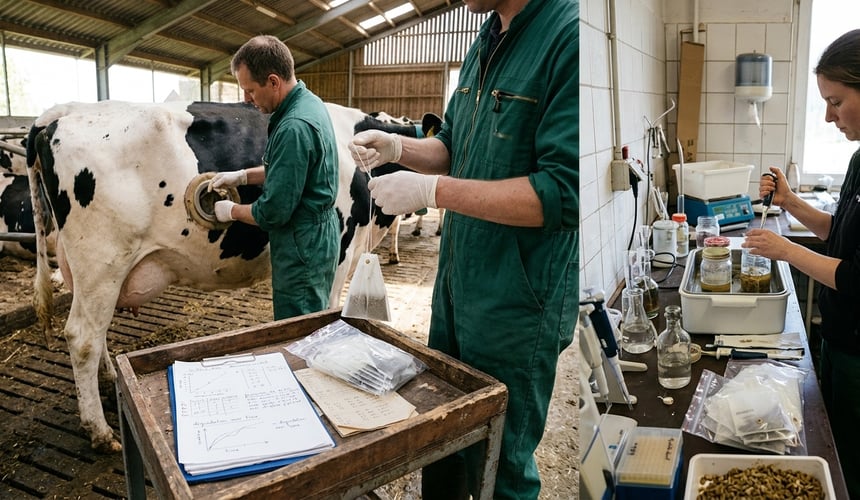
Optimizing ruminant nutrition hinges on understanding how dietary protein is utilized. A critical aspect is determining the extent to which feed proteins are broken down by rumen microorganisms versus bypassing the rumen for digestion and absorption in the small intestine. Scientists employ various methods to measure this, providing crucial data for formulating balanced rations and evaluating feed ingredient quality.
Cropenta Insight
Understanding the intricate dynamics of rumen protein degradation, particularly the disparities observed between in situ and in vitro methodologies for processed ingredients, presents a critical challenge for feed formulators. A precise grasp of these method-specific outcomes is essential to accurately assess an ingredient's true protein availability, enabling more accurate ration formulation to support animal performance and efficient nitrogen utilization.
The Dual Role of Protein in the Rumen
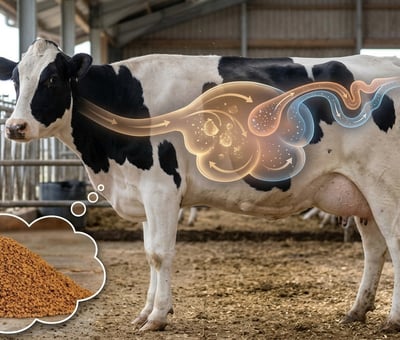
Dietary protein in ruminants serves two primary functions: providing nitrogen for rumen microbes to synthesize microbial protein, and supplying rumen-undegradable protein (RUP), also known as bypass protein, which reaches the small intestine for direct digestion. The fraction that is degraded in the rumen is known as rumen-degradable protein (RDP). Balancing RDP and RUP supply is essential for efficient nitrogen utilization and amino acid provision to the animal.
In Situ Method: Established Approach for Rumen Protein Degradation Measurement
The in situ method, often referred to as the nylon bag technique, involves incubating feed samples directly within the rumen of cannulated animals to assess rumen protein degradation measurement [1, 2]. This technique allows for exposure to the natural rumen environment, including its microbial population and fermentation dynamics . Samples, typically ground and weighed, are placed into porous nylon bags, which are then suspended in the rumen for varying periods, usually from a few hours up to 96 hours or longer for slow-degrading ingredients [1].
After incubation, the bags are removed, washed, and the remaining residue is analyzed for crude protein. The loss of protein from the bag over time indicates the extent of degradation. By fitting these data to a mathematical model, rumen degradation kinetics can be determined, yielding parameters such as the soluble fraction (S), the potentially degradable fraction (D), and the fractional degradation rate (Kd) . An important concept here is that RUP is not simply the protein left after a fixed incubation time, but is calculated from these degradation characteristics at an assumed passage rate (Kp) [2].
In Vitro Techniques: Laboratory-Based Approaches
In contrast to the in situ method, in vitro techniques simulate rumen digestion in a laboratory setting. These methods often involve incubating feed samples with rumen fluid collected from donor animals or with specific enzymes under controlled conditions [1, 3]. Common in vitro approaches include enzymatic assays, which use proteases to simulate protein breakdown, or gas production techniques, which measure gas produced during microbial fermentation as an indicator of digestibility [3]. While offering advantages in terms of throughput and cost, in vitro methods may not fully replicate the complex and dynamic environment of the living rumen [1, 3].
Comparing In Situ and In Vitro Methods
Research has shown that while in vitro methods can provide estimations, they can show poor correlation with in situ measurements, particularly for protein-protected feed ingredients [1, 2]. In vitro techniques can tend to estimate higher rumen protection for proteins that have undergone processing like heat treatment or Maillard reactions [2]. This discrepancy can arise because laboratory simulations may not accurately mimic the physical, chemical, and microbial interactions occurring within the rumen [1].
For example, a study comparing in vitro and in vivo (in situ) methods for estimating ruminal crude protein degradation in various feedstuffs commonly used for beef cattle found differences in their predictive capabilities [1]. The in situ method offers a more direct and biologically relevant assessment of rumen protein degradation measurement, reflecting actual conditions within the animal [2].
From Degradation to Rumen Undegradable Protein (RUP)
The data obtained from in situ degradation studies, specifically the kinetics parameters (S, D, Kd), are used to calculate the RUP value of a feed ingredient. This calculation requires an assumed rumen passage rate (Kp), which reflects how quickly feed particles move out of the rumen . RUP values are dependent on the assumed Kp, thus values should only be compared at the same passage rate [2]. A higher Kp generally leads to a higher calculated RUP percentage, as less time is available for microbial degradation.
According to the manufacturers of Bypass Soy Protein MP and Bypass Rapeseed MP, these values were measured in vivo by an independent research institute under the Dutch in situ protocol [4, 5]. It is important to note that a high RUP percentage alone does not necessarily indicate full nutritional value; it should be evaluated together with intestinal digestibility [2].
Intestinal Digestibility and Metabolizable Protein
After escaping rumen degradation, the RUP fraction must be digested in the small intestine to provide usable amino acids to the animal. Intestinal digestibility, often measured using the mobile nylon bag technique in cows with duodenal cannulas, quantifies the proportion of RUP that is actually digested and absorbed . A high RUP with low intestinal digestibility may result in limited usable protein, underscoring the need to assess both parameters [2].
The concept of metabolizable protein (MP) integrates RUP and intestinal digestibility, along with microbial protein synthesis, to estimate the total amino acid supply to the animal [2]. Systems like the Dutch DVE/OEB or German nXP/RNB translate these measured degradation and digestibility characteristics into formulation values. These comprehensive evaluations enable formulators to optimize protein supply, supporting animal performance and efficient nitrogen utilization.
However, field observations suggest that declared RUP values may not always align with in-situ measurements. In German dairy feeding trials comparing physically-thermally treated or lignosulfonate-treated rapeseed meal, in situ measurements found UDP below the shares used in ration calculations. The physically treated meal showed only a small difference from untreated meal, and lignosulfonate treatment, while significant, yielded less RUP than expected, especially compared to historical formaldehyde treatments [6].
Technical Summary
Measuring rumen protein degradation is crucial for formulating ruminant diets. The in situ method, using cannulated animals, is a key method for determining degradation kinetics and calculating rumen-undegradable protein (RUP) at an assumed passage rate. In vitro techniques offer laboratory alternatives but can show discrepancies in protection, especially for treated proteins. Comprehensive evaluation requires assessing both RUP and its subsequent intestinal digestibility to accurately estimate metabolizable protein supply for the animal.
Disclaimer
This article has been prepared with AI assistance using publicly available sources and is intended solely for general technical and educational purposes. It does not constitute professional advice or recommendations for specific applications. Cropenta makes no warranties regarding the accuracy, completeness or applicability of the information. No rights may be derived from its contents, and Cropenta accepts no liability for its use to the extent permitted by law.
Technical Questions
What is the primary limitation of in vitro methods compared to in situ for measuring rumen protein degradation?
The primary limitation is that in vitro methods may not fully replicate the complex physiological and microbial environment of the living rumen. This can lead to discrepancies, particularly for processed or protected proteins, where in vitro assays may estimate higher rumen protection compared to actual in situ measurements in animals.
How does the assumed passage rate (Kp) influence the calculated RUP value?
The assumed passage rate (Kp) is critical because it determines the effective time feed particles spend in the rumen. A higher Kp implies a shorter residence time, leading to less microbial degradation and, consequently, a higher calculated rumen-undegradable protein (RUP) value. Therefore, RUP values are only comparable when assessed at the same Kp.
Why is intestinal digestibility considered alongside RUP for nutritional evaluation?
Intestinal digestibility is crucial because a high RUP value alone may not ensure amino acid availability to the animal. If the rumen-undegraded protein is not efficiently digested and absorbed in the small intestine, its nutritional contribution is limited. Therefore, both RUP and intestinal digestibility should be evaluated together for an accurate assessment of protein quality.
- 1.Estimating ruminal crude protein degradation from beef ...
- 2.Predicting ruminally undegraded and microbial protein ...
- 3.Introduction to the Special Issue: In Vitro Digestibility in Animal ...
- 4.Cropenta product documentation: Bypass Soy Protein MP
- 5.Cropenta product documentation: Bypass Rapeseed MP
- 6.Geschützte Rapsextraktionsschrote im Fütterungsversuch (proteinmarkt.de)
Related articles
Related Products

Looking for something specific?
Our team is there to help you find the right raw materials and solutions for your formulations

