Ensuring Effective Amino Acid Supply from Rumen-Protected Soy Protein in High-Producing Dairy Cows
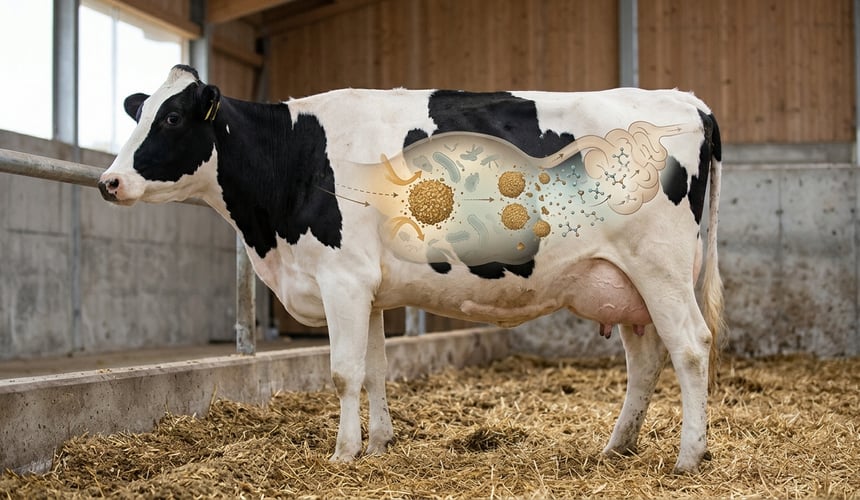
High-producing dairy cows require a precise balance of amino acids to support their metabolic demands for milk production, maintenance, and reproduction. While microbial protein synthesis in the rumen contributes significantly to the cow's amino acid supply, it is often insufficient to meet the needs of top-performing animals. This necessitates supplementation with rumen-undegradable protein (RUP), commonly known as bypass protein. Among the various RUP sources, rumen-protected soy protein is a frequent choice due to its favorable amino acid profile. However, merely including a rumen-protected soy protein in the diet does not automatically guarantee effective amino acid delivery. The crucial question for dairy farmers and nutritionists is: How can dairy farmers and nutritionists ensure that rumen-protected soy protein effectively delivers the necessary amino acids to high-producing cows for optimal performance?
Cropenta Insight
According to companies providing such products, understanding the interplay between a rumen-protected soy protein's processing history, its measured rumen bypass characteristics, and its intestinal digestibility is fundamental for products utilizing controlled Maillard reactions. This level of technical insight is crucial for making informed decisions when balancing amino acid supply.
Protein Dynamics in Ruminant Digestion
Protein digestion in ruminants is a two-stage process. Dietary crude protein is categorized into rumen-degradable protein (RDP) and rumen-undegradable protein (RUP). RDP is utilized by rumen micro-organisms to synthesize microbial protein, which is a primary source of high-quality amino acids for the cow [1]. RUP, conversely, escapes degradation in the rumen and passes directly to the abomasum and small intestine for enzymatic digestion. The efficiency of microbial protein synthesis is vital, but in high-producing cows, the quantity of amino acids provided by microbial protein and RDP may not be adequate to meet their demands for essential amino acids like lysine and methionine [2]. Therefore, strategic supplementation with high-quality RUP sources, such as rumen-protected soy protein, is considered.
Assessing Rumen Bypass and Intestinal Digestibility
The effectiveness of a rumen-protected soy protein depends on two key factors: its ability to resist rumen degradation (rumen bypass) and the subsequent digestibility of this bypassed protein in the small intestine. Rumen bypass is characterized by rumen degradation kinetics, which determine the soluble, washable, potentially degradable, and undegradable fractions, alongside the fractional degradation rate (Kd). In practice, RUP is often calculated using these degradation characteristics at an assumed rumen passage rate (Kp). A high RUP value alone does not automatically equate to high nutritional value; the bypassed protein must also be efficiently digested in the small intestine. If the intestinal digestibility is low, a significant portion of the RUP may pass undigested, providing limited usable amino acids to the animal.
Methods of Rumen Protection
Various methods are used to protect soy protein from rumen degradation. Commonly employed methods to protect soy protein from rumen degradation include heat treatment, chemical treatments (historically formaldehyde, now largely phased out), and controlled Maillard reactions with reducing sugars. Each method aims to alter the protein structure to make it less accessible to rumen micro-organisms while still allowing for digestion in the acidic environment of the abomasum and enzymatic digestion in the small intestine. For example, some rumen-protected soy proteins are produced by binding protein to selected C5 and C6 reducing sugars in a controlled Maillard reaction, according to product developers. However, according to some producers, over-processing can damage amino acids, particularly lysine (reducing its reactive lysine content), and decrease overall intestinal digestibility.
Delivering Essential Amino Acids for High-Producing Cows
The ultimate goal of using rumen-protected soy protein is to increase the metabolizable supply of essential amino acids to the cow. Studies indicate that supplementing specific amino acids like methionine and lysine may support milk production and protein synthesis in high-producing dairy cows [2]. Formulating rations that consider both rumen-protected amino acids and other ingredient characteristics, such as fibrous by-products, may contribute to overall nitrogen utilization and efficiency [3]. Therefore, the nutritional valuation of a rumen-protected soy protein should move beyond crude protein percentages to focus on the actual supply of digestible essential amino acids at the intestinal level.
Evaluating Rumen-Protected Soy Protein Products
When selecting rumen-protected soy protein products, nutritionists should critically evaluate the evidence supporting their RUP values and intestinal digestibility. According to product documentation for specific rumen-protected soy protein ingredients, such as Bypass Soy Protein MP, calculated RUP values above 80% at an assumed passage rate of 6%/h are reported, with intestinal digestibility of the rumen-undegraded protein reported as close to 100% [4]. Observations from other protected protein sources, such as rapeseed meal, indicate that in-situ measured RUP values can sometimes be significantly lower than values declared in product information, underscoring the importance of robust and comparable measurement protocols .
Formulation Considerations for Effective Amino Acid Supply
Integrating rumen-protected soy protein into dairy rations requires a holistic approach. Formulators consider not only the RUP percentage but also the expected intestinal digestibility, the amino acid profile of the source, and its contribution to the overall metabolizable protein balance. Carefully balancing these factors helps ensure that high-producing dairy cows receive the precise amino acid supply needed to support their genetic potential without excessive nitrogen excretion.
Technical Summary
Effective amino acid supply from rumen-protected soy protein for high-producing dairy cows relies on robust rumen bypass and high intestinal digestibility. According to some industry perspectives, accurately assessing these factors using in-vivo methods, rather than in-vitro tests, is considered crucial. Consideration of the assumed rumen passage rate and the specific amino acid profile helps nutritionists formulate rations that precisely meet the animal's needs, contributing to metabolizable protein targets and supporting performance.
Disclaimer
This article has been prepared with AI assistance using publicly available sources and is intended solely for general technical and educational purposes. It does not constitute professional advice or recommendations for specific applications. Cropenta makes no warranties regarding the accuracy, completeness or applicability of the information. No rights may be derived from its contents, and Cropenta accepts no liability for its use to the extent permitted by law.
Technical Questions
What is the key difference between RUP percentage and intestinal digestibility for protected soy protein?
RUP indicates the portion of protein escaping rumen degradation, calculated at a specific passage rate. Intestinal digestibility, conversely, measures how much of that escaped protein is actually digested and absorbed in the small intestine. Both values are critical; a high RUP with low intestinal digestibility provides limited usable amino acids.
How does the assumed passage rate (Kp) affect RUP values and their comparison?
A faster Kp generally results in a higher calculated RUP, as less time is available for degradation.
What role does reactive lysine play in evaluating the nutritional quality of heat-treated soy protein?
Reactive lysine with a free epsilon-amino group is a critical indicator for evaluating the nutritional quality of heat-treated soy protein because its availability is essential for digestion and absorption. Scientific literature indicates that excessive heat or Maillard reactions can bind this group, making the lysine nutritionally unavailable, even if total lysine content remains unchanged. Therefore, measuring reactive lysine content is key to assessing potential over-processing and the true value of the protein.
How do controlled Maillard reactions contribute to rumen protection while maintaining amino acid availability?
Controlled Maillard reactions form melanoidins that resist microbial breakdown in the rumen, according to developers. This balance is key for effective bypass and utilization.
Related articles



Related Products
Looking for something specific?
Our team is there to help you find the right raw materials and solutions for your formulations

