How Rapeseed Protein Digestion Influences Nitrogen Efficiency in Ruminants
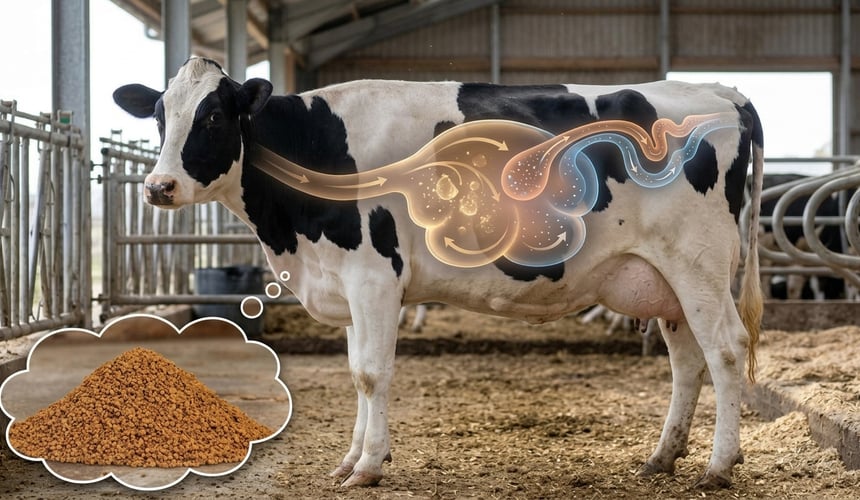
Efficient nitrogen utilization is a persistent challenge in ruminant nutrition. Rapeseed protein, a widely available and protein-rich feed ingredient, presents a complex nutritional profile due to its digestion characteristics. For ruminants to efficiently convert dietary nitrogen into metabolizable protein for milk or meat production, a nuanced understanding of how rapeseed protein is digested in the rumen and small intestine is crucial. This article investigates the specific digestion characteristics of rapeseed protein and their direct influence on an animal's nitrogen balance and overall protein efficiency.
Cropenta Insight
Understanding the interplay between rumen degradability and intestinal digestibility is vital when evaluating rumen-protected rapeseed protein. Processing history significantly influences the characteristics of protein, which in turn affects its availability for the animal and informs formulation decisions. Accurate characterization through in-situ methods provides reliable data for optimizing nitrogen utilization and protein efficiency in ruminant diets, enabling a shift from crude protein percentages to true metabolizable protein values.
Rapeseed Protein's Dual Digestion in Ruminants
In ruminants, dietary protein undergoes a two-stage digestive process. Initially, protein enters the rumen, where a significant portion is degraded by microbial enzymes. This fraction, known as rumen-degradable protein (RDP), is essential for supporting microbial protein synthesis, which itself forms a key amino acid source for the host animal. The remaining protein, termed rumen-undegradable protein (RUP) or bypass protein, escapes rumen degradation and proceeds to the abomasum and small intestine for enzymatic digestion and absorption.
The balance between RDP and RUP is critical for optimizing nitrogen efficiency. An adequate supply of RDP supports a healthy rumen microbiome, while sufficient RUP ensures a direct amino acid supply to the host animal, especially for high-producing animals. However, nitrogen use efficiency in cows is often relatively low under normal production conditions [1].
Characterizing Rumen Degradation and Bypass Protein
The extent of rumen degradation is determined by the inherent protein structure and processing methods. Rumen degradation kinetics, often measured via in-situ nylon bag incubation in rumen-fistulated cows, define several parameters: S (the soluble fraction), W-S (the washable but insoluble fraction), D (the potentially degradable fraction), U (the undegradable fraction), and Kd (the fractional degradation rate per hour). The effective degradation and RUP are then calculated using these parameters in conjunction with an assumed fractional passage rate (Kp). For accurate comparison, RUP values should be determined at the same assumed fractional passage rate [2].
Intestinal Digestibility: The Key to Metabolizable Protein
While a high RUP value indicates that protein bypasses the rumen, it does not automatically imply high nutritional value. The rumen-undegraded protein must also be highly digestible in the small intestine to contribute to the animal's metabolizable protein supply. Intestinal digestibility is typically measured using techniques like the mobile nylon bag technique in cows fitted with duodenal cannulas. A high RUP with low intestinal digestibility delivers little usable protein, highlighting that protein protection must be judged together with intestinal digestibility [2].
Connecting Digestion to Nitrogen Efficiency
The way rapeseed protein is digested directly impacts how efficiently ruminants use nitrogen. An optimal balance of RDP and intestinally digestible RUP supports both robust microbial protein synthesis and a direct amino acid supply to the host. Nitrogen utilization efficiency is influenced by the velocity of nitrogen release [2] and the overall metabolizable protein available to the animal [3]. If too much protein is degraded in the rumen without being captured by microbes, nitrogen can be excreted, reducing efficiency and increasing environmental nitrogen load.
Processing Methods and Their Impact on Rapeseed Protein
Protein protection methods, such as heat treatment or Maillard reactions with reducing sugars, aim to decrease rumen degradation and increase RUP. Controlled Maillard reactions, for instance, make protein resistant to rumen microbes while still allowing acid and enzymes in the abomasum and small intestine to release amino acids. However, excessive processing can destroy reactive lysine and lower both rumen degradation and intestinal digestibility [2].
According to research, in-vitro protein degradation tests, such as enzymatic assays, often correlate poorly with in-situ measurements in live animals, particularly for heat- and Maillard-protected proteins. Studies suggest that these in-vitro methods may overstate rumen protection by tens of percentage points compared to in-vivo measurement, implying that declared values based on in-vitro methods may not always be comparable with in-situ values [2].
Evaluations of Treated Rapeseed Meals
Research has investigated the efficacy of different treatments for rapeseed meal. For example, German dairy feeding trials compared rations containing physically-thermally treated or lignosulfonate-treated rapeseed meal against untreated rapeseed meal. While the treatments aimed to increase bypass protein, milk protein output and feed nitrogen efficiency did not differ significantly between treated and untreated groups. In-situ measurements revealed that the rumen-undegraded protein (UDP) values of the treated meals were well below the shares declared in product information and used in ration calculations. The physically treated meal showed only a few percentage points difference from untreated meal, and lignosulfonate treatment raised UDP significantly but less than expected. Historically, formaldehyde treatment, now prohibited, had increased UDP in situ by twenty percentage points or more [4].
Evaluating the nutritional value of rapeseed protein requires specific studies. While this article focuses on ruminants, broader studies exist to evaluate rapeseed protein's nutritional value in various species, such as piglets [5]. Such studies, even in different species, contribute to the comprehensive understanding of protein evaluation methodologies.
The Role of Controlled Protection in Rapeseed Protein
Understanding the actual digestion characteristics is fundamental for formulating efficient ruminant diets. Such proteins typically contain a certain percentage of crude protein.
Technical Summary
Optimizing ruminant nitrogen efficiency hinges on understanding how rapeseed protein navigates rumen degradation and intestinal digestibility. The balance between RDP and highly digestible RUP is critical for metabolizable protein supply and minimizing nitrogen excretion. In-situ measurements are essential for accurate characterization, as in-vitro methods can overstate protection. Processing, like controlled Maillard reactions, influences these dynamics, directly impacting the ingredient's nutritional valuation in formulation systems.
Disclaimer
This article has been prepared with AI assistance using publicly available sources and is intended solely for general technical and educational purposes. It does not constitute professional advice or recommendations for specific applications. Cropenta makes no warranties regarding the accuracy, completeness or applicability of the information. No rights may be derived from its contents, and Cropenta accepts no liability for its use to the extent permitted by law.
Technical Questions
How do different protein protection methods influence the nitrogen efficiency of rapeseed meal in ruminants?
Protein protection methods, such as heat or Maillard reactions, aim to reduce rumen degradation, increasing the supply of bypass protein. However, efficacy varies; for instance, controlled Maillard reactions can preserve amino acid availability, whereas excessive heat may damage reactive lysine, ultimately impacting intestinal digestibility and overall nitrogen utilization efficiency.
Why is the distinction between in-vitro and in-situ measurements critical for evaluating protected rapeseed protein?
In-vitro tests have limitations in accurately mimicking the complex rumen environment, and they may overstate protein protection for treated ingredients. In contrast, in-situ measurements, conducted in live, rumen-fistulated animals, provide more realistic and reliable data on actual rumen degradation kinetics and bypass protein values, which are essential for accurate nutritional valuation in feed formulation.
What are the implications of varying passage rates (Kp) on calculated RUP values for rapeseed protein?
The fractional passage rate (Kp) is an assumed parameter used in the calculation of rumen-undegradable protein (RUP). A higher Kp suggests faster passage through the rumen, resulting in a higher calculated RUP, as less time is available for microbial degradation. Therefore, RUP values for different ingredients or treatments are only comparable if calculated using the same Kp.
How does excessive processing affect the nutritional value of protected rapeseed protein beyond its rumen bypass?
While controlled processing can enhance rumen bypass, excessive heat or harsh chemical treatments can lead to over-protection. This can reduce the intestinal digestibility of the bypass protein and potentially degrade essential amino acids like lysine, even if total protein remains unchanged. The result is a lower metabolizable protein supply, despite a high RUP figure.
How does the DVE/OEB system account for the nutritional value of rumen-protected rapeseed protein in ruminant diets?
The Dutch DVE/OEB system evaluates feed ingredients based on intestinal digestible protein (DVE) and rumen protein balance (OEB). This system allows degradation and digestibility measurements to be translated into practical formulation values. It quantifies how much protein is available for the animal and how the ingredient influences the rumen's nitrogen balance, enabling more precise diet formulation than crude protein alone.
- 1.Slow-release non-protein nitrogen sources in animal nutrition: A review
- 2.Digestion kinetics of protein feed ingredients and their impact on ...
- 3.Nitrogen in ruminant nutrition: A review of measurement techniques
- 4.Geschützte Rapsextraktionsschrote im Fütterungsversuch (proteinmarkt.de)
- 5.Effects of rapeseed protein on growth performance, nutrient digestibility ...
Related articles

Looking for something specific?
Our team is there to help you find the right raw materials and solutions for your formulations

