Why Trypsin Inhibitors Are Key to Assessing Heat Treatment Quality in Full-Fat Soybeans
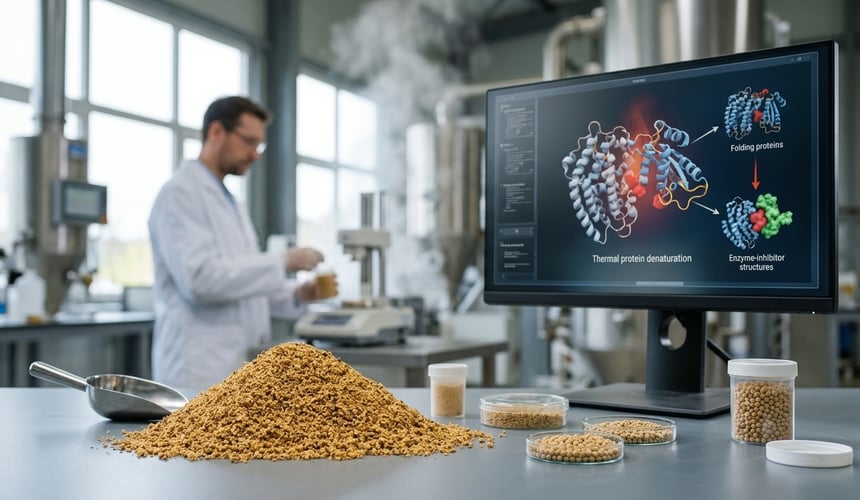
Raw soybeans contain various anti-nutritional factors that can reduce nutrient digestibility and animal growth. Among these, trypsin inhibitors are particularly significant for monogastric animals, as they interfere with protein digestion. Proper heat treatment is essential to inactivate these factors, making the protein and energy in full-fat soybeans more accessible. However, the quality of this heat treatment can vary significantly depending on the processing method and conditions. This raises a key question for feed manufacturers and nutritionists: Why are trypsin inhibitors such an important indicator of whether full-fat soybeans have been properly processed with heat, and what does this mean for feed quality?
Cropenta Insight
For feed ingredient suppliers and formulators, understanding the precise impact of processing on anti-nutritional factors like trypsin inhibitors is fundamental. This insight allows for a more accurate evaluation of processed full-fat soybeans, ensuring the ingredient contributes to its intended nutritional value. It emphasizes that relying solely on general processing claims is insufficient; direct measurement of trypsin inhibitor activity offers a tangible metric for assessing protein quality and availability, which is crucial for optimal feed formulation across different species.
The Role of Trypsin Inhibitors in Soybeans
Soybeans naturally contain trypsin inhibitors, which are proteins that bind to and inhibit the activity of trypsin and chymotrypsin, key digestive enzymes in the small intestine. This inhibition can lead to reduced protein digestion, amino acid malabsorption, and compensatory pancreatic hypertrophy, ultimately impacting growth in animals [1, 2]. These anti-nutritional effects are particularly pronounced in monogastric animals like pigs and poultry [1, 3]. Consequently, the nutritional value of soybeans as a protein and energy source in animal feed largely depends on the effective inactivation of these inhibitors.
Heat Treatment and Trypsin Inhibitor Inactivation
Heat treatment is the primary method used to inactivate trypsin inhibitors in full-fat soybeans. Processes such as toasting, extrusion, and roasting involve applying heat, which denatures the trypsin inhibitor proteins, rendering them inactive. The effectiveness of this inactivation is crucial. Under-processing leaves residual trypsin inhibitor activity (TIA), leading to the anti-nutritional effects described above. Conversely, over-processing can damage the protein, reducing the availability of essential amino acids, particularly lysine, according to some assessments [4]. Therefore, achieving an optimal balance is key to maximizing the nutritional value of processed full-fat soybeans.
Different thermal processing methods affect trypsin inhibitors and protein quality in distinct ways. In toasting, soybeans are subjected to heat, often with steam, for a specific duration. This process is effective in reducing heat-labile anti-nutritional factors such as trypsin inhibitors, according to some reports [4]. However, parameters like temperature, time, and moisture must be carefully controlled to avoid over-processing that could reduce reactive lysine and overall protein digestibility. Extrusion, a thermomechanical treatment, combines temperature, moisture, pressure, and shear forces. This process can inactivate anti-nutritional factors in soybeans, according to some observations [5]. Roasting, a dry heat treatment, also denatures trypsin inhibitors, but its impact on protein can differ from toasting or extrusion, according to some analyses [4].
Trypsin Inhibitor Activity as a Quality Indicator
Measuring residual trypsin inhibitor activity (TIA) is considered the most direct and reliable indicator of adequate heat treatment for monogastric feeds. A study involving growing pigs showed that increasing dietary trypsin inhibitor concentrations could affect growth performance by reducing amino acid bioavailability [1]. This highlights the direct link between TIA levels and nutritional outcomes. Therefore, TIA serves as a precise proxy for assessing whether the processing has been sufficient to neutralize these detrimental factors without damaging the protein.
Other indicators, such as urease activity, KOH protein solubility, and Protein Dispersibility Index (PDI), also reflect heat treatment, according to some evaluations. Urease activity indicates that heat was applied, but a low urease level does not confirm optimal processing or the absence of over-processing. KOH protein solubility and PDI measure protein denaturation and can indicate over-processing if too low or under-processing if too high, each having its own optimal range, according to some assessments [4]. However, these are indirect measures compared to TIA's direct assessment of the most impactful anti-nutritional factor for monogastrics.
Implications for Feed Quality and Formulation
For feed manufacturers and nutritionists, understanding and controlling TIA levels in processed full-fat soybeans is essential for several reasons:
- Nutrient Availability: Proper processing of full-fat soybeans contributes to amino acid digestibility and protein availability in animal feed [1, 5]. This directly impacts the nutritional contribution of the ingredient to the feed.
- Animal Performance: Reduced TIA is associated with desirable growth performance and feed efficiency, especially in sensitive monogastric animals like young pigs and poultry [1]. In a piglet trial, groups fed processed full-fat soybeans showed numerically higher growth and slightly lower feed conversion ratios compared to a control diet, though these differences were not statistically significant, according to product documentation [5].
- Processing Control: TIA measurement provides a clear benchmark for optimizing processing parameters for different methods like toasting and extrusion, helping to ensure consistency in product quality .
- Economic Considerations: Inconsistent heat treatment can lead to variable feed quality, necessitating adjustments in formulation or potentially leading to animals performing below expectations, both of which have economic consequences.
Therefore, TIA testing is a critical step in quality control for processed full-fat soybeans, offering a direct link between processing adequacy and expected animal performance.
Technical Summary
Trypsin inhibitor activity (TIA) is a primary indicator of proper heat treatment in full-fat soybeans, crucial for animal feed. High TIA levels affect amino acid digestibility and growth, especially in monogastrics [1]. Methods like toasting and extrusion aim to inactivate these anti-nutritional factors, but over-processing can damage protein, according to some assessments [4]. Measuring residual TIA directly reflects processing quality, guiding formulators to ensure optimal nutrient availability and animal performance in feeds.
Disclaimer
This article has been prepared with AI assistance using publicly available sources and is intended solely for general technical and educational purposes. It does not constitute professional advice or recommendations for specific applications. Cropenta makes no warranties regarding the accuracy, completeness or applicability of the information. No rights may be derived from its contents, and Cropenta accepts no liability for its use to the extent permitted by law.
Technical Questions
How do various heat treatment methods differentially impact trypsin inhibitor activity in full-fat soybeans?
Different heat treatments, such as toasting, extrusion, and roasting, all aim to inactivate trypsin inhibitors through denaturation. Toasting typically involves steam and controlled temperature, while extrusion combines temperature, pressure, and shear. Each method has specific parameters that influence the extent of trypsin inhibitor inactivation and the risk of over-processing, which could reduce protein quality. Effective control is essential to balance inhibitor reduction with amino acid integrity.
What is the typical optimal range for trypsin inhibitor activity in processed full-fat soybeans for monogastric feeds?
Optimal ranges for trypsin inhibitor activity (TIA) in processed full-fat soybeans for monogastric feeds are generally low. Maintaining TIA within a low range helps ensure that anti-nutritional effects are minimized, supporting optimal protein digestion and animal performance without risking nutrient damage from excessive heat.
How does reduced trypsin inhibitor activity translate into improved amino acid bioavailability for animals?
Trypsin inhibitors directly interfere with the digestive enzymes trypsin and chymotrypsin. By inactivating these inhibitors through proper heat treatment, the full activity of these enzymes is restored in the animal's gut. This allows for more efficient breakdown of dietary proteins into amino acids, which can then be absorbed more readily. Improved amino acid bioavailability means the animal can utilize the protein more effectively for growth and maintenance.
Beyond trypsin inhibitors, what other anti-nutritional factors in soybeans are affected by heat treatment, and why is TIA still considered the primary indicator?
Heat treatment also inactivates other heat-labile anti-nutritional factors like lectins. However, TIA is considered the primary indicator due to its direct and significant impact on protein digestion and amino acid utilization in monogastrics. While other factors contribute to anti-nutritional effects, the specific enzymatic inhibition caused by trypsin inhibitors has a clear, measurable influence on feed efficiency and animal growth, making TIA a sensitive and relevant quality control metric.
- 1.Increasing trypsin inhibitor concentrations in growing pig diets ...
- 2.Advancements in Inactivation of Soybean Trypsin Inhibitors
- 3.Inactivation methods of soybean trypsin inhibitor – A review
- 4.Reducing Heat Without Impacting Quality: Optimizing Trypsin Inhibitor ...
- 5.Cropenta product documentation: Full-Fat Toasted Extruded Soybeans
Related articles
Related Products

Looking for something specific?
Our team is there to help you find the right raw materials and solutions for your formulations

