How Different Processing Methods Affect the Energy Value of Liquid Fat Blends
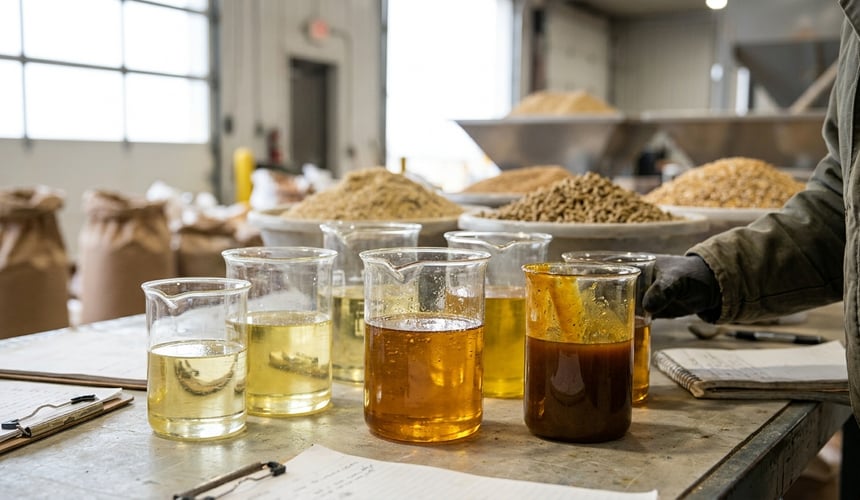
Feed manufacturers often seek efficient energy sources, and liquid fat blends are a common inclusion in animal diets. However, the energy value these blends provide is not solely determined by their raw composition. The specific processing methods used to create these liquid fat blends can significantly influence their final metabolizable energy value by altering fat digestibility and fatty acid composition across different animal species [1].
Cropenta Insight
Understanding how different processing methods influence the energy value of liquid fat blends is crucial for feed manufacturers. Factors like fatty acid profile modifications and improved emulsification can directly impact the efficiency of energy uptake in animals. Recognizing these distinctions allows for more precise formulation, ensuring that the chosen fat blends align with specific nutritional targets and offer optimal energy supply.
Factors Influencing Energy Value in Fat Blends
The energy value of a fat blend in animal feed is a complex attribute influenced by several factors, including its fatty acid composition, degree of saturation, and the presence of free fatty acids (FFAs), triglycerides, and phospholipids. Triglycerides, consisting of three fatty acids on a glycerol backbone, are the predominant form of fat in many feed ingredients. Free fatty acids, often found in acid oils and certain by-products, differ in their digestive characteristics. Phospholipids, which carry a phosphate group, are amphiphilic and also contribute to the fatty acid and energy supply [1].
Fatty acid chain length and the number of double bonds (saturation) play a role in determining a fat's melting point and digestibility. Generally, unsaturated fatty acids are considered more digestible than saturated ones, particularly in younger animals. Oxidative stability, a fat's resistance to oxidation, is also affected by unsaturation, FFAs, and metal content, all of which can be influenced during processing [2, 3].
Processing Methods and Their Effects
Various processing methods are applied to fats to create liquid fat blends, each with potential implications for the final energy value:
- Blending: Simple physical blending of different fat sources can alter the overall fatty acid profile and the ratio of triglycerides, FFAs, and phospholipids. For instance, blending fats containing FFAs with those rich in triglycerides may influence overall fat digestibility in poultry diets [1]. The synergy between different fat components can sometimes lead to a different digestible energy value than predicted from individual components alone.
- Heat Treatment: Heat application during processing can have multiple effects. While controlled heat can reduce certain anti-nutritional factors or improve the physical properties of some ingredients, excessive or uncontrolled heat can lead to oxidation or polymerization of fatty acids, potentially reducing digestibility and energy content. However, specific thermal processes can also structure oil-based systems to mimic solid fats, potentially modifying their nutritional value [3].
- Emulsification: Some liquid fat blends incorporate emulsifiers like lecithin. Lecithin is a mixture of phospholipids, glycolipids, triglycerides, and other components, whose exact composition depends on its source (e.g., soy, rapeseed, sunflower) and processing . Emulsification works by creating smaller fat droplets, which may enhance the action of pancreatic lipase and facilitate the formation of micelles that transport fatty acids to the intestinal wall. While emulsifying properties improve conditions for fat digestion, this does not automatically prove a higher fat digestibility in a given complete diet [1].
Age-Dependent Digestion and Species Variation
The impact of processing on energy value is also influenced by the animal species and its age. Young piglets and chicks, for example, have limited production of bile salts and lipase, meaning their capacity for fat digestion improves with age. Saturated fats are typically digested less effectively in young animals compared to unsaturated oils [1]. Therefore, a processing method that enhances the digestibility of saturated fatty acids, or produces a blend with a higher proportion of unsaturated fatty acids, may have a more pronounced positive effect in younger animals.
Evaluating Energy Systems
When comparing different fat sources and processed blends, it is essential to use a consistent energy system (e.g., gross energy, digestible energy, metabolizable energy, or net energy). These values and systems vary between species (pigs, poultry, ruminants) and regional feed tables. Comparing fats within one defined system helps ensure accurate nutritional evaluation and formulation decisions [1]. Lipids are essential compounds, providing not only energy but also vital nutrients [4].
Technical Summary
Processing methods for liquid fat blends significantly impact their metabolizable energy value in animal feed. Techniques such as blending, heat treatment, and emulsification can alter fatty acid composition, saturation, and the physical state of fats. These changes influence fat digestibility, especially in young animals with developing digestive systems. Evaluating energy value requires a consistent energy system and considering the blend's overall fatty acid profile and oxidative stability.
Disclaimer
This article has been prepared with AI assistance using publicly available sources and is intended solely for general technical and educational purposes. It does not constitute professional advice or recommendations for specific applications. Cropenta makes no warranties regarding the accuracy, completeness or applicability of the information. No rights may be derived from its contents, and Cropenta accepts no liability for its use to the extent permitted by law.
Technical Questions
How does the fatty acid composition of a liquid fat blend influence its energy contribution?
The fatty acid composition, particularly the ratio of saturated to unsaturated fatty acids, affects the blend's digestibility and thus its energy contribution. Unsaturated fatty acids are generally more digestible, especially for young animals, contributing to a higher effective energy value. Processing methods can alter this profile, impacting overall nutritional availability.
In what ways can heat treatment during fat blend production modify its nutritional properties?
Controlled heat treatment can improve certain physical properties of fat blends. However, excessive heat can lead to oxidation or polymerization of fatty acids, potentially reducing their digestibility and metabolizable energy. The specific duration and temperature of heat application are critical in determining the nutritional outcome.
What is the role of emulsifiers, such as lecithin, in liquid fat blends regarding energy value?
Emulsifiers like lecithin help break down fat into smaller droplets, aiding the action of pancreatic lipase and micelle formation for absorption. This can create more favorable conditions for fat digestion, potentially leading to improved utilization of the fat's energy content. However, improved emulsification does not always directly translate to higher digestibility in all dietary contexts.
Why is it crucial to consider animal age when evaluating the energy value of processed fat blends?
Animal age is critical because young animals, such as piglets and chicks, have immature digestive systems with limited production of bile salts and lipase. This means they digest fats, particularly saturated ones, less efficiently than older animals. Therefore, processing methods that improve digestibility or modify fatty acid profiles can have a greater impact on energy availability in younger animals.
Related articles

Related Products


Looking for something specific?
Our team is there to help you find the right raw materials and solutions for your formulations

