Silicon's Influence on Sodium Transport in Plants Under Salinity Stress
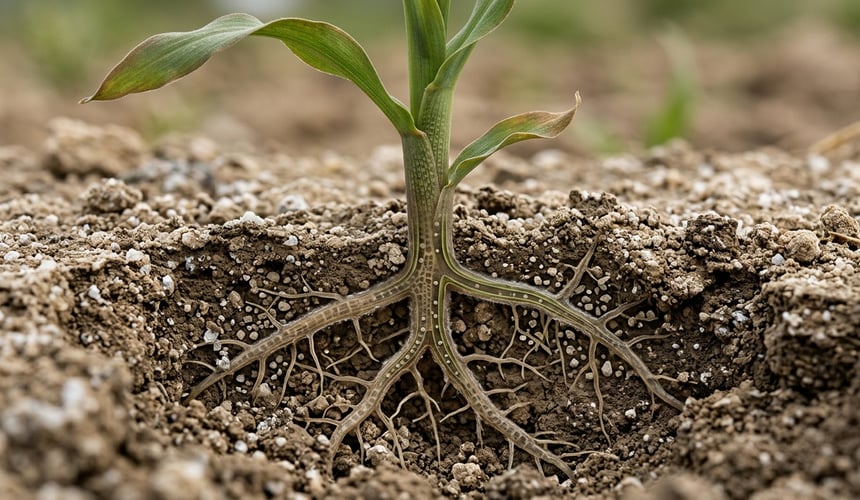
When crop plants encounter saline conditions, high concentrations of sodium (Na+) can become toxic, disrupting essential physiological processes. A key aspect of managing salinity stress involves regulating how plants absorb and move sodium within their tissues. Silicon (Si) application has been observed to influence these processes, helping plants to manage sodium more effectively.
Cropenta Insight
The specific pathways for silicon absorption are relevant for its influence on plant physiology, including ion transport. Understanding these mechanisms can inform strategies for silicon application to support crop responses, particularly under challenging conditions like salinity stress.
Silicon's Influence on Sodium Uptake and Translocation
Exogenous silicon application may influence how plants take up sodium from the soil and transport it throughout their system. Under saline conditions, silicon has been proposed to affect the accumulation of sodium in sensitive plant tissues, such as the leaves [1, 2]. This effect is significant because excessive sodium in photosynthetic tissues can impair physiological functions.
One mechanism by which silicon may modulate sodium transport involves regulating ion homeostasis. Silicon can reinforce cell walls and modulate the activity of key ion transporters, which can affect the balance of ions within plant cells [2]. This modulation may include alterations in the expression of genes associated with ion transport, thereby influencing the plant's capacity to manage sodium internally.
Studies suggest that silicon application can be associated with limiting the root-to-shoot translocation of sodium [1]. By retaining more sodium in the root tissues or preventing its excessive movement into the shoot, silicon helps reduce the toxic impact on critical growth centers and photosynthetic organs. This compartmentalization of sodium in less sensitive parts of the plant, such as vacuoles in root cells, can be a crucial strategy for salinity tolerance.
Implications for Plant Tolerance to Salinity
The ability of silicon to influence sodium transport mechanisms can contribute to specific physiological adjustments that may support plant tolerance to saline conditions [3]. By managing sodium accumulation and distribution, silicon may help maintain cellular turgor, enzyme activity, and overall metabolic balance, which are often compromised by high salinity [1].
For instance, an improved ion balance facilitated by silicon can support the plant's water-use efficiency under osmotic stress, allowing it to maintain better hydration despite challenging external conditions. This can be associated with greater structural resilience and improved vigor in plants exposed to salinity stress [3].
Technical Summary
Silicon application may influence plant responses to salinity stress by modulating sodium transport. It can reduce sodium uptake, limit root-to-shoot translocation, and support sodium compartmentalization within plants. These actions are associated with improved ion homeostasis, contributing to enhanced plant tolerance and overall physiological balance under saline conditions.
Disclaimer
This article has been prepared with AI assistance using publicly available sources and is intended solely for general technical and educational purposes. It does not constitute professional advice or recommendations for specific applications. Cropenta makes no warranties regarding the accuracy, completeness or applicability of the information. No rights may be derived from its contents, and Cropenta accepts no liability for its use to the extent permitted by law.
Technical Questions
Are silicon's effects on sodium transport consistent across all crop types?
The degree to which silicon influences sodium transport can vary significantly between crop species. Some plants are strong silicon accumulators, while others accumulate less. Research findings on crops like rice, which is a strong silicon accumulator, may not directly apply to all other crop species regarding the extent of silicon's impact on sodium management under salinity stress.
What is ion homeostasis and how does silicon affect it under salinity?
Ion homeostasis refers to the plant's ability to maintain a stable internal balance of essential ions. Under salinity, silicon may contribute to ion homeostasis by modulating the activity of ion transporters and reinforcing cell walls. This can help prevent excessive accumulation of harmful ions like sodium and maintain the balance of beneficial ions, which is vital for plant health.
Related articles
Related Products


Looking for something specific?
Our team is there to help you find the right raw materials and solutions for your formulations

