When Is Protected Rapeseed Protein Worth Its Price in Dairy Rations?
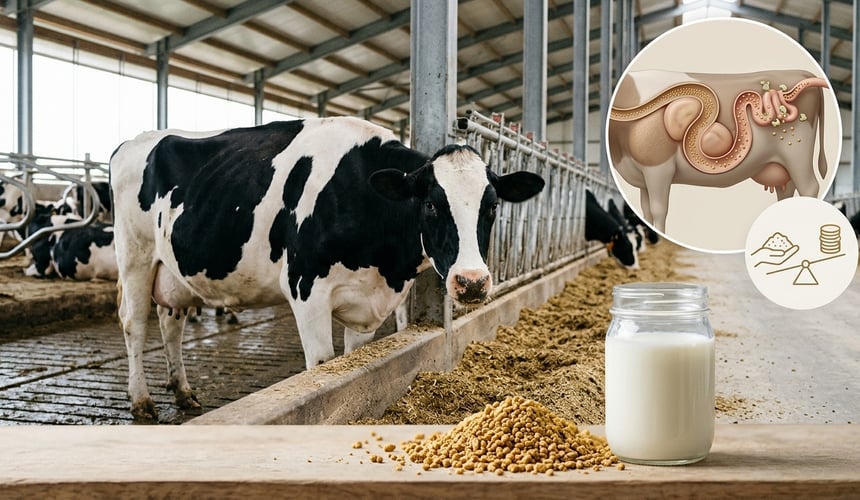
A dairy nutritionist comparing protein sources usually starts with price per tonne and crude protein content. That comparison breaks down once the question becomes how much protein the cow actually absorbs in the small intestine. Rapeseed meal is largely degraded by rumen micro-organisms, so its value to the cow depends on how much protein escapes that fermentation and is digested further down the gut.
Protected rapeseed protein is a rapeseed-based protein treated to reduce rumen degradation, so a larger share reaches the small intestine. Whether that is worth paying for depends on the cow, the ration and how the product is evaluated. The sections below outline the conditions in which nutrition and economics may point in the same direction, and where the evidence is still thin.
Cropenta Insight
Crude protein alone does not show how much protein a cow can use. Two products with similar crude protein can differ widely in rumen-undegradable protein and in how much of that fraction is digested in the small intestine. For a cost comparison, the figure that matters is intestinally digestible protein per unit price, read together with the ration's rumen protein balance.
Why Crude Protein Is the Wrong Yardstick
Rumen micro-organisms use degradable protein, ammonia and fermentable energy to build microbial protein, which is a major amino acid source for the cow. Only the rumen-undegradable protein (RUP, also called bypass or UDP) passes on to the small intestine. Its value depends on whether it is digested there. A high RUP with poor intestinal digestibility delivers little usable protein, so both figures have to be read together.
Protection is usually achieved with heat, with Maillard reactions between protein and reducing sugars, or with other chemical treatments. Controlled treatment binds protein against rumen degradation while enzymes in the abomasum and small intestine can still release amino acids. Over-processing lowers degradation and digestibility at the same time, and it can bind lysine so that total lysine stays unchanged while reactive lysine falls.
What the Values Mean and What They Do Not
RUP is calculated from in-situ degradation parameters and an assumed fractional passage rate (Kp). It is not the protein left after a full incubation, and RUP values are only comparable at the same Kp. Protein values from in-vitro tests can overstate rumen protection of heat- and Maillard-treated proteins, so in-situ data are the more relevant reference for these products.
A specific protected rapeseed protein, Bypass Rapeseed MP, is described according to the company as a rapeseed meal and treated molasses product without added formaldehyde. The company states a calculated RUP of about 80% at an assumed passage rate of 6%/h and an intestinal digestibility of the rumen-undegraded protein of about 90%. According to the company, these in-vivo values were obtained by an independent research institute using the official reference sample. Such figures are incomplete without the passage rate and the intestinal digestibility basis, and they should be verified against the product documentation.
Which Cows and Rations Can Make the Case
The economic argument is strongest where the ration is short of metabolisable protein and the rumen supply of degradable protein is already sufficient. High-yielding cows in early to mid lactation, with high protein demand and diets built on rapeseed meal or other rumen-degradable sources, are the typical situation in which the cost per unit of digestible protein becomes the deciding factor.
A 2025 study of rumen-protected amino acids in cows fed a metabolisable protein-deficient diet reported higher milk protein yield with protected lysine, methionine and histidine.[1] That study used protected amino acids, not a protected protein, and it does not show what a protected rapeseed protein would do. It does suggest that when the protein supply is limiting, the amino acid profile of the bypass fraction deserves attention alongside the RUP figure.
Research on protected protein supplementation itself is more limited. A 2024 study examined the source and frequency of rumen-protected protein supplementation on apparent total-tract digestibility and milk-related outcomes.[2] The evidence summarised here does not allow firm conclusions about economic return. A 2021 evaluation of a different rumen-protected rapeseed expeller stated the hypothesis that cows fed such proteins would show similar or improved milk production, but that remains a hypothesis for that product and is not transferable to Bypass Rapeseed MP.[3]
Operational Checks Before Inclusion
Compare products on cost per kilogram of intestinally digestible protein rather than on crude protein or price per tonne alone. Check the rumen protein balance of the ration after inclusion, because a protein that bypasses the rumen changes the balance between degradable protein and fermentable energy. Ask suppliers which passage rate the RUP was calculated at and whether the intestinal digestibility was measured in vivo.
Where the protein is handled in a mill, keep the processing history on record. Over-heated lots may look similar in crude protein while producing a different degradation and digestibility profile, and batch variation can show up in the mixer as slight differences in colour and odour rather than in any routine analysis.
Limits of the Current Evidence
The available in-vivo work on protected rapeseed protein is limited, and the study designs, cow types and rations differ between reports. The 2024 study does not, in the summary available here, support a conclusion on economic return, and the rapeseed expeller study concerns a different product. Any cost case should therefore be built from the product's own documented RUP and intestinal digestibility values, the ration balance and the local price of the alternative protein sources.
Technical Summary
Before comparing prices, confirm the passage rate behind each RUP value, the intestinal digestibility basis and the ration's rumen protein balance. Then calculate cost per kilogram of intestinally digestible protein for each option under local prices.
This article was created with the help of AI and reviewed by the Cropenta editorial team. It is general information, not professional advice.
Technical Questions
Why do formulators compare reactive lysine and not only total lysine in heat-treated rapeseed proteins?
Total lysine can stay unchanged while part of it becomes bound during Maillard reactions with reducing sugars. The bound lysine is no longer available for digestion, so a total lysine value alone can overstate the amino acid supply from an over-processed batch. Reactive lysine, read together with intestinal digestibility, gives a more useful basis for judging the protein's contribution to the ration.
Why can two RUP values not be compared when they were calculated at different passage rates?
RUP is a calculated value that depends on the assumed fractional passage rate, which is estimated from intake and production rather than measured in the nylon bag. A higher assumed passage rate leaves more protein to escape the rumen, so the same degradation data give a different RUP. Values must be compared at the same Kp, and the valuation system used should be stated with the figure.
Related articles


Related Products
Looking for something specific?
Our team is there to help you find the right raw materials and solutions for your formulations

