Why Amino Acid Form Determines Plant Uptake and Metabolism
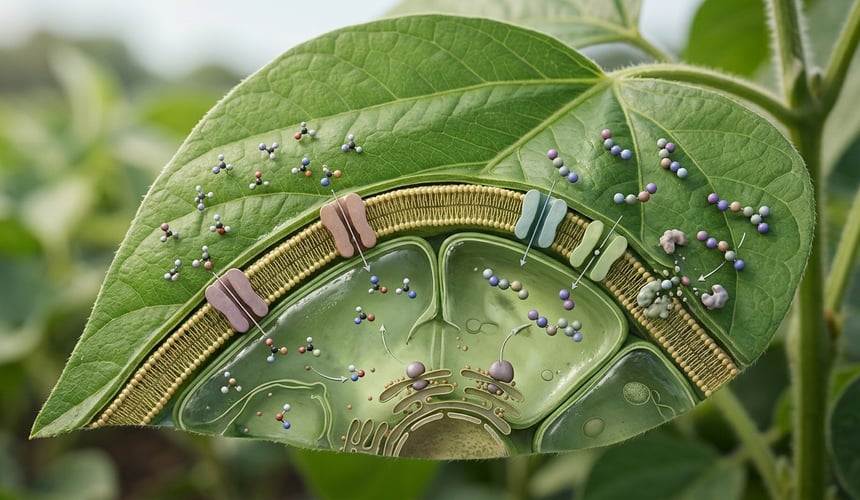
The reason sits in the form of the molecules: a single amino acid crosses a membrane through one kind of transporter, while a short peptide of two or three units needs an entirely different route. Form determines how fast a molecule enters a leaf, where it can travel inside the plant, and whether it acts mainly as a nitrogen source or as a signal that alters gene expression. This is why two amino acid products with the same nitrogen figure on the label can behave very differently in the crop, and why composition data matters as much as total nitrogen when comparing formulations.
Cropenta Insight
For distributors and manufacturers comparing amino acid plant uptake claims between products, free amino acid share, peptide fraction and L-configuration content are the first specifications worth requesting, because they define what the plant can actually recognise and absorb. A product dominated by free L-amino acids and a product dominated by larger peptides can carry the same nitrogen figure and still enter the plant through different transporters at different rates, which makes composition data more informative than total nitrogen alone.
How free amino acids and peptides enter the plant
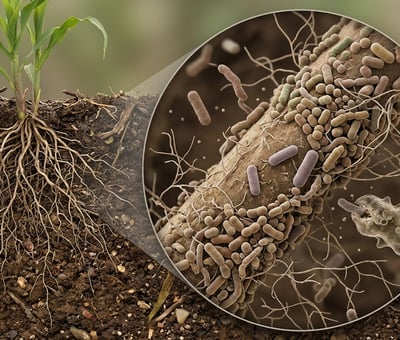
Amino acids are not only a nitrogen source that plants take up directly; they are also the main transport form of organic nitrogen inside the plant[1]. On a leaf surface, uptake begins when dissolved molecules cross the cuticle and then the plasma membrane of epidermal cells. Plants carry dedicated amino acid transporters for this step, and the same transporter families move amino acids between tissues, from source leaves to growing sinks[1, 2]. Free amino acids fit these transporters directly.
Oligopeptides take a different route. Short peptide transporters move molecules of roughly two to four amino acid units across the membrane, and peptides can also be hydrolysed to free amino acids before or during uptake[3]. A larger protein hydrolysate fraction cannot use the free amino acid route at all until it is broken down. This difference in entry route is the first practical explanation for why two products with a similar compositional analysis may not be taken up at the same rate.
What happens to the molecule after it enters
Once inside, the fate of the nitrogen diverges further. Absorbed free amino acids can be transported through the xylem and phloem to sink tissues, used directly in protein synthesis, or deaminated and fed into the Krebs cycle to release energy and carbon skeletons[1]. That energy-releasing role is one reason amino acid applications are discussed in relation to metabolic activity in crops recovering from abiotic stress such as drought or heat, though field evidence for such effects remains limited and species-specific.
Peptides are handled differently. Before their nitrogen can enter general metabolism, they must be hydrolysed to free amino acids, or they may be perceived intact and trigger signalling responses. This is where the second practical difference lies: the plant has to invest enzymatic work to release nitrogen from a peptide that it does not need for a free amino acid. Amino acid mobility in plants and plant nitrogen metabolism both depend on which form arrives at the tissue.
Form influences more than nitrogen supply
Amino acids have functions that extend beyond protein building blocks[3]. They can act as signalling molecules that regulate root and shoot architecture, flowering time and responses to stress[2]. Exogenous application can reprogram plant metabolism, inducing the expression of transporter and assimilation genes, which is why a sprayed amino acid can produce effects that a simple nitrogen calculation would not predict[4].
That signalling role depends on the specific molecule and its form. A free amino acid that reaches a receptor or transporter with the correct configuration can participate in this signalling. A peptide of a different sequence, or a D-configuration amino acid, may not. According to the company, chemical hydrolysis is harsher and converts part of the amino acids into the D-configuration that plants do not readily use, while enzymatic hydrolysis is milder and retains mostly L-amino acids with a broader profile of the twenty proteinogenic amino acids. Process therefore influences not just the nitrogen figure but the biologically recognisable fraction.
According to the company, product form and process history define how a plant can interact with the applied material. Two products with the same nitrogen content can enter through different transporters, travel to different tissues, and act as nitrogen or as signal depending on their composition. This does not mean one form is universally superior; a peer-reviewed study on a single amino acid or peptide does not justify efficacy claims for a commercial blend, and comparative trials are needed before form can be linked to a specific field response.
Technical Summary
Free amino acids and short peptides use distinct transporters to enter plant tissues. Free forms can move through xylem and phloem, support protein synthesis or feed the Krebs cycle directly. Peptides require hydrolysis before their nitrogen enters general metabolism, though they may also act as signals. Composition and hydrolysis method determine which forms are present and therefore how the plant can use the applied material. Field effects remain species- and condition-dependent and require comparative evidence.
This article was created with the help of AI and reviewed by the Cropenta editorial team. It is general information, not professional advice.
Technical Questions
Which fraction of an amino acid product is taken up most readily by plants?
According to the company, free amino acids are the smallest fraction, followed by peptides and whole proteins. Size alone does not determine quality, but it does determine which transporters can move the molecule. A product dominated by free forms can be taken up directly, while one dominated by larger peptides may first require hydrolysis before its nitrogen enters general plant metabolism.
Why does hydrolysis method matter for amino acid plant uptake?
According to the company, chemical hydrolysis is harsher and converts part of the amino acids into the D-configuration that plants do not readily use, while enzymatic hydrolysis is milder and retains mostly L-amino acids with a broader profile of the twenty proteinogenic amino acids. This difference in form, not only in total nitrogen, shapes how the plant can interact with the applied material.
Does a higher free amino acid share always mean a better product?
Not necessarily. Composition alone is no evidence of agronomic efficacy, and a single amino acid or peptide study does not prove how a commercial blend will behave. Comparative research under similar conditions is required before linking a specific form profile to a specific field response. Requesting form and process data is a reasonable first step, not a conclusion.
Looking for something specific?
Our team is there to help you find the right raw materials and solutions for your formulations