Microbial Fertilizers
 Cropenta in 60 seconds

Technical
Understanding

Specialized
Inputs

Long-Term
Partnerships

Sustainable
Solutions
Liquid Bacillus biofertilizer
Liquid Bacillus biofertilizer forms an advanced innovation category within microbiological fertilizers and next-generation biostimulant formulations. Bacillus-based biofertilizers are used worldwide for their ability to activate rhizosphere processes, make nutrients available and strengthen root resilience. The shift to liquid formulations offers producers a technological advantage: an organic carbon matrix supports microbial stability, applicability, and scalability in premium agricultural input portfolios.
For professional microbiological fertilizer raw materials, liquid Bacillus solutions, and specialty fertilizer ingredients, producers and formulators can contact via the Cropenta contact form or view the online offer on the website. Cropenta supports B2B partners worldwide with consistent sourcing of liquid Bacillus-based microbiological technologies, focused on rhizosphere activation, nutrient mobilization, and premium stress mitigation concepts.
The role of liquid Bacillus biofertilizers in modern agricultural inputs
Bacillus strains are spore-forming bacteria distinguished by their robust stability and broad applicability in various soils and climate zones. Within liquid biofertilizer concepts, Bacillus strains are combined with organic carbon-rich matrices, resulting in formulations that optimize both microbial viability and functional rhizosphere activation.
A liquid Bacillus biofertilizer does not provide direct NPK fertilizer value but functions as a microbiological input that stimulates soil processes, mobilizes nutrients, and increases plant uptake efficiency. This makes it a strategic component in specialty fertilizer and biostimulant portfolios.
Why liquid Bacillus solutions are important in modern cultivation
Global agriculture faces increasing pressure from soil degradation, climate stress, and the need to enhance input efficiency. In many cultivation systems, nutrients are present but limited in availability due to soil fixation or low microbial activity. Liquid Bacillus biofertilizers activate biological processes that reduce these limitations.
For producers, this offers a premium innovation platform within sustainable crop inputs, applicable in vegetables, fruits, field crops, ornamentals, and tropical plantation systems where yield assurance and root health are central.
Plant physiological background: Bacillus and rhizosphere interaction
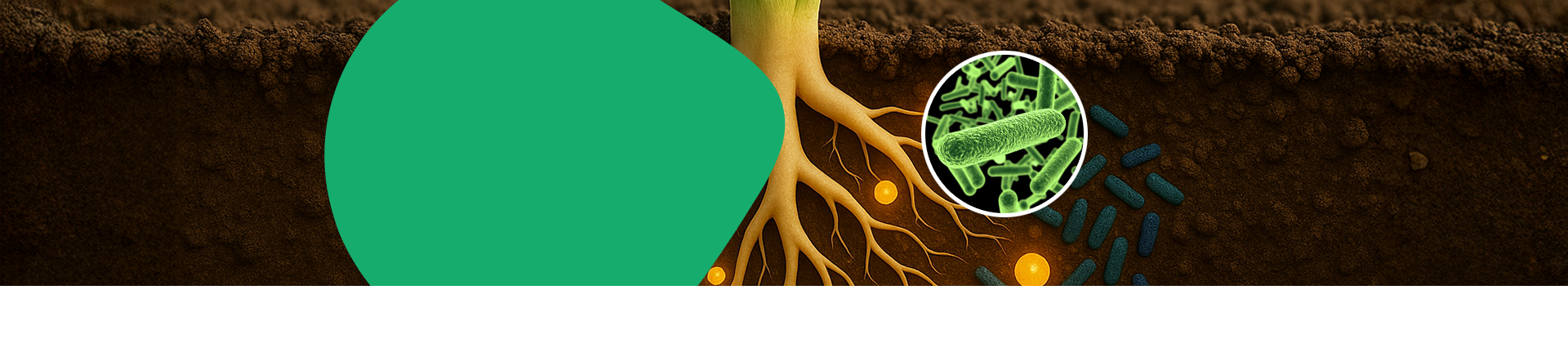
Bacillus bacteria colonize the root zone and produce metabolites that stimulate root branching, enhance uptake capacity and activate stress signaling pathways. They contribute to phosphate release and mineralization of soil elements, giving plants more efficient access to essential nutrients.
Additionally, Bacillus solutions enhance rhizosphere resilience by supporting a favorable microbial balance. This results in a more active root system with better water uptake and increased stress adaptation.
Plant Stress Mitigation: from soil activation to yield stability
Liquid Bacillus biofertilizers are increasingly used as microbiological stress biostimulants. By improving root health and nutrient efficiency, plants can recover more quickly after stress events and yield remains more stable, especially under drought and heat stress.
For formulators, this constitutes a commercially powerful claim: Bacillus-based rhizosphere activation directly leads to higher nutrient use efficiency and yield optimization without synthetic growth hormones.
Key mechanisms supported by liquid Bacillus biofertilizers
- Nutrient mobilization through phosphate release and mineralization
- Rhizosphere activation via root zone colonization
- Root architecture stimulation and increased uptake capacity
- Priming of stress pathways (ISR/SAR/ABA) for faster adaptation
- ROS neutralization indirectly via increased antioxidant activity
- Osmoregulation support under drought and salt stress
- Photosynthesis stabilization through better nutrient status
Biostimulant Raw Materials & Fertilizer Specialties
Liquid Bacillus biofertilizers are often integrated into multi-component formulations with other premium inputs:
- Microbial biostimulants (Bacillus, PGPR, Trichoderma)
- Seaweed extracts (Ascophyllum nodosum, Laminaria)
- Fulvic acid and humic acids
- Amino acids (all 20 free L-alpha amino acids)
- Peptides and protein hydrolysates
- Chelated micronutrients (Fe, Zn, Mn, B)
- Calcium and magnesium specialties
- Postbiotics and microbial metabolites
- Organic Bacillus-based microbiological solutions in carbon-rich liquid matrices
Synergy with amino acids and metabolic energy
Liquid Bacillus technologies function optimally in combination with amino acids. Amino acids support root recovery and enzymatic pathways, while Bacillus stimulates rhizosphere activation and nutrient mobilization. All 20 amino acids contribute to premium metabolic performance.
Through the citric acid cycle (Krebs cycle), amino acids provide ATP energy for root regeneration, while Bacillus optimizes the biological uptake environment. This combination forms a core strategy within next-generation liquid biofertilizer concepts.
International relevance of liquid Bacillus biofertilizers
Liquid Bacillus biofertilizers are applied worldwide in rice systems in China, corn and soybean in South America, greenhouse vegetables in Europe, fruit export chains in Africa, and tropical plantation crops such as banana and palm oil. Therefore, sourcing of Bacillus-based liquid technologies is strategically relevant for international agricultural input companies.
Commercial value for buyers and formulators
For buyers, reliable sourcing of liquid Bacillus biofertilizers means access to standardized microbiological solutions with high stability and reproducible effect. For formulators, this technology offers product differentiation through sustainable rhizosphere activation, nutrient use efficiency, and stress mitigation concepts.
Overview table
| Mechanism | Effect | Crop value |
|---|---|---|
| Phosphate mobilization | More available nutrients | Higher yield assurance |
| Rhizosphere activation | Healthier roots | More stress resilience |
| ISR/SAR priming | Faster adaptation | Premium crop performance |
| Water uptake optimization | More efficient hydration | More drought tolerance |
| Synergy with biostimulants | Accelerated plant response | Next-generation formulations |
Liquid Bacillus biofertilizer thus forms a core innovation within sustainable microbiological fertilizer strategies. For producers and formulators, this liquid technology offers a robust basis for rhizosphere activation, stress resilience, and yield optimization in global agricultural input markets.