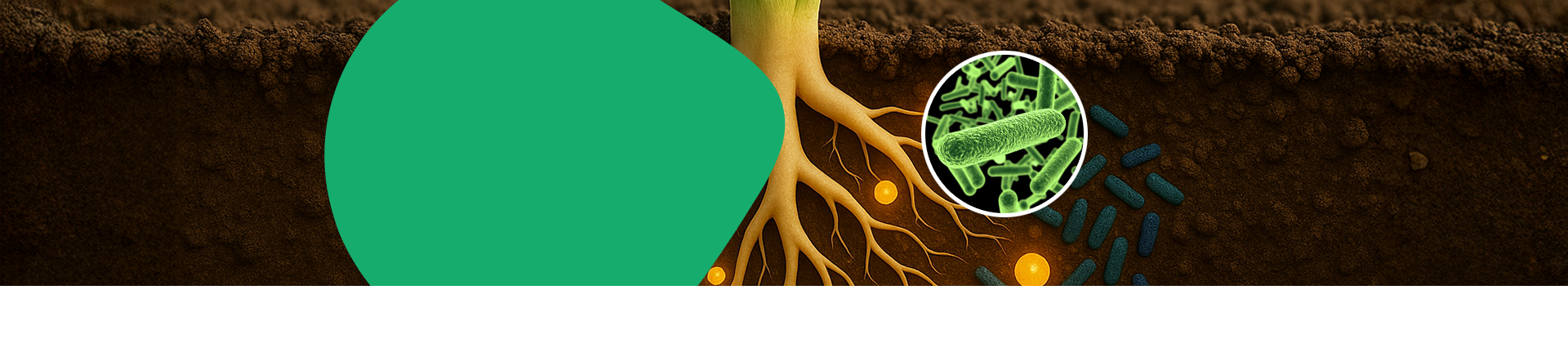
Microbial Fertilizers
 Cropenta in 60 seconds

Technical
Expertise

Specialized
Inputs

Long-Term
Partnerships

Sustainable
Solutions
Mycorrhiza Biostimulant
Mycorrhiza biostimulants are among the most fundamental microbial raw materials in sustainable agriculture. Mycorrhizal fungi form a symbiosis with plant roots, creating an extensive fungal network that makes nutrients and water more efficiently available.
For formulators and purchasers, mycorrhiza biostimulants are particularly valuable because they enhance plant performance through root network expansion, phosphate mobilization, and stress buffering, rather than through direct input increase.
What is mycorrhiza?
Mycorrhiza literally means “fungus root” and describes the natural collaboration between roots and soil fungi. The plant supplies carbon to the fungus, while the fungus significantly increases the uptake of water and nutrients.
This is one of the oldest and most universal symbioses in land plants.
Why is mycorrhiza so effective as a biostimulant?
The fungus forms hyphae that extend far beyond the root itself, creating a greatly expanded exploration volume in the soil.
This results in:
- higher phosphate uptake
- improved water availability
- greater root continuity under stress
Phosphate mobilization as a core mechanism
Phosphate is often present in the soil but is chemically poorly available. Mycorrhiza enhances phosphate utilization by:
- transport via hyphal networks
- enzymatic mobilization of fixed phosphate
- synergy with PGPR bacteria
This reduces fertilizer dependence and increases nutrient efficiency.
Drought tolerance and osmoregulation
Mycorrhiza is particularly valuable under drought stress. By extending the uptake range and improving water extraction, plants remain functional for longer.
Additionally, turgor maintenance is supported as water transport remains more stable.
Mycorrhiza and plant resilience
In addition to uptake, mycorrhiza also stimulates resilience mechanisms through:
- plant priming
- strengthening of cell walls
- microbiome stabilization in the rhizosphere
This limits infection pressure and stress damage.
Formulation technical considerations
For purchasers, it is important that mycorrhiza consists of living fungi, which means quality strongly depends on:
- viability during storage
- carriers and formulation type
- application timing (early in cultivation)
- compatibility with fungicides
Synergy with other biostimulant raw materials
Mycorrhiza works optimally in combination with other sustainable inputs:
- Mycorrhiza + fulvic acid for micronutrient mobility
- Mycorrhiza + seaweed extract for stress priming
- Mycorrhiza + PGPR for rhizosphere consortia
From mycorrhiza to yield stability
Due to higher uptake efficiency and better stress buffering, mycorrhiza leads to:
- more uniform growth
- better phosphate utilization
- higher drought tolerance
- more stable yields and quality
Overview: mycorrhiza as a biostimulant strategy
| Mechanism | Effect | Cultivation Value |
|---|---|---|
| Hyphal Network | Larger uptake range | Water and nutrients |
| Phosphate Mobilization | More available P | Fertilizer reduction |
| Stress Buffering | Drought tolerance | Yield certainty |