Comparing Methods to Protect Soy Protein for Ruminant Bypass
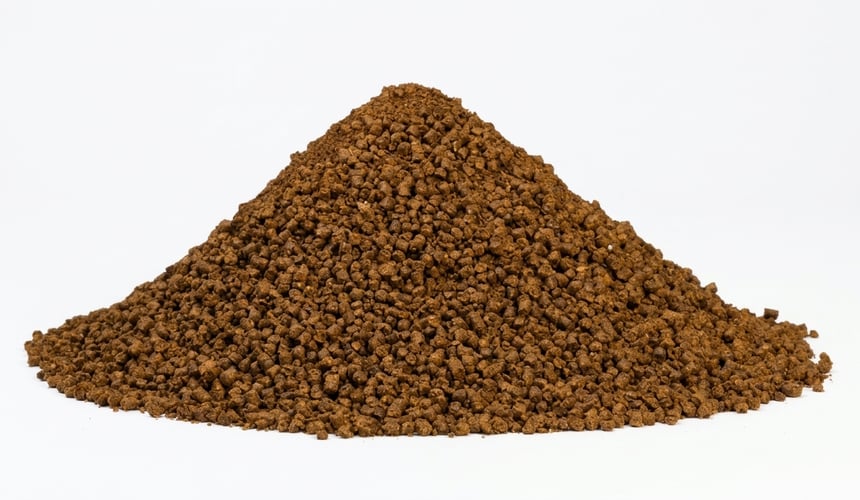
Optimizing protein utilization in ruminant diets requires careful consideration of how protein sources are processed to minimize rumen degradation and maximize the amino acids available for intestinal absorption. Specifically for soy protein, a valuable source of essential amino acids, various protection methods aim to achieve what is known as rumen-undegradable protein (RUP) or bypass protein. The effectiveness of these methods extends beyond simply increasing RUP; it encompasses maintaining or supporting intestinal digestibility and the ultimate supply of metabolizable protein to the animal.
Cropenta Insight
When evaluating rumen-protected proteins, formulators often focus on RUP values, but intestinal digestibility is equally crucial. According to product documentation, a product like Bypass Soy Protein MP, which is derived from non-GMO soybean meal and treated molasses via a controlled Maillard reaction, demonstrates a high calculated RUP when assessed at a consistent passage rate, alongside near-complete intestinal digestibility of this RUP. This balance of rumen protection and high intestinal digestibility is key for precise amino acid delivery in ruminant diets.
Understanding Rumen Degradation Kinetics and Protection
Rumen degradation kinetics describe how dietary proteins are broken down by rumen micro-organisms. Key parameters include the soluble fraction (S), the washable but insoluble fraction (W-S), the potentially degradable fraction (D), the undegradable fraction (U), and the fractional degradation rate per hour (Kd) [1]. The effective degradation and subsequent RUP are calculated from D, Kd, and an assumed fractional passage rate (Kp), which is estimated from intake and production, not directly measured in the nylon bag technique. It is important to note that RUP values are only comparable when assessed at the same assumed passage rate [2].
Various methods aim to alter these kinetics to protect soy protein from extensive rumen degradation. These include heat treatment, chemical treatments, and reactions with reducing sugars. However, over-processing can have detrimental effects, potentially lowering both rumen degradation and subsequent intestinal digestibility [3].
Thermal and Chemical Treatments for Rumen Protection
Heat treatment is a common approach to protect protein. It can alter the protein structure, making it less accessible to microbial enzymes in the rumen. The degree of heat, duration, and moisture content during processing all influence the extent of protection. For instance, thermomechanical processing, sometimes combined with enzyme facilitation, may reduce anti-nutritional factors and potentially contribute to nutrient digestibility in soybean meal [3]. However, the exact impact on rumen degradation and intestinal digestibility requires careful evaluation.
Chemical treatments, such as those involving lignosulfonates, have also been employed to protect proteins. These treatments aim to create complexes that resist microbial breakdown in the rumen. However, the efficacy can vary. Research on lignosulfonate-treated rapeseed meal, for example, found that while it influenced rumen-undegradable protein (UDP) compared to untreated meal, the increase was substantially less than what was often expected or declared in product information [4]. Historically, formaldehyde treatment was used to create highly resistant proteins, but its use is no longer permitted due to concerns about residues and safety.
Maillard Reaction in Protecting Soy Protein
Another approach to protect soy protein involves controlled Maillard reactions. This reaction occurs between reducing sugars (such as glucose, fructose, or xylose) and free amino groups, particularly the epsilon-amino group of lysine. Through a series of steps involving Schiff bases and Amadori products, melanoidins are formed. When controlled, this process can render protein more resistant to rumen micro-organisms, while still allowing the acid and enzymes in the abomasum and small intestine to release amino acids. However, excessive Maillard reactions can lead to the destruction of reactive lysine, thereby affecting overall digestibility and palatability [2].
For example, according to product documentation, Bypass Soy Protein MP, a rumen-protected protein derived from non-GMO soybean meal, is produced using a controlled Maillard reaction with selected C5 and C6 reducing sugars from treated molasses. This process, which is designed to control sugar distribution, temperature penetration, moisture, processing time, and homogeneity, aims to create melanoidins that resist microbial breakdown in the rumen. Following this, acid denaturation in the abomasum and subsequent enzymatic digestion in the small intestine are intended to release the amino acids [2].
Evaluating Intestinal Digestibility and Metabolizable Protein
A high RUP percentage alone does not guarantee nutritional value; it must be coupled with adequate intestinal digestibility. The share of rumen-undegraded protein that is digested in the small intestine, measured for example with the mobile nylon bag technique in cows fitted with duodenal cannulas, is a crucial indicator. If RUP has low intestinal digestibility, it delivers little usable protein to the animal. For instance, the product documentation for Bypass Soy Protein MP reports a calculated RUP above 80% at an assumed passage rate of 6%/h, with the intestinal digestibility of the rumen-undegraded protein reported as close to 100% [2]. This comprehensive evaluation, combining both RUP percentage and its intestinal digestibility, provides a more accurate and holistic picture of the protein's true nutritional contribution to the animal's metabolizable protein supply.
Nutritional protein valuation systems, such as the Dutch DVE/OEB system, the German nXP/RNB system, INRA PDI, or CNCPS metabolizable protein, translate these degradation and digestibility characteristics into formulation values. These systems help determine the digestible protein available to the animal and the rumen protein balance. Values differ between systems and depend on the assumed passage rate [2].
Challenges in Measurement and Application
It is important to differentiate between in-vitro and in-situ methods for assessing protein degradation. In-vitro protein degradation tests, which often use enzymatic or fractionation methods, can correlate poorly with in-situ measurements conducted in rumen-fistulated cows. This discrepancy is particularly evident for heat- and Maillard-protected proteins, where in-vitro methods may overstate rumen protection by tens of percentage points compared to in-vivo measurements. Consequently, declared values based on in-vitro methods may not be comparable with in-situ derived values [2].
The choice of rumen protection method for soy protein significantly influences its nutritional value for dairy cattle. Methods like controlled Maillard reactions aim to balance rumen resistance with subsequent intestinal digestibility, thereby contributing to the metabolizable protein supply. Understanding the specific mechanisms of protection and their verified impact on rumen degradation kinetics and intestinal amino acid digestibility is vital for formulators aiming to optimize protein utilization in ruminant diets [5].
Technical Summary
Various methods protect soy protein from rumen degradation, including heat and controlled Maillard reactions, to influence its supply of metabolizable protein to ruminants. Effective protection balances rumen resistance with high intestinal digestibility of the undegraded protein. Evaluating these methods requires in-situ measurements of degradation kinetics and subsequent intestinal digestibility, as in-vitro tests may overstate protection, particularly for Maillard-treated proteins. The assumed passage rate influences RUP values, underscoring the need for consistent methodology in comparisons.
Disclaimer
This article has been prepared with AI assistance using publicly available sources and is intended solely for general technical and educational purposes. It does not constitute professional advice or recommendations for specific applications. Cropenta makes no warranties regarding the accuracy, completeness or applicability of the information. No rights may be derived from its contents, and Cropenta accepts no liability for its use to the extent permitted by law.
Technical Questions
How does the assumed passage rate (Kp) affect calculated RUP values for protected soy protein?
The calculated RUP percentage for a protected protein is directly influenced by the assumed fractional passage rate (Kp). Higher Kp values, reflecting faster feed passage through the rumen, generally result in higher calculated RUP values because less time is available for microbial degradation. Therefore, comparing RUP values across different products or studies is only meaningful when the same Kp is used.
What is reactive lysine, and why is its availability important after soy protein protection treatments?
Reactive lysine refers to lysine with a free epsilon-amino group, which is available for digestion and absorption by the animal. Maillard reactions, while protecting protein from rumen degradation, can bind this reactive lysine. If the reaction is too intense, it can modify reactive lysine, even if total lysine content remains unchanged, thus affecting the overall nutritional value and amino acid availability for the ruminant.
Why are in-vitro protein degradation tests often unreliable for Maillard-protected proteins?
In-vitro tests, using enzymatic or chemical fractionation, may not accurately mimic the complex microbial and physiochemical environment of the rumen. For Maillard-protected proteins, these tests can fail to account for the particular bonds formed during the reaction, often overstating the actual rumen protection compared to in-situ measurements in live animals. This can lead to misleading RUP estimations for formulators.
How does intestinal digestibility of RUP relate to the overall protein valuation in ruminant diets?
Intestinal digestibility is crucial because a high RUP value is nutritionally beneficial only if the undegraded protein can be efficiently digested and absorbed in the small intestine. Protein valuation systems like DVE/OEB integrate both RUP and its intestinal digestibility to calculate the amount of truly digestible protein available to the animal, providing a more accurate basis for diet formulation than RUP alone.
Related articles

Related Products
Looking for something specific?
Our team is there to help you find the right raw materials and solutions for your formulations

