Why Beneficial Microbes Face Challenges in Field Survival
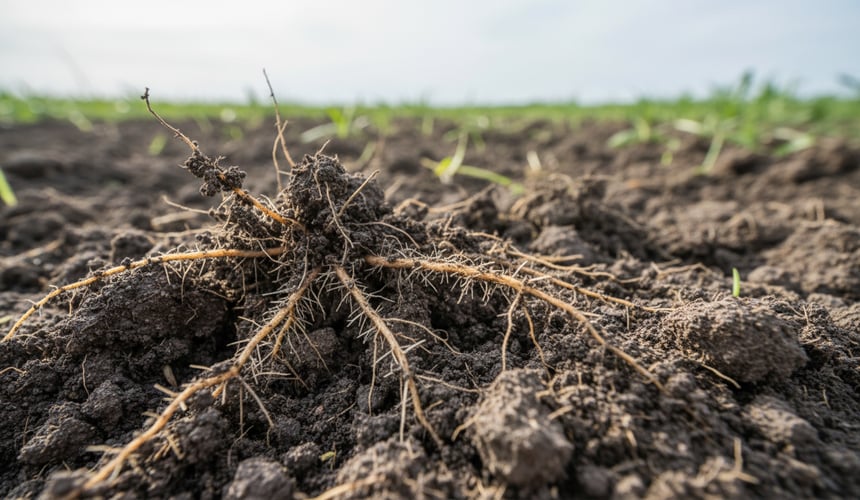
Beneficial microorganisms in biostimulants and fertilizers are recognized for their potential to support crop growth and nutrient availability. However, their consistent performance in field conditions can be unpredictable. This leads to a critical question for growers and agronomists: Why do the beneficial microorganisms applied often fail to survive or perform as expected once they are in the field? This article explores the primary environmental challenges that hinder the efficacy of these valuable microbial products.
Cropenta Insight
The discrepancy between laboratory viable counts and actual field performance of microbial products highlights a key challenge in microbial agriculture. Understanding how environmental factors like UV radiation, desiccation, and pH variations directly impact microbial survival is crucial for formulators and technical specialists who develop products for greater resilience, aiming for more consistent performance for professional distributors and commercial customers in the Microbial Technologies sector.
The Complexities of Microbial Survival in the Field
The environment within agricultural fields is highly dynamic and presents numerous challenges for microbial survival, far exceeding the controlled conditions of a laboratory or greenhouse. For microorganisms to deliver their intended benefits, they must first survive these harsh conditions and then establish themselves within the soil or on plant surfaces. Environmental stressors for beneficial microorganisms can include ultraviolet (UV) radiation, temperature extremes, desiccation, and fluctuating pH levels [1].
Environmental Stressors Impacting Microbial Viability
UV radiation, particularly from sunlight, can be damaging to beneficial microorganisms. Exposure to UV-B and UV-C radiation may lead to DNA damage, protein denaturation, and cell membrane disruption, potentially compromising the microbe's ability to function or even survive. Microbial products applied to surfaces may be vulnerable to this stressor [1].
Temperature is another critical factor. While some beneficial microorganisms thrive in specific temperature ranges, agricultural fields can experience wide fluctuations, from intense heat during the day to cooler temperatures at night. High temperatures may cause proteins to denature and cell structures to break down, while freezing conditions may lead to ice crystal formation that ruptures cells [1]. These thermal stresses can reduce the viable count of microbial inoculants.
Desiccation, or extreme dryness, is a pervasive challenge, especially in regions prone to drought or during dry periods between irrigation or rainfall. Water is essential for microbial cellular processes, and a lack of it can lead to osmotic stress, metabolic shutdown, and ultimately cell death. Some beneficial microorganisms may not tolerate prolonged periods of desiccation [2].
Soil pH also plays a significant role in microbial survival and activity. Most beneficial microorganisms have an optimal pH range for growth and function. Deviations from this optimal range, whether toward acidity or alkalinity, may inhibit enzyme activity, alter nutrient availability, and disrupt cell membrane integrity, potentially making it difficult for applied microbes to establish and thrive [3].
The combined effect of these stressors can be more severe than any single factor, creating an environment where even robust laboratory-grown microbial cultures may struggle to persist. This highlights the importance of formulations that enhance field survival beyond initial viable counts [4].
Technical Summary
Beneficial microorganisms applied in agriculture face significant survival challenges in field environments. Key stressors like UV radiation, heat, desiccation, and pH fluctuations can damage microbial cells and inhibit their metabolic functions. This explains why laboratory-demonstrated viability does not always translate to sustained field performance. Understanding these limiting conditions is crucial for developing resilient microbial products.
Disclaimer
This article has been prepared with AI assistance using publicly available sources and is intended solely for general technical and educational purposes. It does not constitute professional advice or recommendations for specific applications. Cropenta makes no warranties regarding the accuracy, completeness or applicability of the information. No rights may be derived from its contents, and Cropenta accepts no liability for its use to the extent permitted by law.
Technical Questions
How does UV radiation specifically harm microorganisms in field applications?
UV radiation, particularly UV-B and UV-C present in sunlight, can cause direct damage to microbial DNA, proteins, and cell membranes. This damage can inhibit essential cellular processes, potentially reduce metabolic activity, and ultimately lead to the death of the microorganism, often significantly impacting the survival rate of surface-applied microbial products before they can establish.
What is the role of desiccation in limiting microbial viability?
Desiccation refers to extreme dryness, which is often a major stressor for microbes. Lack of water can disrupt cellular osmotic balance, leading to dehydration of cytoplasm and inactivation of enzymes. Without sufficient moisture, microorganisms may not be able to carry out their metabolic functions, potentially resulting in reduced viability and often cell death, especially for strains not adapted to drought conditions.
Why are temperature fluctuations a significant problem for beneficial microbes?
Beneficial microbes typically have optimal temperature ranges for growth. Wide fluctuations, such as intense heat during the day and cold at night, can cause severe stress. High temperatures can denature proteins and damage cell structures, while freezing can lead to ice crystal formation that ruptures cells, often hindering microbial establishment and activity in the field.
How does soil pH affect the survival and function of applied microorganisms?
Soil pH directly influences the biochemical environment and nutrient availability for microorganisms. Most microbes thrive within a specific pH range. Deviations from this optimum can inhibit crucial enzyme activities, alter cellular membrane integrity, and affect nutrient uptake, potentially making it difficult for beneficial microbes to colonize and perform their intended functions effectively.
Related articles

Related Products

Looking for something specific?
Our team is there to help you find the right raw materials and solutions for your formulations

