Evaluating Lecithin as an Energy Ingredient in Broiler Diets
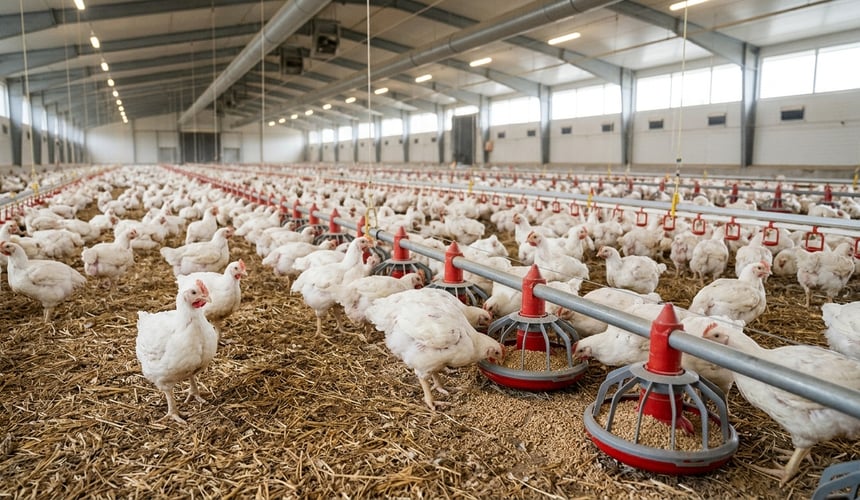
Feed formulators continually seek alternative energy raw materials that contribute to feed value while supporting optimal animal performance. Dietary fats are crucial for energy supply in broiler diets, and their selection involves assessing various factors, including energy value, fatty acid composition, and digestibility. Lecithin, a complex mixture of phospholipids, glycolipids, triglycerides, and other components, has received attention for its potential as an energy source in broiler feed, beyond its emulsifying properties. Understanding its effectiveness requires reviewing specific feeding trial results on lecithin-containing fat sources as energy ingredients in broiler feed. This article reviews what feeding trials show about the effectiveness of lecithin and lecithin-containing fat blends as an energy source in broiler diets, and what are the practical implications for feed formulators.
Cropenta Insight
Understanding the actual metabolizable energy of lecithin and lecithin-oil blends is crucial for feed formulators. While lecithin's emulsifying properties are recognized, trial data directly demonstrating its energy contribution and impact on broiler performance offers tangible evidence for ingredient selection. This moves beyond theoretical values, providing a basis for incorporating these alternative lipid sources into commercial broiler feed systems for balanced and efficient energy supply.
Lecithin's Role as a Fat Source in Broiler Diets
Fats are concentrated energy sources in animal feed. For poultry, especially young broilers, fat digestion can be age-dependent, as their production of bile salts and lipase is limited, affecting the digestion of saturated fats more significantly than unsaturated oils. Lecithin, as a feed ingredient, is not a pure substance; it consists of various phospholipids, such as phosphatidylcholine and phosphatidylethanolamine, alongside triglycerides and free fatty acids. These components, depending on their raw material source (e.g., soy, rapeseed, sunflower) and processing, contribute to its energy value. Phospholipids are amphiphilic, possessing both hydrophobic and hydrophilic properties, which enables them to act as emulsifiers. This emulsifying property may support the formation of small fat droplets in the intestinal lumen, potentially enhancing the conditions for pancreatic lipase activity and micelle formation, which are critical steps for fatty acid absorption.
Investigating Crude Soybean Lecithin in Broiler Feed Trials
Studies investigated crude soybean lecithin (L) as an energy source in broiler feeding. The research aimed to evaluate its potential contribution to broiler diets [1, 2].
Trial Outcomes: Energy Value and Broiler Performance
The feeding trials indicate that crude soybean lecithin may serve as an effective energy source in broiler diets. It has been observed that the inclusion of crude soybean lecithin or its blends with soybean oil in broiler diets may contribute to the energy content and support performance [1, 2].
These results suggest that crude soybean lecithin can contribute significantly to the energy content of broiler diets. Its effectiveness appears to be robust, whether used as a direct replacement for a portion of soybean oil or as part of a lecithin-oil blend.
Practical Considerations for Feed Formulators
The findings from these feeding trials offer practical implications for formulators considering alternative lipid and energy ingredients in broiler feed. The ability of crude soybean lecithin to contribute to apparent metabolizable energy (AMEn) and support broiler performance, comparable to soybean oil, provides flexibility in ingredient sourcing and formulation strategy. Formulators can consider lecithin and lecithin-containing fat blends as viable options to meet the energy demands of broilers, potentially diversifying their raw material portfolio. When assessing such ingredients, it is important to consider the specific composition of the lecithin product, particularly its phospholipid, triglyceride, and free fatty acid content, as these influence its overall energy contribution and functional properties. Furthermore, the oxidative stability of these lipid sources is a practical consideration during storage and feed processing to maintain feed quality.
Technical Summary
Feeding trials demonstrate that crude soybean lecithin effectively functions as an energy source in broiler diets, comparable to soybean oil. Studies indicate that lecithin inclusion or using lecithin-oil blends may contribute to apparent metabolizable energy (AMEn) and support broiler performance, including feed intake, weight gain, and feed conversion ratio. These results provide practical evidence for formulators to consider lecithin as a valuable component in energy raw material selection for poultry.
Disclaimer
This article has been prepared with AI assistance using publicly available sources and is intended solely for general technical and educational purposes. It does not constitute professional advice or recommendations for specific applications. Cropenta makes no warranties regarding the accuracy, completeness or applicability of the information. No rights may be derived from its contents, and Cropenta accepts no liability for its use to the extent permitted by law.
Technical Questions
How does the composition of crude soybean lecithin influence its energy value for broilers?
Crude soybean lecithin is a mixture, primarily phospholipids, triglycerides, and free fatty acids. Triglycerides and free fatty acids directly contribute energy, while phospholipids, being amphiphilic, assist in fat emulsification and digestion. The specific proportions of these components, influenced by raw material and processing, determine the overall energy density and digestibility, impacting its metabolizable energy value in broiler diets.
What is the significance of age-dependent fat digestion in evaluating lecithin for young broilers?
Young broilers have limited bile salt and lipase production, affecting fat digestion, especially saturated fats. Lecithin's emulsifying properties may support fat droplet dispersion, potentially aiding digestion during early growth stages. This means the effectiveness of lecithin as an energy source could be particularly relevant for optimizing energy utilization in young birds, where endogenous digestive capabilities are still developing.
Beyond energy, what functional properties of lecithin are relevant for feed formulators?
While providing energy, lecithin's primary functional property is its emulsifying capacity. This amphiphilic characteristic can help stabilize fat emulsions in the gut, which may improve the conditions for lipase activity and nutrient absorption. For feed formulators, this means lecithin might not only contribute energy but also support the digestion and absorption of other dietary fats, potentially leading to a more efficient utilization of total dietary lipids.
Related articles



Related Products


Looking for something specific?
Our team is there to help you find the right raw materials and solutions for your formulations

